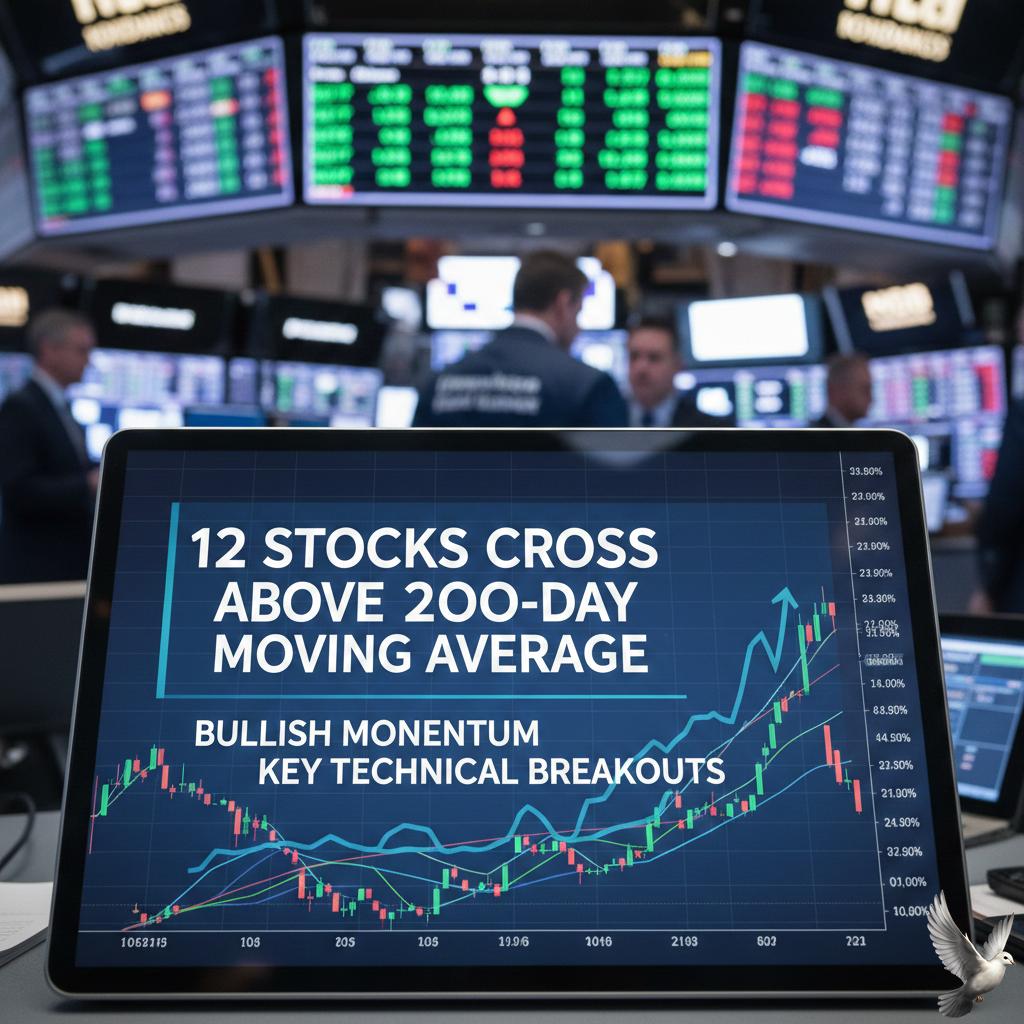
12 stocks cross above 200-day moving average
The Indian equity market is demonstrating selective strength as the Nifty 500 universe shows signs of long-term trend reversals. On February 6, 2026, twelve notable stocks successfully closed above their 200-day moving average (DMA), a critical technical milestone that often signals a shift from a bearish or sideways phase into a sustained uptrend.
Among the prominent names securing this breakout are Reliance Industries, which closed at 1,450.80, and ICICI Bank at 1,406.10. Other major players joining the bullish trend include Kotak Mahindra Bank (422.35), Bajaj Finserv (2,024.20), and Life Insurance Corporation of India (901.85). Consumer staples and real estate also saw representation through Dabur India (508.30) and Sobha (1,514.50), alongside niche performers like Data Patterns and Campus Activewear.
The broader market context remains cautiously optimistic following the Reserve Bank of India’s February policy update. The Monetary Policy Committee maintained the repo rate at 5.25% and kept a neutral stance, reflecting a balanced approach toward India’s 7.4% projected GDP growth for the fiscal year. While the Nifty 50 has been consolidating near the 25,693 level, the cooling of the India VIX to 11.94 indicates a significant reduction in market fear, paving the way for the current stock-specific action.
Traders are closely watching these technical breakouts as the Nifty 500 continues to rotate capital into sectors showing relative strength. A price hold above the 200 DMA is traditionally viewed as a green flag for institutional buyers, suggesting that the underlying momentum for these twelve stocks is backed by long-term accumulation rather than short-term speculation.
The market now faces a psychological hurdle at the 26,000 mark for the Nifty 50. However, the emergence of these "Golden Cross" candidates within the mid-cap and large-cap segments suggests that internal market breadth is improving. Investors are currently prioritizing quality breakouts over broad index plays, focusing on names that have reclaimed their long-term averages despite global volatility and recent corrections in the technology sector.