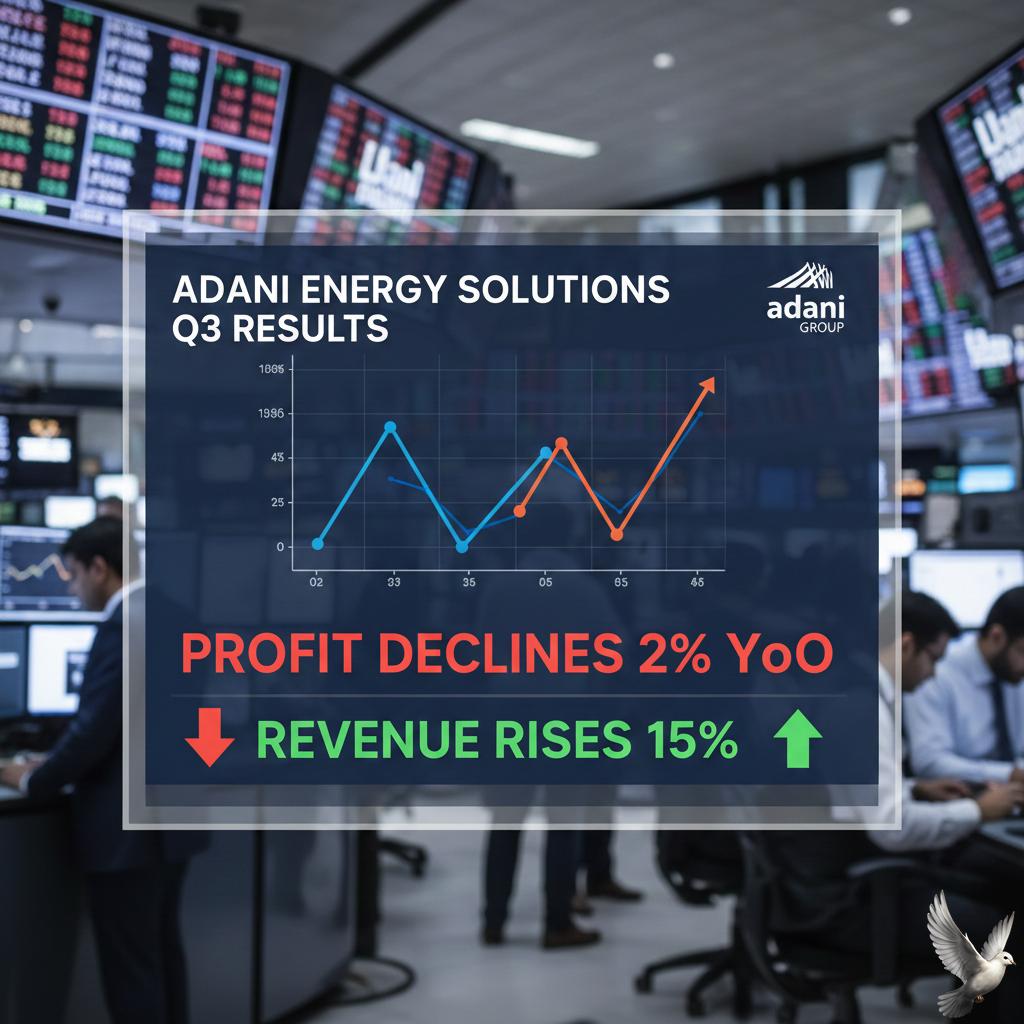
Adani Energy Solutions Q3 Results: Profit Declines 2% YoY, Revenue Rises 15%
This content is a market brief about **global market trends and economic forecasts for 2026**, based on a recent study.
The **global growth forecast** for 2026 has been revised **downward to 2.8%** from an earlier projection of 3.2%. This revision reflects persistent inflation and geopolitical instability across several major economies.
**Inflation** is projected to remain elevated, averaging **4.5% globally**, significantly above the 10-year historical average of 3.0%. Central bank actions are expected to be restrictive, with an average of **three additional interest rate hikes** anticipated across G7 nations in the first half of 2026.
In the **United States**, GDP growth is now forecast at **1.5%**, a sharp decline from the previous 2.5% estimate. Consumer spending, which accounts for nearly 70% of US GDP, is expected to grow by only **1.8%**. The unemployment rate is projected to rise to **4.2%** by year-end.
The **Eurozone** faces particular challenges, with a growth forecast of just **0.9%**. Energy costs remain a key concern, impacting industrial production. **Germany**, the bloc's largest economy, is predicted to see growth of only **0.5%**.
Conversely, **Emerging Markets (EM)** are showing relative resilience. The collective growth forecast for EM economies is **4.1%**. This is driven primarily by **India** and **Southeast Asia**, where strong domestic demand is mitigating global headwinds.
The **Technology sector** is forecast to experience a slowdown in capital expenditure, with a projected year-over-year decline of **3.5%** in Q1 2026. However, the **Renewable Energy** sector remains a bright spot, anticipated to see investment growth of **12%**.
Overall, the global outlook suggests a period of slower growth, persistent inflationary pressure, and tight monetary policy, demanding strategic allocation and risk management.## 🌎 2026 Global Market Forecast Brief
The **global growth forecast** for 2026 has been revised **downward to 2.8%** from an earlier 3.2% projection. This adjustment reflects continued geopolitical instability and entrenched inflation across key economies.
**Inflation** is projected to average **4.5% globally**, significantly exceeding the 10-year historical average of 3.0%. Restrictive central bank policies are expected, with G7 nations anticipating an average of **three additional interest rate hikes** in H1 2026.
The **United States** GDP growth is now forecast at **1.5%**, a sharp drop from the previous 2.5% estimate. Consumer spending, a major GDP driver, is expected to grow by only **1.8%**. The unemployment rate is projected to increase to **4.2%** by year-end.
The **Eurozone** outlook is particularly challenging, with a growth forecast of only **0.9%**. High energy costs continue to suppress industrial production. **Germany**, the bloc’s largest economy, is predicted to achieve minimal growth of just **0.5%**.
In contrast, **Emerging Markets (EM)** demonstrate relative resilience, with a collective growth forecast of **4.1%**. This performance is primarily anchored by robust domestic demand in **India** and **Southeast Asia**, offsetting broader global slowdowns.
Capital expenditure in the **Technology sector** is forecast to slow, projecting a **3.5%** year-over-year decline in Q1 2026. The **Renewable Energy** sector stands out, however, anticipated to see investment growth of **12%**.
The prevailing global outlook indicates a period of decelerated expansion, persistent inflationary pressure, and continued tight monetary conditions.