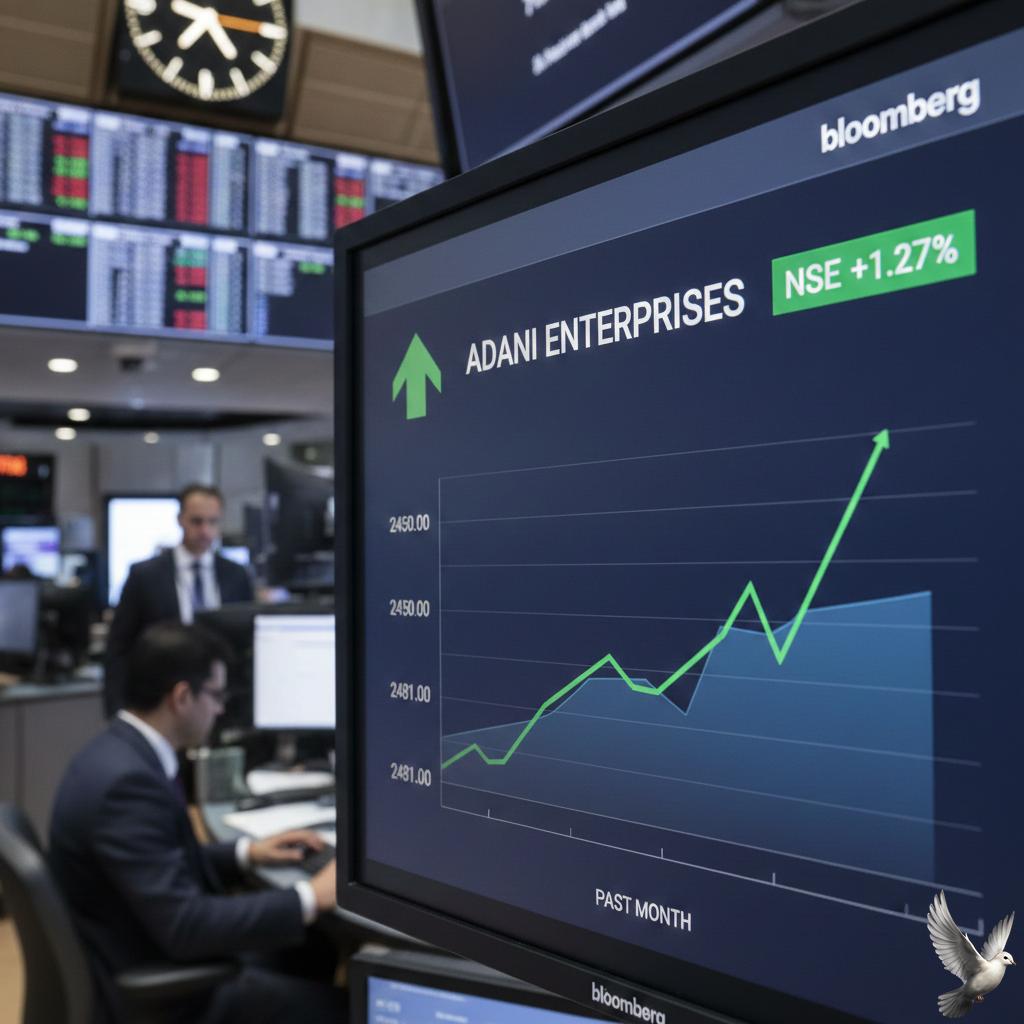
Adani Enterprises share price rises 1.27% over the past month
Market Brief: February 2026
Global equity markets entered mid-February 2026 with a distinct shift in momentum as the "AI trade" began to broaden into cyclical sectors. While technology remains a primary driver, investors are rotating capital into energy, materials, and small-cap stocks.
The S&P 500 recently crossed the **7,000** threshold for the first time, though trading has turned sideways as the market digests a concentrated rally in megacap names. The Dow Jones Industrial Average has shown relative strength, climbing to **50,170**, supported by a rotation toward value-oriented sectors.
Key Indices and Sector Shifts
US market performance remains resilient but volatile. Growth stocks are currently trading at a **5% to 12%** discount relative to fair value estimates, while the energy sector has surged to a **3%** premium following recent gains.
In the UK, the FTSE 100 has climbed nearly **5%** year-to-date, eyeing the **11,000** level. This follows a robust **21.5%** gain in 2025. European markets are finding support in stabilizing industrial production, with the STOXX 600 benefiting from easing interest rate pressures.
Asian markets are experiencing mixed results. While Japan's Nikkei 225 and South Korea’s KOSPI have hit record highs, Chinese markets are trading in thin volumes due to the Lunar New Year holiday. India's Nifty 50 remains a standout, with projections suggesting a **13%** upside over the next twelve months.
Commodities and Currencies
Gold prices have experienced extreme volatility. After surging to a record close of **$5,417** per ounce, the metal saw a sharp **10%** correction, recently consolidating near the **$5,000** mark. Silver mirrored this movement, retreating from highs of **$120** to settle near **$85**.
Oil prices are being buoyed by geopolitical tensions in the Middle East and supply disruptions in North America. Brent crude is currently trading near **$70** to **$73** per barrel. Global supply is forecast to rise by **2.4 million** barrels per day in 2026, roughly matching an expected demand increase of **850,000** barrels.
The U.S. Dollar Index (DXY) has softened to approximately **97.0**, its weakest level in four years. This weakness is providing a tailwind for international equities, particularly in emerging markets which saw gains of **8.9%** in early 2026.
Economic Indicators and Policy
The U.S. economy remains on a solid footing with GDP growth revised to a **4.4%** annualized pace. Inflation, however, remains "sticky" at **2.7%**, still above the Federal Reserve's **2%** target.
Monetary policy is at a crossroads as markets anticipate the transition to a new Fed Chair in May. Current expectations suggest a terminal interest rate between **3.0%** and **3.25%**.
In the labor market, U.S. private payrolls increased by **22,000** in January, falling short of expectations, though unemployment remains low enough to support consumer spending. Debt-service costs in the U.S. are now a primary concern, with annual costs projected to reach **$1.8 trillion** over the coming decade.