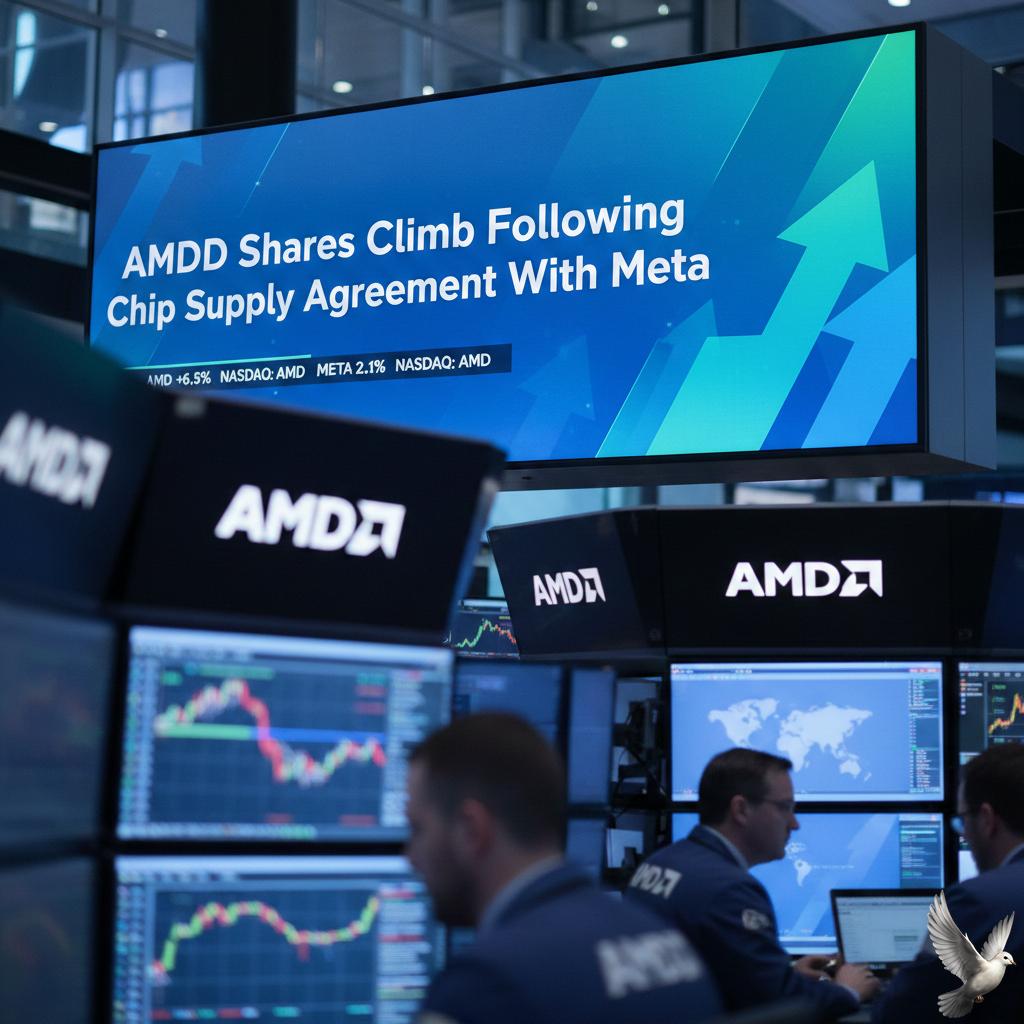
AMD Shares Climb Following Chip Supply Agreement With Meta
Advanced Micro Devices (AMD) has finalized a transformative $60 billion partnership with Meta Platforms, securing a primary role in building the social media giant’s next-generation artificial intelligence infrastructure.
The five-year agreement includes a strategic equity component, granting Meta the option to purchase up to 10% of the chipmaker. This depth of collaboration mirrors a similar multi-billion-dollar deal AMD recently established with OpenAI, signaling a shift in the AI hardware landscape.
**Infrastructure and Hardware Deployment**
AMD will supply 6 gigawatts of compute capacity to Meta, beginning with a massive rollout in the second half of 2026. The initial phase features custom-designed Instinct MI450 GPUs, which are optimized specifically for Meta’s unique workloads and built on the new Helios rack-scale architecture.
In addition to flagship graphics processors, Meta is integrating AMD’s 6th Gen EPYC "Venice" CPUs into its data centers. This diversified approach aims to reduce the industry's reliance on single-source suppliers and provide the raw power needed for Meta's "personal superintelligence" projects.
**Market Performance and Financial Outlook**
AMD shares reacted with significant volatility to recent news, closing at $196.60 on February 23, 2026. While the stock has seen a 20% pullback from its January highs of $267, the Meta deal provides strong long-term revenue visibility.
Wall Street remains focused on AMD's data center segment, which is projected to maintain a compound annual growth rate exceeding 60%. Analysts have set a wide range for 12-month price targets, with an average of approximately $260.91, reflecting optimism about the firm's expanding footprint in the inference market.
**Spending Trends in the Sector**
Meta has substantially increased its capital expenditure forecast for 2026, targeting a range between $115 billion and $135 billion. A significant portion of this budget is dedicated to high-performance AI silicon and specialized networking hardware.
While competitors like Nvidia remain dominant with over 90% of the training market, AMD is successfully capturing share in AI inference. The broader industry trend shows "Big Tech" firms—including Microsoft and Alphabet—investing over $630 billion annually to secure the hardware necessary for the global AI race.