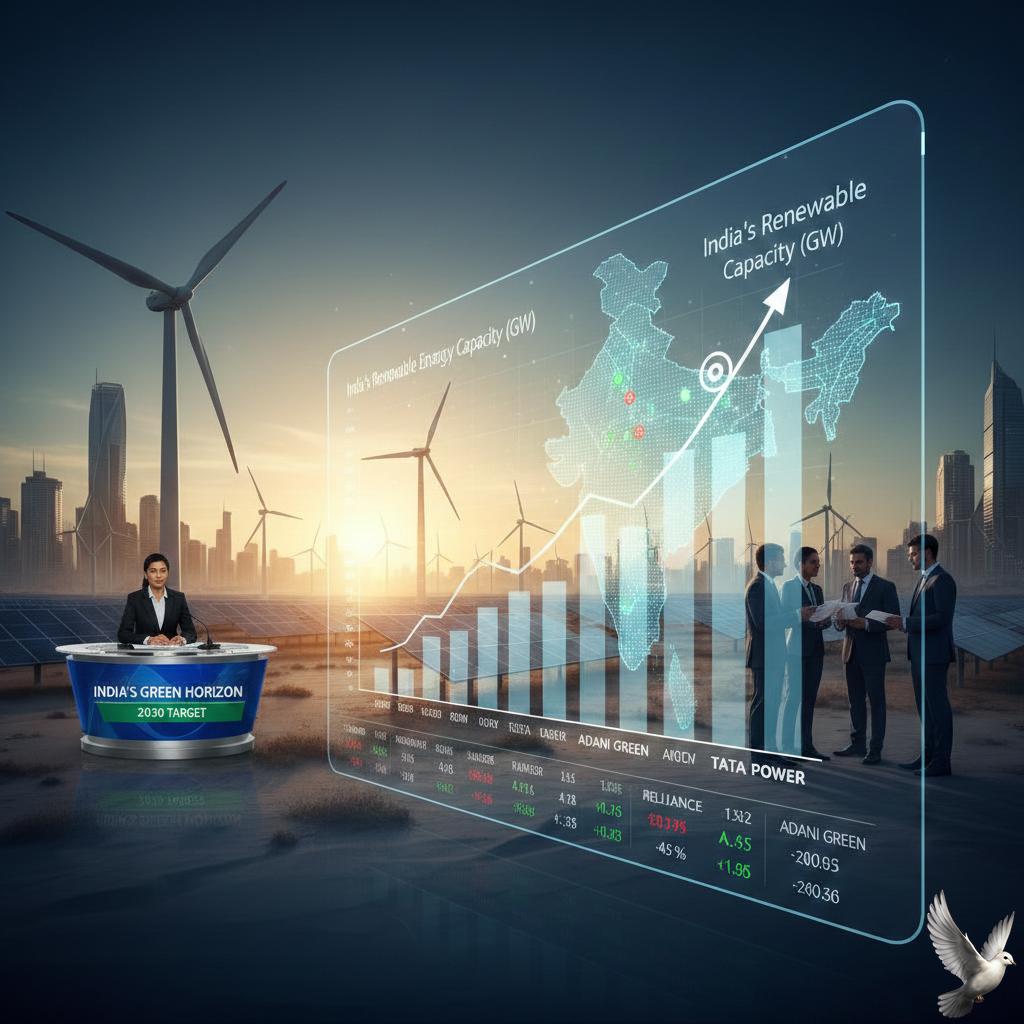
Analyzing India's Progress Toward the 500 GW Renewable Energy Target by 2030
India is accelerating its transition to a green economy, surpassing major milestones well ahead of schedule. As of February 2026, the nation’s total installed power capacity has reached 520.5 GW. For the first time, non-fossil fuel sources—including solar, wind, hydro, and nuclear—account for more than 52% of this total, standing at 272 GW.
This achievement marks the successful fulfillment of India’s COP26 pledge to derive 50% of its power from clean sources by 2030, hitting the target four years early. The current financial year 2025-26 has seen a record-breaking addition of 52,537 MW in generation capacity, with 80% of new installations coming from renewable energy.
Solar energy continues to lead the sector with a cumulative capacity of 141 GW, followed by wind power at 55 GW. Strategic focus has now shifted toward offshore wind, with the identification of key zones off the coasts of Gujarat and Tamil Nadu. Recent auctions under the National Green Hydrogen Mission have also seen green hydrogen prices fall to a historic low of 279 INR per kg.
A significant shift in market dynamics is the transition from plain renewable tenders to Firm and Dispatchable Renewable Energy (FDRE). To manage the intermittency of solar and wind, battery energy storage systems (BESS) are seeing a massive scale-up. Capacity is projected to surge tenfold to 5 GWh in 2026, supported by a 5,400 crore INR Viability Gap Funding scheme.
Despite the rapid supply growth, power demand has shown signs of volatility. While January 2026 recorded a 5% year-on-year increase in demand reaching 143 billion units, overall growth for the fiscal year has been moderated by a prolonged monsoon. Peak demand reached a new high of 245 GW during the recent winter cold wave.
Investors are closely monitoring the financial health of distribution companies (discoms), which currently carry a debt burden of 7.18 lakh crore INR. The Draft National Electricity Policy 2026 aims to address this through cost-reflective tariffs and mandatory renewable consumption obligations.
The sector is moving toward a more integrated grid architecture. With over 190 GW of non-fossil capacity currently under implementation or tendered, the path toward the 500 GW clean energy goal by 2030 remains highly viable. Success now depends on the seamless integration of storage technologies and the stabilization of long-term power purchase agreements.