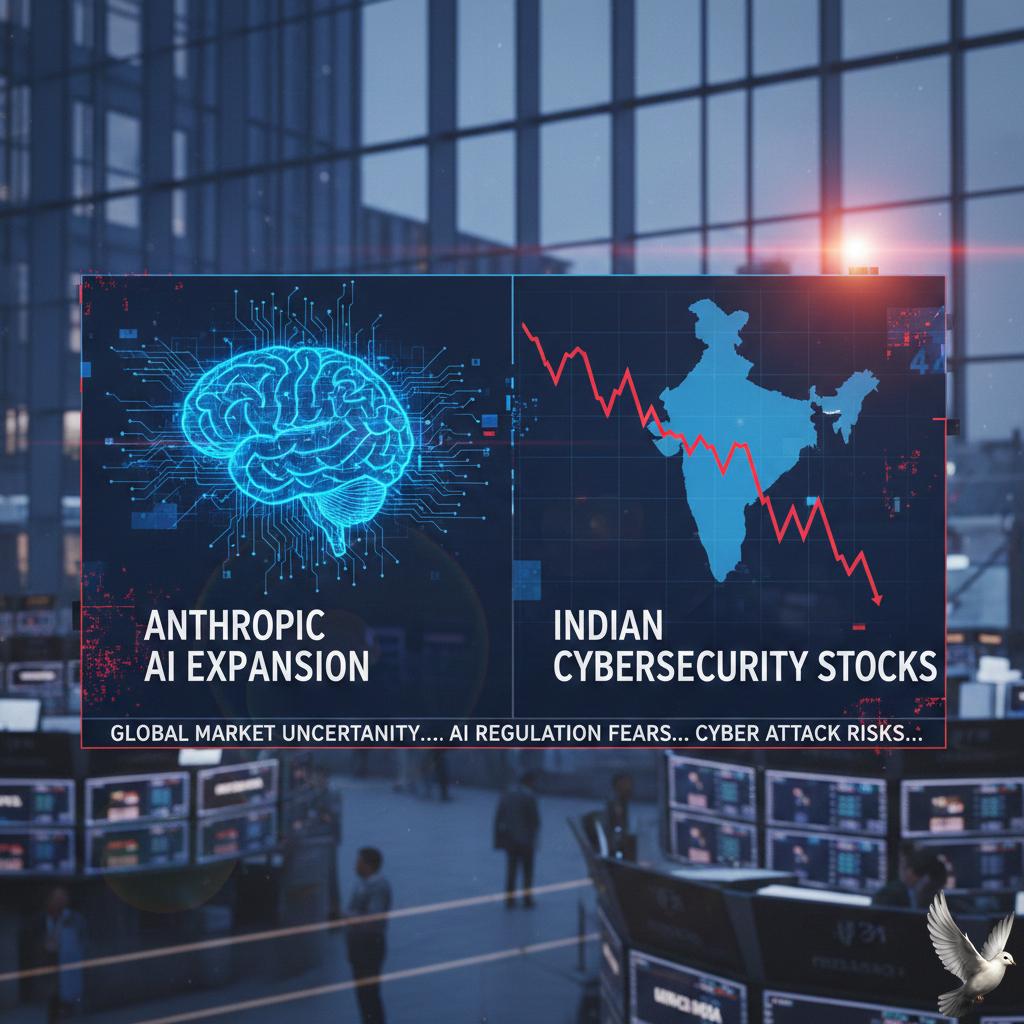
Anthropic AI Expansion Concerns Impact Indian Cybersecurity Stocks
The global cybersecurity sector is currently navigating a period of significant volatility. Stocks in both India and the US have experienced sharp declines following the launch of Claude Code Security by Anthropic. This new AI-powered tool has triggered widespread concern over the potential displacement of traditional vulnerability management and legacy security systems.
In the US market, the impact was immediate and broad. Major industry players saw their valuations contract as investors reassessed the competitive landscape. CrowdStrike, Datadog, and Zscaler all recorded drops of approximately 11%. Other prominent firms were also affected, with Fortinet and Okta declining by 6%, and Palo Alto Networks slipping 3%.
The Indian market faced even more drastic movements. TAC Infosec hit a 20% lower circuit, while TechD Cybersecurity fell more than 14%. Other domestic firms like Quick Heal Technologies and Sasken Technologies also saw declines ranging from 3% to 5%. These movements reflect a growing anxiety that AI-driven tools could compress the entire vulnerability lifecycle—from discovery to remediation—into a single automated workflow.
Anthropic's new tool differentiates itself by moving away from traditional rule-based scanning. Instead, it uses advanced reasoning to map application components and identify logic flaws that human researchers might typically find. During internal tests using the Claude Opus 4.6 model, the company reportedly identified over 500 vulnerabilities in production-level open-source codebases that had previously gone undetected for years.
Market analysts are divided on whether this sell-off is a rational repricing or a narrative-driven overreaction. While the new tool is highly effective at code auditing and suggesting software patches, it does not yet address core cybersecurity needs such as real-time endpoint protection, identity management, or zero-trust networking.
Despite these distinctions, the sentiment remains cautious. The Global X Cybersecurity ETF recently hit its lowest level since late 2023, falling nearly 5% in a single session. This trend is part of a larger shift where software sectors are being tested by the rapid commercialization of agentic AI and automated defense capabilities.
The long-term outlook for the sector may eventually stabilize as these AI tools are integrated into existing platforms. However, for now, the speed of innovation continues to create "headline headwinds," keeping investors on edge as they watch for further signs of structural disruption across the global security landscape.