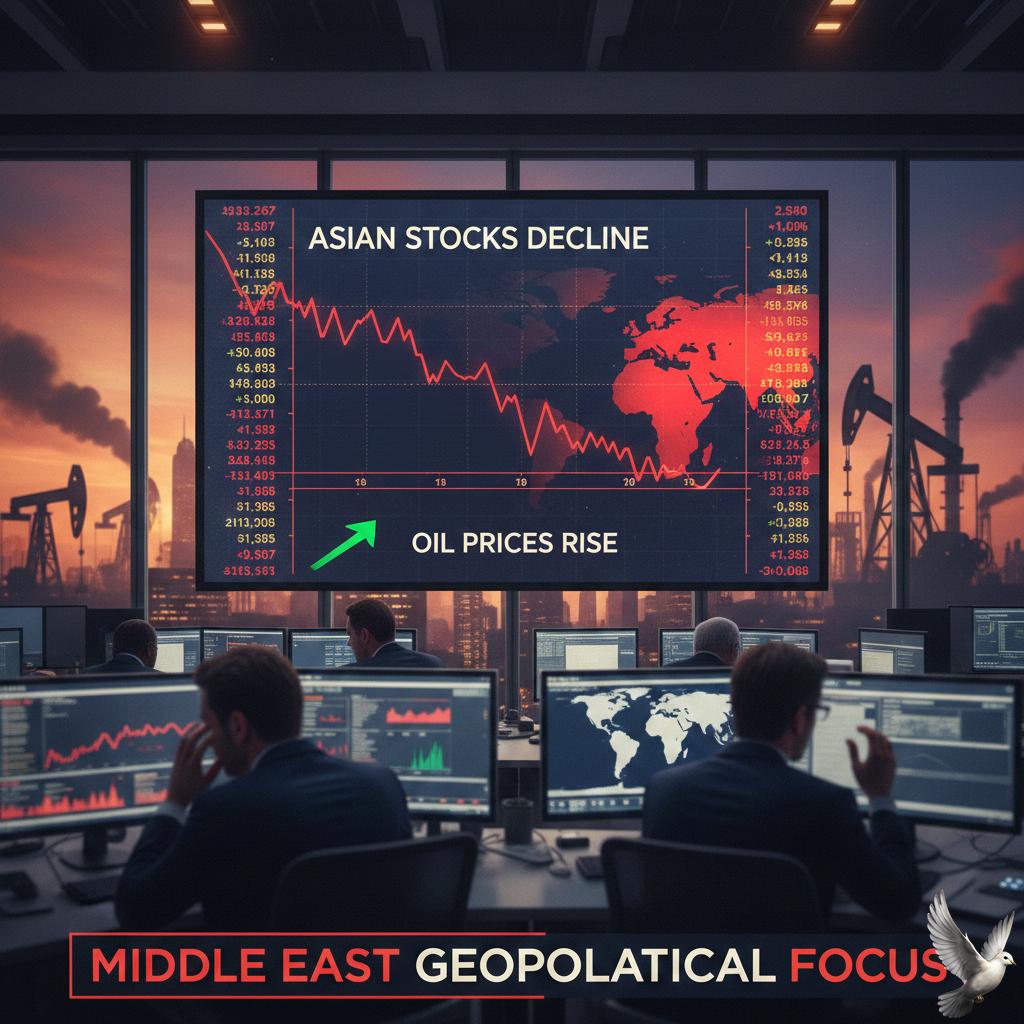
Asian Stocks Decline and Oil Prices Rise Amid Middle East Geopolitical Focus
**Geopolitical Risk Brief: US-Iran Escalation**
Asian equities faced a widespread downturn as escalating tensions between the United States and Iran soured investor sentiment. Japan's **Nikkei 225** and Australia's **S&P/ASX 200** both opened lower as the market grappled with fresh security risks in the Middle East.
Energy markets are currently reflecting a significant "war premium." **Brent crude** surged past **$71.80** per barrel, marking its highest level since August. Simultaneously, **West Texas Intermediate (WTI)** climbed above **$66.50**. Traders are pricing in a **70% probability** of a US military strike following the collapse of nuclear discussions in Geneva.
The strategic importance of the **Strait of Hormuz** remains the primary concern for global supply. Roughly **20%** of the world's daily oil consumption passes through this chokepoint. Any disruption to shipping lanes could trigger a rapid spike in energy costs and disrupt global manufacturing supply chains.
Safe-haven assets have seen a corresponding spike in demand. Spot **gold** has breached the symbolic **$5,000** per ounce mark, as investors move away from riskier equity positions. This flight to safety is also strengthening the **US Dollar**, which rose **0.25%** against a basket of major currencies.
Market analysts suggest that stocks have not yet fully priced in the potential for a prolonged conflict. While many investors originally expected a diplomatic resolution, recent military movements—including the deployment of **carrier strike groups** and stealth fighters—have shifted expectations toward a short-term military intervention.
Central banks are monitoring the situation closely. A sustained rise in oil prices threatens to reignite **inflationary pressures**, potentially delaying planned interest rate cuts in major economies. For now, volatility remains high as the global market awaits a definitive signal from Washington or Tehran.