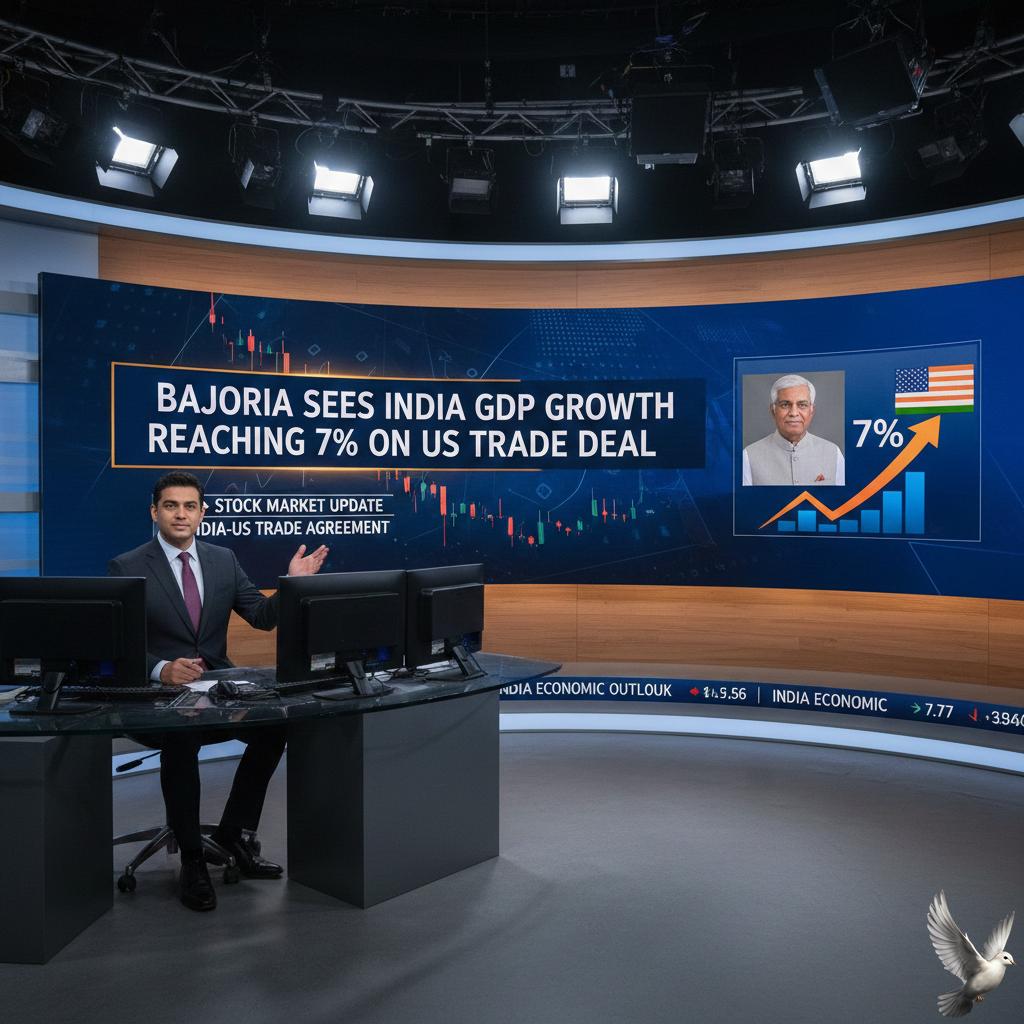
Bajoria Sees India GDP Growth Reaching 7% on US Trade Deal
**MARKET BRIEF: Historic India-US Trade Deal (February 2026)**
**Headline: Tariffs Slashed to 18% – India Gains Strategic Edge**
**The Deal**
In a major economic breakthrough, India and the United States have finalized a new trade framework as of February 2026. The agreement officially lowers reciprocal tariffs on Indian exports to **18%**, a sharp reduction from the previous peak of **50%** (which included punitive duties). This move immediately de-escalates trade tensions and positions India as a preferred commercial partner over regional rivals.
**Sector Impact: Textiles & Manufacturing**
The tariff cut is a game-changer for labor-intensive sectors. Indian textiles and apparel now face an **18%** duty in the US, giving them a pricing advantage over competitors like Vietnam and Bangladesh (both at **20%**) and significantly undercutting China (**37%**). Leather, gems, and jewelry exporters also gain immediate relief, restoring margins that were previously eroded by high levies.
**Economic Outlook & Currency**
Market sentiment has responded positively. India’s real GDP growth is projected at **7.4%** for FY 2025-26, supported by this renewed export optimism. The Indian Rupee (INR) is expected to stabilize and strengthen as the deal removes the risk of a trade war, encouraging foreign direct investment (FDI) back into domestic manufacturing.
**Supply Chain & Future Targets**
The agreement accelerates India's integration into global supply chains, specifically for "friend-shoring" initiatives. Both nations have reaffirmed a bilateral trade target of **$500 billion** by 2030. The partnership now extends beyond traditional goods to include critical minerals and clean energy, with India committing to diversify its energy procurement in exchange for market access.