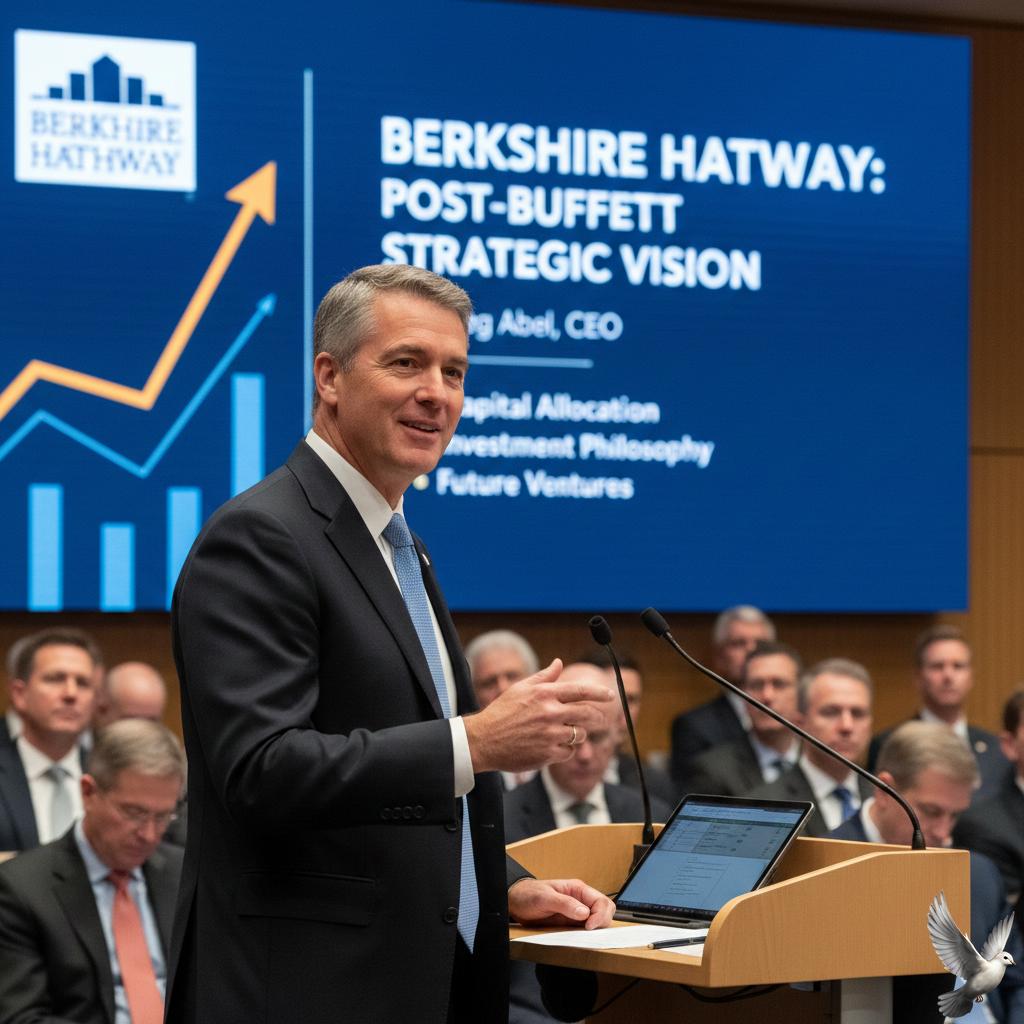
Berkshire Hathaway CEO Greg Abel to Discuss Post-Buffett Strategic Vision
As of February 26, 2026, Berkshire Hathaway has officially entered the Greg Abel era. Following Warren Buffett’s retirement from the Chief Executive role on January 1, the 63-year-old successor now oversees a conglomerate with a market capitalization exceeding $1.07 trillion.
While Buffett remains Chairman at age 95, Abel has assumed full authority over the firm’s sprawling operations and its monumental investment decisions. The transition comes at a period of high stability for the stock, with Class B shares trading near $494.50, up roughly 11% year-to-date and within a 52-week range of $455.19 to $542.07.
The immediate challenge for Abel is the management of a record-breaking cash pile, which has climbed to approximately $382 billion. This "war chest" represents roughly 35% of the company's total market value.
While these reserves provide immense security and earn steady interest from Treasury bills, they have also drawn attention from analysts concerned that such a large idle balance could drag down overall returns. Abel is expected to transition the firm from Buffett’s "Oracle" approach to a more hands-on "Operator" style, focusing on modernizing legacy businesses and seeking major acquisition targets, or "elephants," in technology and renewable energy sectors.
Operational performance across the 90-plus subsidiaries remains a priority. While the BNSF Railway and various industrial units continue to generate strong cash flow, the insurance segment faces competitive pressure.
GEICO, in particular, has seen Progressive overtake its position as the number two auto insurer in the U.S. market. Abel is expected to implement more rigorous technology-driven shifts to regain market share and improve margins across the insurance portfolio.
In the equity portfolio, the "post-Buffett" strategy is already visible through significant rebalancing. Recent disclosures show the firm has trimmed its massive stake in Apple to roughly $62 billion, a 4% reduction that maintains the tech giant as Berkshire’s largest anchor holding while managing concentration risk.
Simultaneously, the firm has diversified into newer areas, recently building a $350 million stake in The New York Times and increasing positions in energy players like Chevron.
Investors are now looking toward the upcoming annual shareholder letter, the first under Abel’s leadership, for clues on capital allocation. The market is specifically watching for a potential return to opportunistic stock buybacks, which were largely paused during Buffett’s final year.
As the new CEO balances a transition to modern growth sectors with the preservation of Buffett’s value-investing culture, his ability to deploy that $382 billion cash reserve will likely define Berkshire’s performance for the next decade.