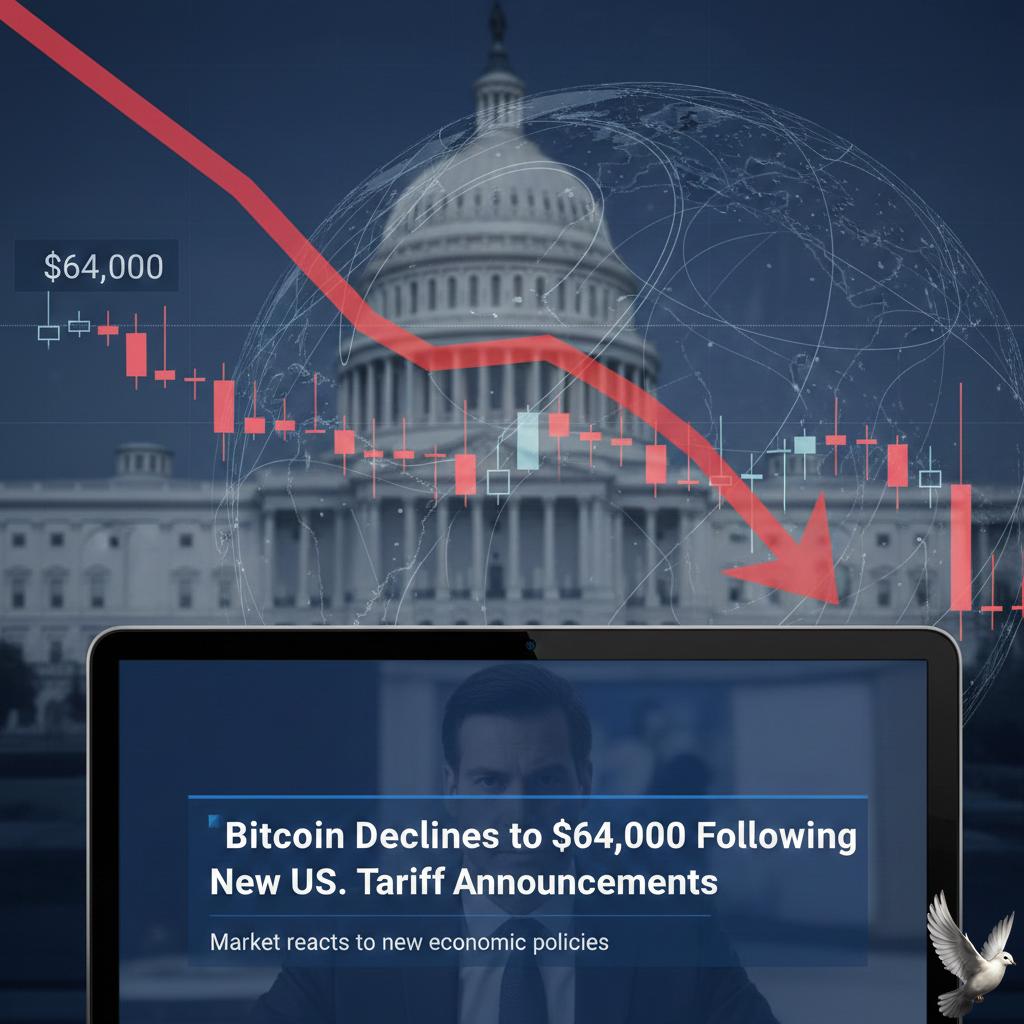
Bitcoin Declines to $64,000 Following New U.S. Tariff Announcements
The cryptocurrency market is navigating a period of intense volatility as of February 23, 2026. Major assets have faced a steep correction following recent shifts in U.S. trade policy and macroeconomic uncertainty.
Bitcoin has retreated below the key 65,000 level, currently trading near 64,300. This represents a decline of approximately 4.8% over the last 24 hours. The sell-off has effectively erased gains made over the previous weekend and puts the digital gold nearly 48% below its record high of 126,100 reached late last year.
Ethereum is experiencing similar pressure, sliding roughly 5.2% to trade around 1,970. The second-largest cryptocurrency remains vulnerable as broader market sentiment shifts toward a risk-off stance. Other prominent assets like XRP and Cardano have also posted losses as investors pull capital from speculative markets.
The primary catalyst for this downturn is the announcement of a 15% global tariff on imports. This move follows a U.S. Supreme Court ruling that limited previous executive trade powers. The decision to raise the baseline tariff from 10% to 15% for a 150-day period has unsettled global financial markets, leading to a sharp drop in U.S. equity futures and digital assets.
Market dynamics show a significant spike in liquidations. Over 136,000 traders were liquidated in the past 24 hours, totaling 458 million in losses. Most of these positions—roughly 92%—were leveraged longs, indicating a rapid flush-out of bullish bets.
The global crypto market capitalization now stands at approximately 2.33 trillion. Analysts are closely watching the 60,000 support level for Bitcoin. A failure to hold this psychological floor could lead to a deeper correction toward the low-50,000 range.
Sentiment indicators have plummeted to historic lows. The Crypto Fear and Greed Index currently sits at 5 out of 100, signaling extreme fear. This level of market pessimism has only been seen three times since 2018, often coinciding with major capitulation events.
Whale activity has also increased, with on-chain data showing large holders moving coins onto exchanges. This trend typically precedes further selling pressure. Despite the immediate gloom, some analysts view the current Sharpe Ratio lows as a potential zone for long-term accumulation.
Investors are now pivoting their focus toward upcoming economic data, including U.S. Producer Price Index figures and fourth-quarter GDP aggregates. These reports will likely dictate whether the current "buy-on-dips" or "sell-on-rallies" trend persists through the end of the quarter.