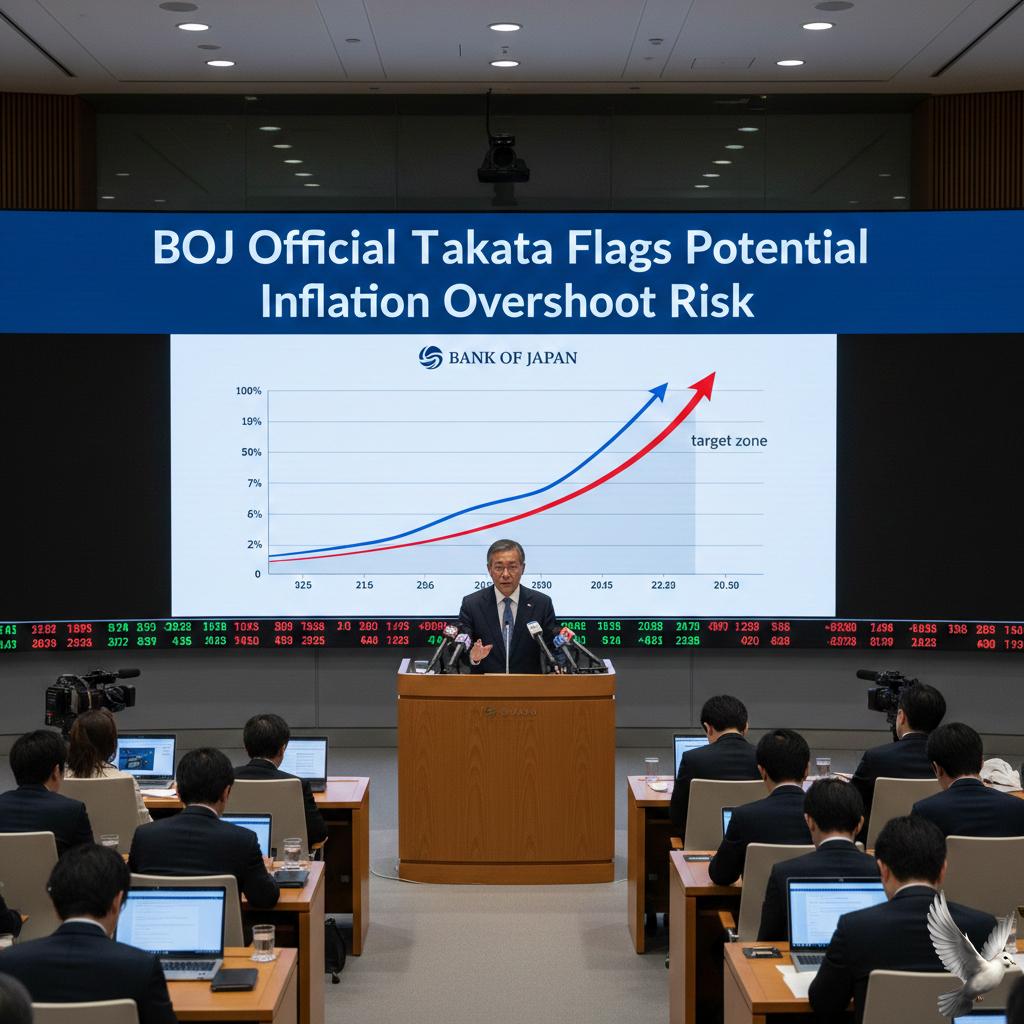
BOJ Official Takata Flags Potential Inflation Overshoot Risk
The Bank of Japan is currently navigating a pivotal transition as board member Hajime Takata intensifies calls for a shift in monetary strategy. Speaking in Kyoto on February 26, 2026, Takata emphasized that the era of fighting deflation has ended. He is now urging the central bank to prioritize preventing an inflation overshoot, advocating for a steady and gradual increase in interest rates.
Takata maintains that Japan has successfully met its 2.0% inflation target. He noted that the economy has fully emerged from a decades-long period of stagnation. Despite these hawkish leanings, the broader board remains divided. In January 2026, the BOJ held its short-term policy rate steady at 0.75%, rejecting Takata’s proposal to hike the rate to 1.0%.
Current economic data reflects a cooling trend in consumer prices. Japan's annual inflation rate eased to 1.5% in January 2026, down from 2.1% in December. This represents the lowest level since early 2022. Similarly, core inflation—which excludes fresh food—slipped to 2.0%, aligning exactly with the central bank’s long-term target.
While inflation is moderating, the "virtuous cycle" of wages and prices is gaining momentum. Major labor unions are pursuing wage increases exceeding 5.0% for the third consecutive year. This persistent upward pressure on personnel expenses is expected to make underlying inflation more "sticky," potentially keeping core CPI near the 2.0% mark throughout 2026.
Global factors are also playing a significant role in the BOJ’s internal debate. Takata highlighted that massive global fiscal stimulus and the ongoing boom in artificial intelligence could push up international growth, further pressuring Japanese domestic prices. However, the political landscape introduces new variables. Prime Minister Sanae Takaichi recently nominated two reflation-leaning academics to the BOJ board, signaling a preference for more cautious policy tightening.
Financial markets have reacted sharply to these conflicting signals. The Nikkei 225 Index hit a fresh record high, surging above 59,000 on February 26, 2026. This rally was fueled by fading expectations of an immediate rate hike following the government's dovish board nominations.
In the currency markets, the Yen has faced renewed downward pressure. The USD/JPY pair recently tested resistance near 156.25 as traders pushed back the timing for the next rate increase. While a hike in March is now seen as unlikely, with probabilities dropping below 10%, many analysts still expect the BOJ to adjust rates toward 1.2% or higher by the end of the year if the wage-price spiral remains intact.
The central bank now faces a delicate balancing act. It must weigh the hawkish warnings of an inflation overshoot against a government that favors looser policy to support moderate GDP growth, which is projected at roughly 0.9% for fiscal 2026. This recalibration is expected to have lasting effects on global liquidity and the carry trade as Japan moves toward a more normalized interest rate environment.