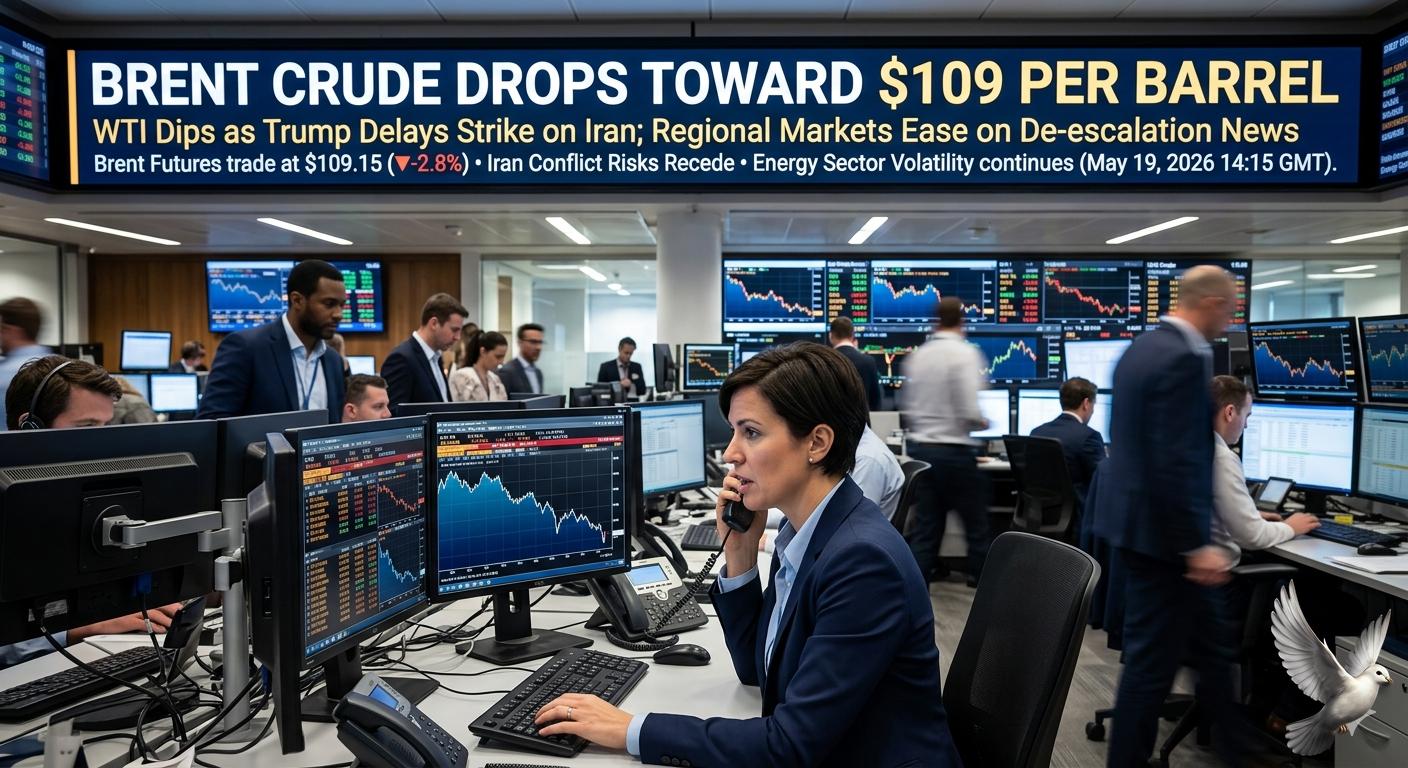
Brent crude drops toward $109 per barrel after Trump delays planned strike on Iran
International energy markets experienced a sharp downward correction on Tuesday morning following significant geopolitical developments from Washington. Global benchmark Brent crude fell below **$109** per barrel during early trading, paring more than **2%** from its previous session settlement of **$112.10**.
Concurrently, West Texas Intermediate (WTI) futures dropped **1.8%** to trade around **$102.48** per barrel, down from the prior close of **$104.38**. This market shift marks a notable reversal from overnight trading sessions where Brent had spiked to a high of **$112**.
The immediate catalyst for the price decline was an announcement from US President Donald Trump stating he would temporarily hold off on a military strike against Iran that had been scheduled for Tuesday. The decision to delay the escalation came after direct appeals from Middle Eastern leaders and regional allies, reviving thin hopes that a diplomatic resolution could prevent a wider conflict.
Despite the temporary relief, the broader market remains highly volatile. Energy infrastructure across the Middle East continues to operate under high-risk conditions. Global crude prices have surged more than **50%** since initial military strikes involving the US, Israel, and Iran on February 28, which led to a partial blockade and severe disruption of tanker flows through the Strait of Hormuz.
The ongoing maritime bottlenecks continue to strain physical supply buffers. According to recent energy data, global oil inventories fell by an average of **8.5 million** barrels per day over the second quarter, shrinking the available supply cushion in major developed economies.
However, severe headwinds on the demand side are keeping a lid on further price run-ups. High fuel costs and international supply blockages are denting consumption. Global oil consumption is currently forecast to contract by **2.4 million** barrels per day year-over-year during the second quarter, leading to a broader projected annual decline of **420,000** barrels per day for the full year.
Even with lower global consumption patterns, the structural deficit in the physical market is expected to persist into the latter half of the year. Market analysts continue to warn that any prolonged or permanent closure of the Strait of Hormuz—the world's most critical oil transit chokepoint—will cause severe, compounding shortages for global oil tankers and international product delivery.