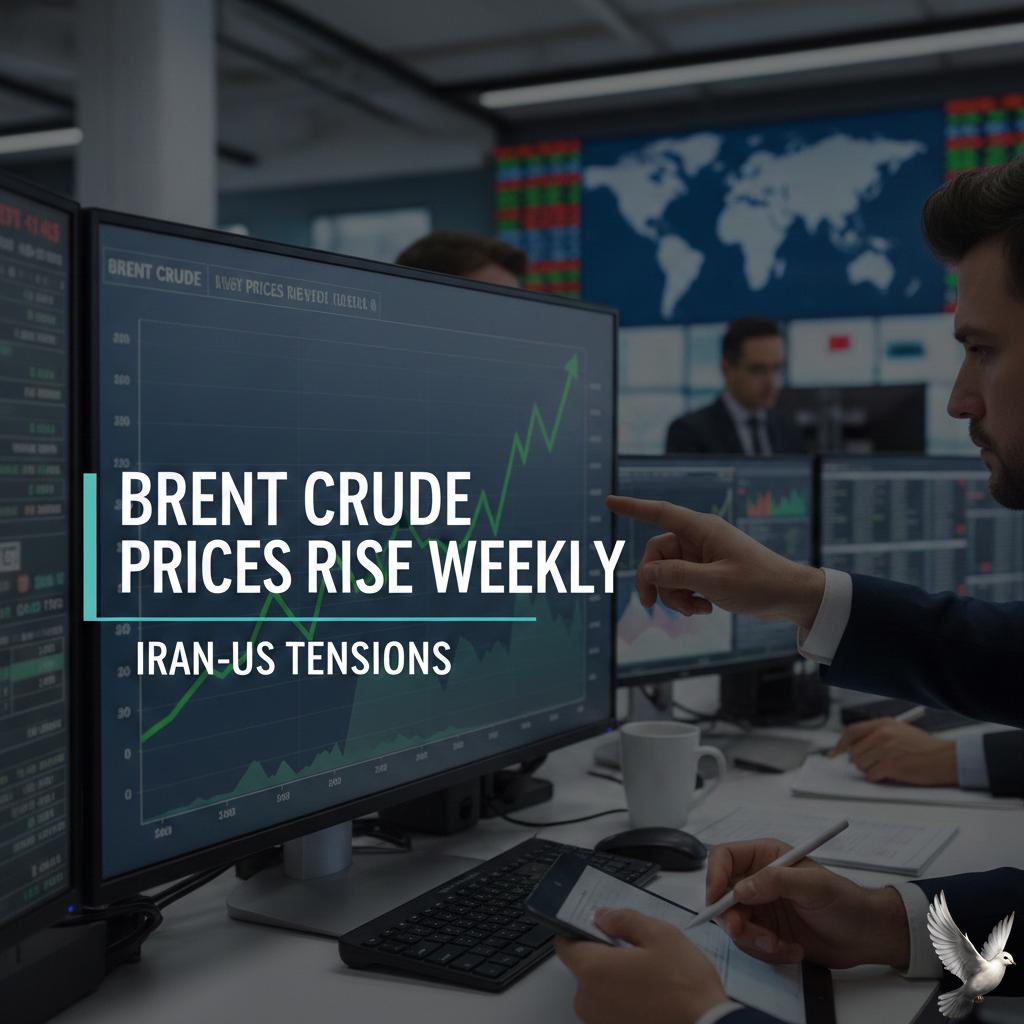
Brent Crude Prices Rise Weekly Amid Iran-US Tensions
Market Brief: Global Oil Surge
**Brent crude** prices have hit a six-month high, surpassing the **$71** mark as geopolitical friction intensifies. The global benchmark reached **$71.99** per barrel, marking a sharp **6%** gain for the week.
**WTI** futures followed a similar trajectory, rising above **$67** per barrel with a weekly increase of over **5%**. This rally is primarily driven by escalating tensions between the **U.S.** and **Iran** regarding nuclear developments.
Washington has issued a **10-to-15 day** ultimatum for a new nuclear agreement. In response, the U.S. has significantly increased its military presence in the Middle East, deploying two aircraft carriers and strike groups to the region.
Market anxiety is centered on the **Strait of Hormuz**. This narrow passage facilitates the transit of nearly **20%** of global oil consumption. Iran recently conducted joint naval drills with Russia and issued notices of rocket launches, briefly closing parts of the strait.
Supply fundamentals remain tight. Global oil inventories in the **U.S.** and **China** are shrinking. Meanwhile, **OPEC+** members have reaffirmed plans to keep production levels flat through the first quarter of **2026**.
Technical indicators show **WTI** has recovered strongly from the **$55** zone. Analysts suggest a decisive breakout above **$72** for Brent could signal a new leg higher in the current commodity cycle.
Secondary factors contributing to price support include the breakdown of peace talks between **Russia** and **Ukraine**. This has reignited fears of extended sanctions and further supply disruptions in European energy markets.
Global demand for **2026** is forecast to rise by **850,000** barrels per day. Non-OECD economies, specifically **China** and **India**, are expected to account for the entirety of this consumption growth.
Market participants are now pricing in a significant risk premium. Any physical disruption to shipping lanes could trigger an immediate supply shock, potentially pushing prices toward triple digits.
Investment sentiment remains bullish despite short-term volatility. Traders are closely monitoring the **10-day** diplomatic window as the primary trigger for the next major price movement.