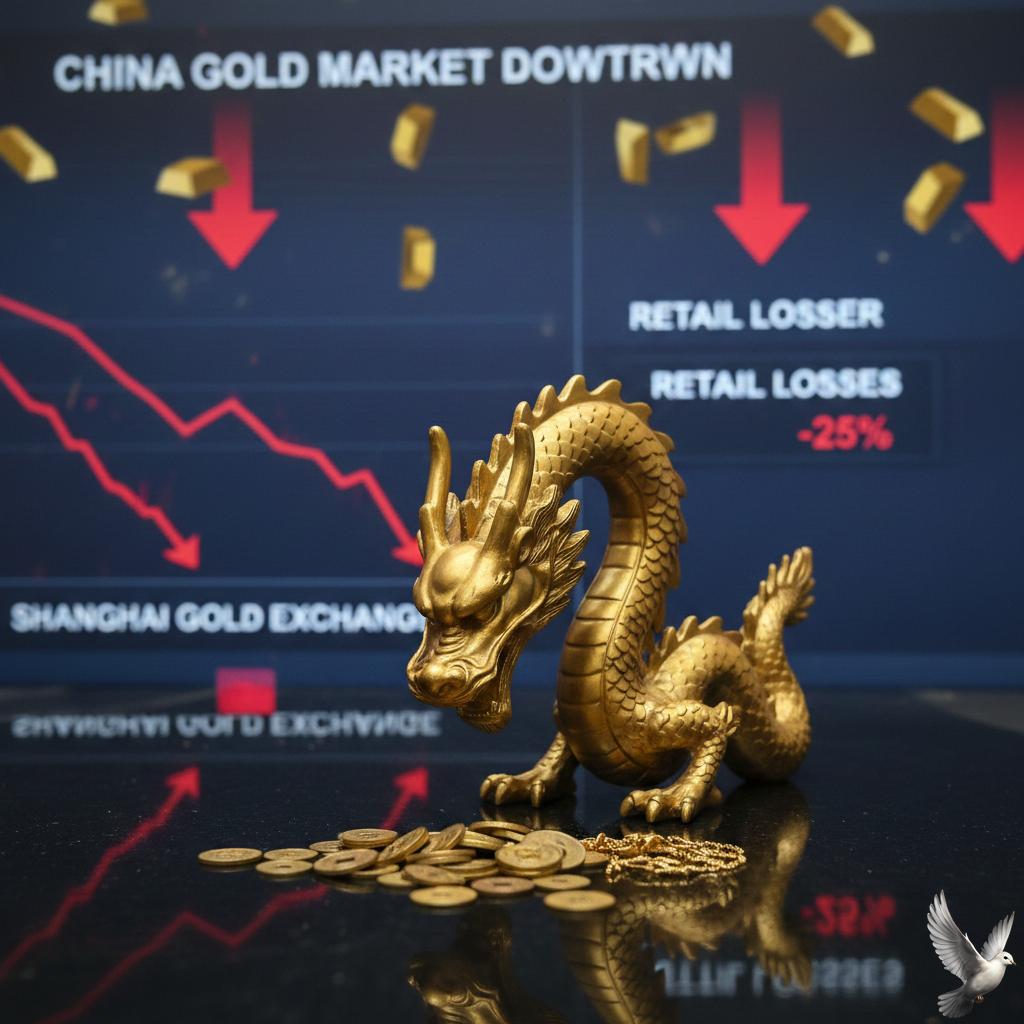
China Gold Market Downturn Highlighted by Steep Retail Losses
**Global Commodities Brief: Precious Metals Rout**
**Executive Summary**
A massive reversal in the precious metals market has triggered historic losses for retail and institutional investors alike. Following a parabolic rally driven by speculative "hot money" in Asia, the market collapsed in late January and early February 2026. The sell-off was catalyzed by the nomination of **Kevin Warsh** as the next US Federal Reserve Chair, which strengthened the US Dollar and signaled a potentially hawkish monetary policy shift.
**The Speculative Bubble Bursts**
Chinese retail investors, who had aggressively piled into futures markets, faced immediate devastation. One widely cited case involves a **42-year-old homemaker** in Hangzhou. After opening a futures account to chase the rally, she initially saw a **60% gain** in 48 hours.
However, the subsequent market U-turn triggered a forced liquidation of her leveraged positions. In less than one week, she incurred a **750,000 yuan** loss, wiping out **84%** of her peak investment equity. This case reflects a broader trend of margin calls cascading through the retail sector, with many accounts facing total wipeouts.
**Market Data & Price Action**
The volatility recorded in the last 72 hours has been historic:
* **Silver Crash:** Silver futures suffered their largest single-day drop on record, plunging approximately **26%** in one session. Prices collapsed from all-time highs near **$121 per ounce** to trade in the **$70–$80** range.
* **Gold Sell-Off:** Gold spot prices fell roughly **9–10%**, the sharpest daily decline since 1983. Prices retreated from a peak above **$5,600** to test support levels near **$4,400**.
* **Exchange Responses:** To curb volatility, the **Shanghai Gold Exchange** and **CME Group** significantly hiked margin requirements, forcing further liquidations of leveraged bets.
**Key Drivers**
The nomination of Kevin Warsh unnerved markets previously positioned for aggressive rate cuts. His reputation as a "hard money" advocate drove the **US Dollar Index** sharply higher, making dollar-denominated commodities expensive for overseas buyers.
Combined with profit-taking from trend-following funds, this fundamental shift caused the "hot money" trade to unravel instantly. Market analysts note that while long-term structural demand remains, the short-term speculative fervor has been effectively flushed out.