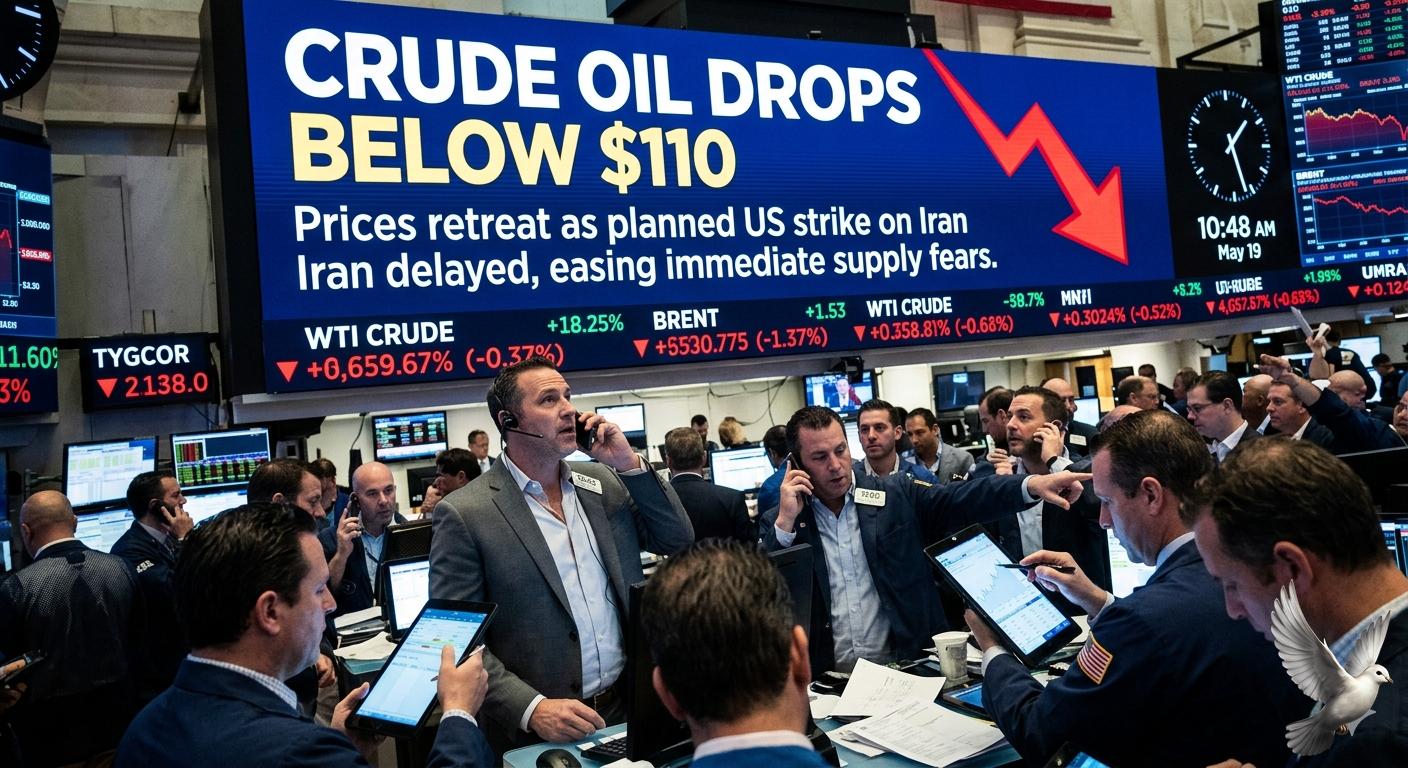
Crude Oil Drops Below $110 Following Delayed US Strike on Iran
Crude oil prices fell more than 2% during early trade on Tuesday, pulling back from recent highs as investors reacted to potential de-escalation in the Middle East. Market sentiment shifted quickly after the United States announced a postponement of a planned military strike on Iran, explicitly aiming to provide additional time for diplomatic negotiations following appeals from regional leaders.
This regulatory freeze on direct military action has provided immediate relief to global supply concerns, reversing the sharp upward momentum built during the previous session. On Monday, international crude oil futures had surged dramatically, with the West Texas Intermediate June contract closing up 3.1% at $108.66 per barrel, and July Brent crude rising 2.6% to reach $112.10 per barrel. The current correction has cooled those immediate price shocks, pulling benchmarks lower.
Despite the intraday drop, energy markets remain highly sensitive to physical supply crunches. Global crude and refined inventories have seen a massive reduction of nearly 250 million barrels since regional hostilities escalated, with recent drawdowns dropping at an aggressive pace of roughly 4 million barrels per day.
The primary driver for future market directions remains the status of the Strait of Hormuz. Because the waterway acts as a strategic chokepoint handling approximately 20% of global oil and gas production, its effective closure or restricted access keeps massive volumes of energy out of the market, structurally lifting the long-term price floor for crude.
Market analysts note that while record-high levels of energy exports from alternative producers have prevented prices from surging toward extreme thresholds like $150, sustained market stabilization relies entirely on concrete breakthroughs in diplomatic negotiations. Until a permanent solution for maritime shipping security is established, crude prices are expected to exhibit high volatility, balancing between immediate geopolitical de-escalation and severe underlying inventory deficits.