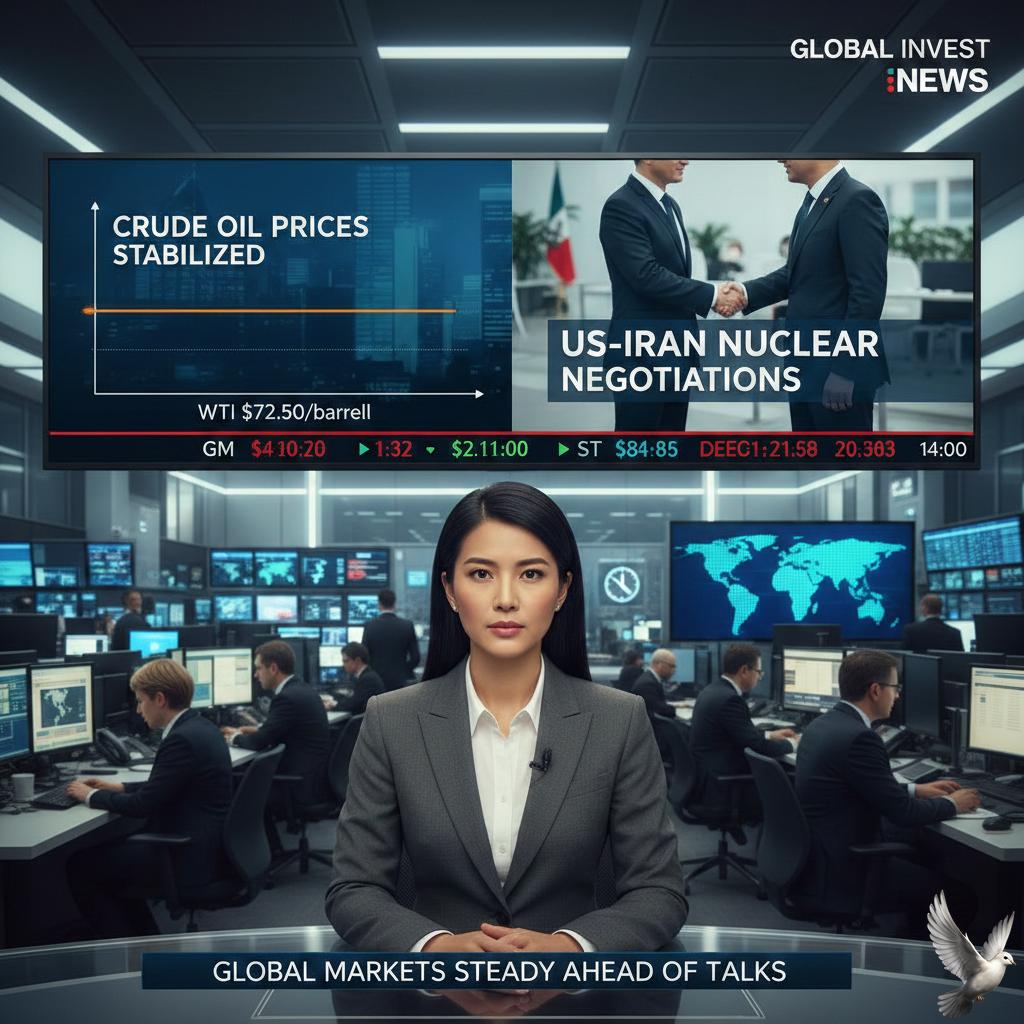
Crude Oil Prices Stabilize Before US-Iran Nuclear Negotiations
Crude oil prices have maintained a steady position as of Monday, February 16, 2026. This stability follows a period of volatility where benchmarks recorded their first consecutive weekly declines of the year. Market participants are currently balancing persistent geopolitical friction against a projected global supply surplus.
**Benchmark Performance**
West Texas Intermediate (WTI) is currently trading near **$62.85** per barrel. This marks a significant consolidation after falling from the **$65** level seen earlier in the month.
Brent crude is hovering around **$67.70** per barrel. While prices touched highs near **$70** in January due to supply concerns, they have since moderated as immediate fears of military escalation eased.
**Geopolitical Landscape**
Washington and Tehran are entering a critical phase of diplomatic engagement. Indirect talks in Oman have signaled a preference for a negotiated settlement over military action, which has stripped some of the "war premium" from current pricing.
Despite the focus on diplomacy, the regional environment remains tense. The United States has recently deployed a second aircraft carrier to the Middle East, maintaining a visible military presence. Analysts suggest that a sustained break above **$66** for WTI would require a fresh escalation, while continued de-escalation could see prices retreat toward the **$60** mark.
**OPEC+ Strategy**
The OPEC+ alliance is actively debating a production increase scheduled for April. Key members, including Saudi Arabia and the UAE, are looking to recover market share and accommodate anticipated summer demand.
A formal decision is expected at the upcoming meeting on March 1. Some members argue that current fears of oversupply are exaggerated, while others remain cautious due to a massive global inventory build. Reports indicate that global stocks grew by **477 million** barrels in 2025—the fastest pace since the 2020 pandemic.
**Demand and Supply Outlook**
The International Energy Agency (IEA) has revised its 2026 demand growth forecast downward to **850,000** barrels per day. Economic uncertainty and higher price points earlier in the year have weighed on consumption prospects.
Global oil supply is projected to rise by **2.4 million** barrels per day in 2026. This growth is expected to be evenly split between OPEC+ and non-OPEC producers. With supply significantly outpacing demand, the market is facing a potential surplus of **3.7 million** barrels per day for the year, which continues to act as a ceiling for price rallies.