Factors Influencing Foreign Institutional Investment Trends in India: Outflow Drivers and Recovery Outlook
Indian equity markets are navigating a complex phase where record domestic inflows act as a vital floor against external volatility. As of February 24, 2026, the Nifty 50 is trading near the 25,480 level, reflecting a cautious sentiment following a 0.9% dip in early session trade. The Sensex is mirroring this trend, currently positioned around 82,480 points.
The market remains in a delicate holding pattern as it seeks a definitive end to the earnings downgrade cycle. While valuations have corrected from peak levels of 25x forward earnings to approximately 20x, they remain elevated relative to historical averages. Investors are closely monitoring the shift toward FY28 projections, which are expected to drive the next major valuation reset.
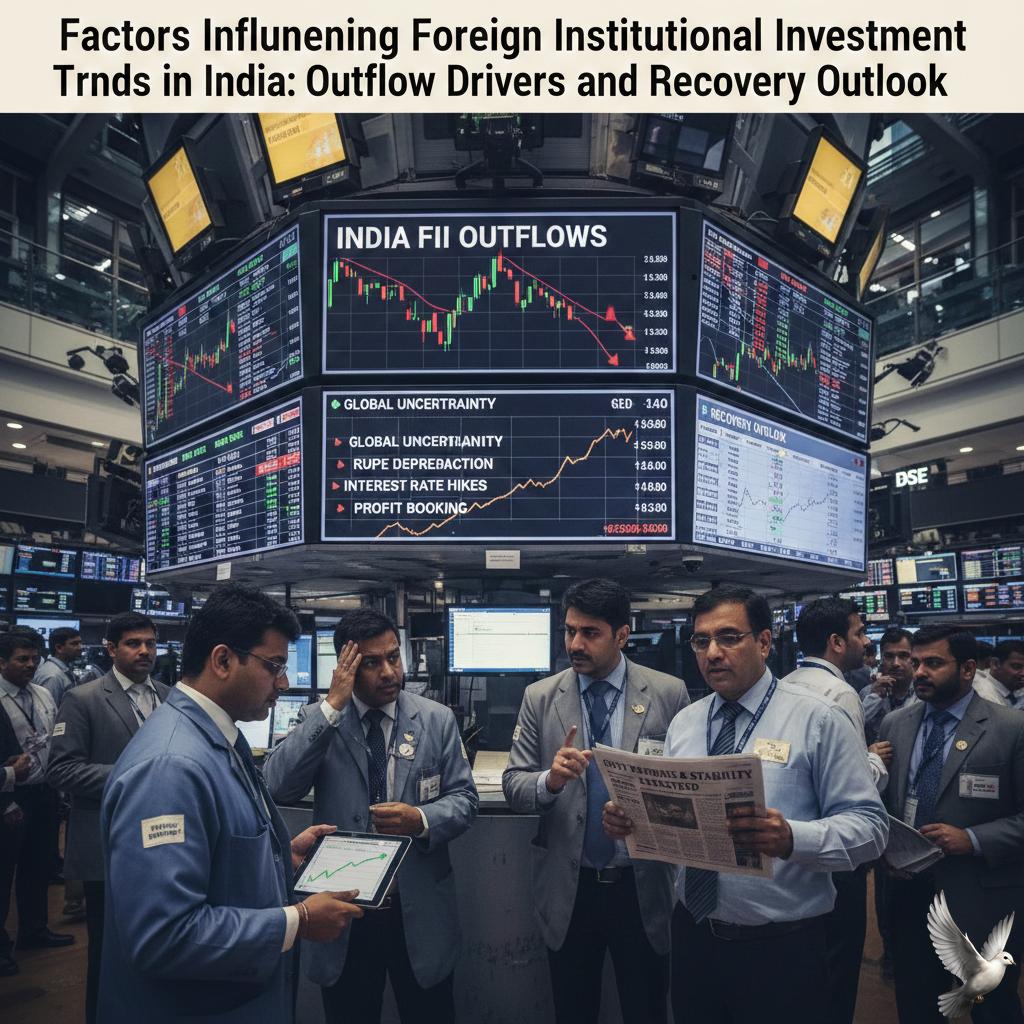
Foreign Institutional Investor (FII) activity has shown signs of tactical stabilization. After record annual outflows of 18 billion USD in the previous year, February 2026 has seen a tentative return of foreign capital. Most recently, FIIs recorded a net purchase of 3,483 crore INR in a single session, signaling a potential shift as global interest rates begin to trend lower.
Domestic Institutional Investors (DIIs) continue to provide the primary cushion for the market. Strong SIP contributions and insurance flows have created a persistent demand for equities, often offsetting foreign selling pressure. However, these steady inflows have also slowed the pace of price corrections, keeping multiples higher than some analysts anticipated for this stage of the cycle.
Sector performance is currently diverging. Financials remain a key anchor, estimated to contribute 46% of incremental index earnings growth through 2028. Conversely, the IT sector is under pressure due to global shifts in technology spending and local currency fluctuations, with major players like Infosys and TCS seeing recent pullbacks.
The broader macroeconomic environment is supportive, with India’s GDP growth projected at 7.5% for the current fiscal year. Inflation has moderated significantly, averaging near 2.1%, which has allowed the Reserve Bank of India to maintain an accommodative stance after cumulative rate cuts of 125 basis points.
Market participants are now focusing on the roll-forward to FY28 earnings and the potential for a business cycle turn. A sustainable upward move will likely require corporate profit growth to outpace nominal GDP, providing the fundamental justification for current market premiums.
[India Market Strategy 2026](https://www.youtube.com/watch?v=ML6czGvdp9Y)
This video provides an expert analysis of the latest January market recap and the factors influencing Nifty and Sensex trends for 2026.
http://googleusercontent.com/youtube_content/0