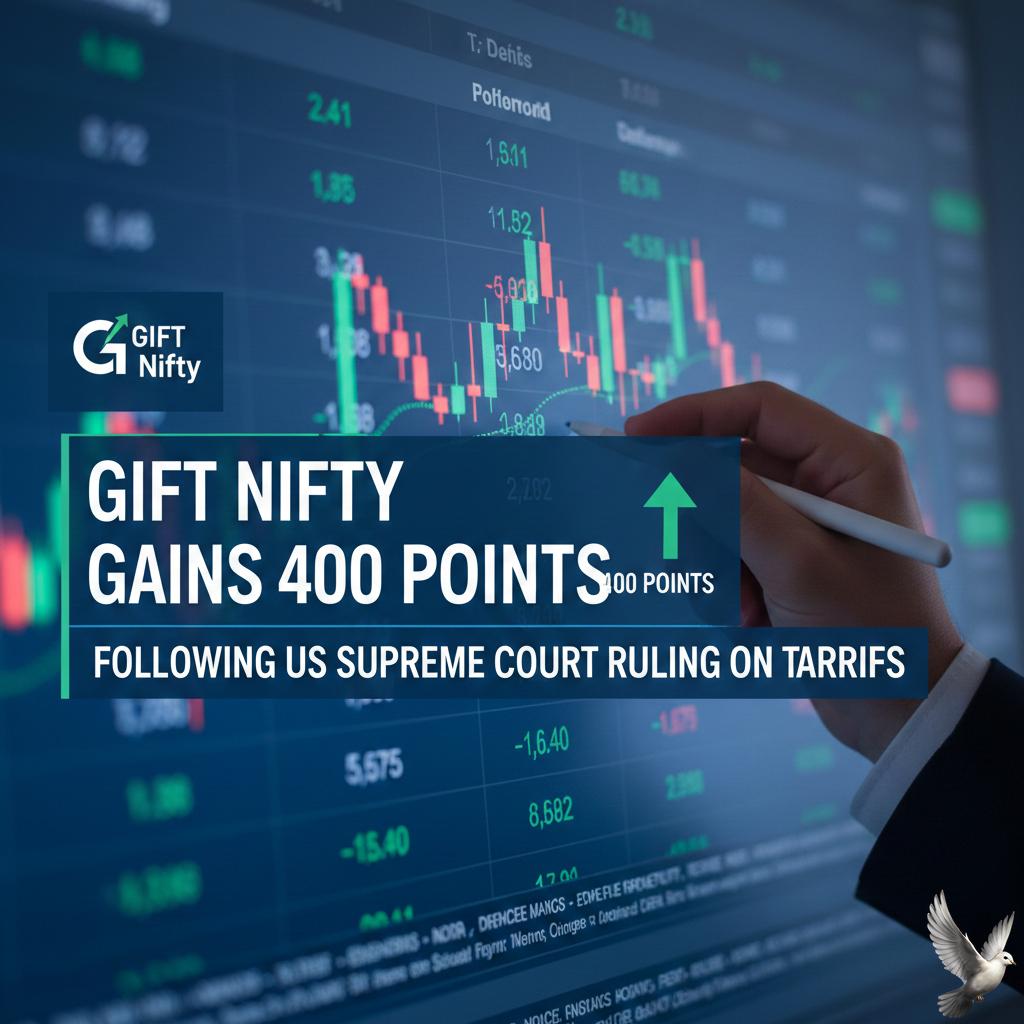
Gift Nifty Gains 400 Points Following US Supreme Court Ruling on Tariffs
A landmark ruling by the US Supreme Court has dismantled the broad-based global tariffs imposed by the Trump administration. In a 6-3 decision on February 20, 2026, the court ruled that the use of the International Emergency Economic Powers Act (IEEPA) to implement sweeping trade duties was unlawful. The court clarified that the power to levy taxes and tariffs during peacetime rests solely with Congress, not the executive branch.
Global markets reacted immediately with a sharp relief rally. The Gift Nifty surged nearly 400 points from its daily lows, reclaiming levels above 25,700. This movement reflects a significant shift in investor sentiment as the legal basis for "Liberation Day" tariffs—which included a 10% baseline duty on all imports—effectively collapsed.
For India, the ruling provides a critical competitive boost. Before this decision, Indian exporters were facing total tariffs as high as 50% in 2025. While recent bilateral negotiations had already seen the removal of a 25% penal tariff related to energy trade, an 18% reciprocal tariff was still pending on major sectors. The court's decision effectively voids these broad reciprocal duties, freeing approximately 55% of India's exports to the US from the 18% burden.
The ruling creates a potential path for billions in tariff refunds. Estimates suggest the US government collected over $175 billion in revenue from these now-invalidated duties. While sector-specific tariffs under Section 232—covering steel and aluminum—remain in place, the broader removal of emergency duties eases pressure on Indian textiles, leather, and machinery.
Market volatility has cooled as the "trade war" premium begins to dissipate. Investors are now pivoting toward the upcoming interim trade agreement, which may be renegotiated to reflect the new legal landscape. With the Gift Nifty signaling a strong positive opening for domestic indices, the focus shifts to how the administration will adapt to these strict constitutional limits on trade policy.
This reset in trade dynamics arrives at a vital time for the Indian IT and pharmaceutical sectors, which have struggled with global policy uncertainty. By removing the threat of unilateral executive action, the ruling offers a more stable and predictable environment for international commerce and long-term capital flows.