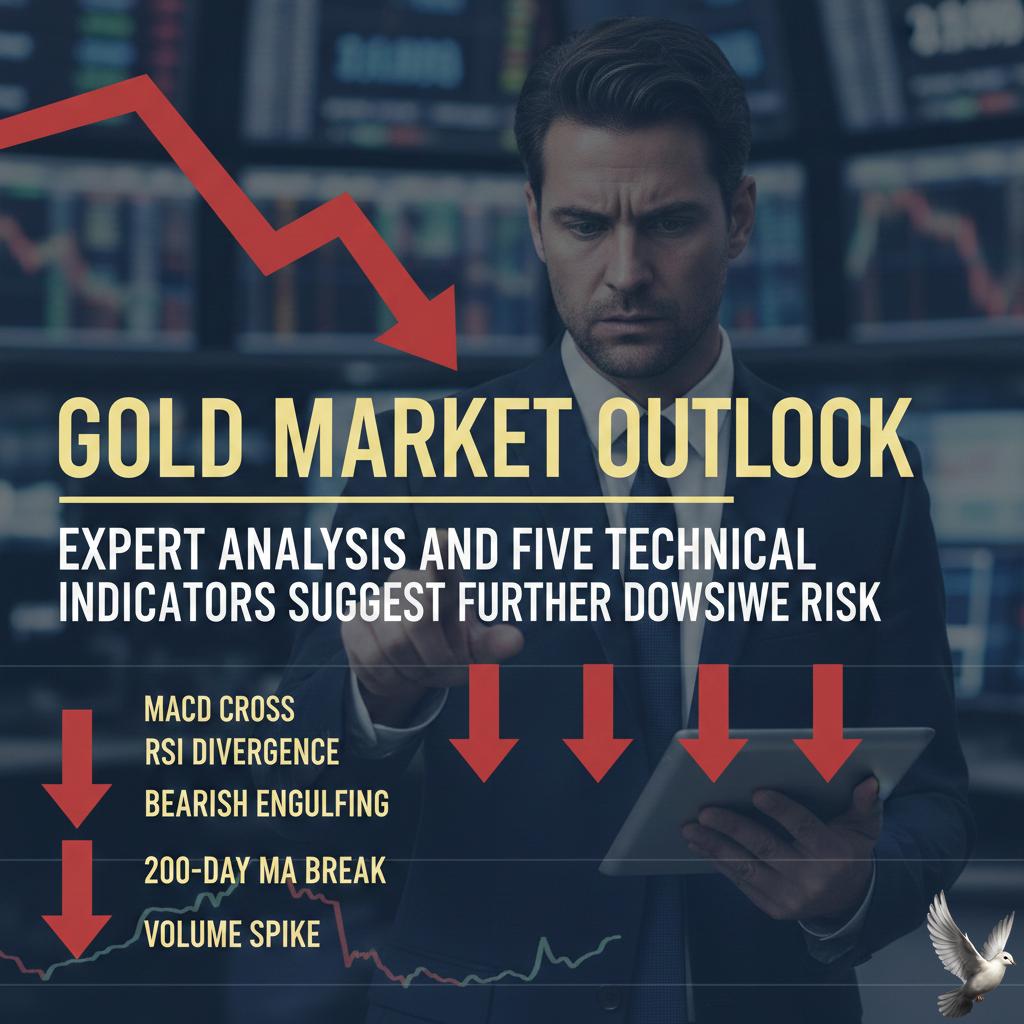
Gold Market Outlook: Expert Analysis and Five Technical Indicators Suggest Further Downside Risk
Market Brief: Gold Price Consolidation
Gold prices on the **Multi Commodity Exchange (MCX)** witnessed a sharp correction, dropping by nearly **Rs 1,800** intraday during recent sessions. This retreat follows a historic rally that saw the metal peak near **Rs 1,80,779** per 10 grams in late January. As of February 16, 2026, the market has entered a phase of quiet consolidation, with prices for **24K gold** hovering around **Rs 1,57,890** per 10 grams.
Global and Domestic Indicators
The primary driver of the current pullback is a firmer **US Dollar Index**, which has regained strength following hawkish signals from the Federal Reserve. A stronger dollar makes bullion more expensive for international buyers, triggering widespread profit-booking. In the international spot market, gold has retreated from record highs to trade near **$5,020** per ounce.
Domestic sentiment remains cautious as technical indicators signal limited immediate upside. While the metal has managed to hold above the psychological floor of **Rs 1,55,000**, the lack of fresh catalysts is keeping the market in a tight range.
Key Levels and Strategy
Analysts are currently recommending a **sell-on-rise** strategy as the metal faces significant resistance near the **Rs 1,59,400** mark.
* **Immediate Support:** Rs 154,400 – Rs 153,150
* **Key Resistance:** Rs 156,800 – Rs 158,200
* **Critical Demand Zone:** Rs 151,900
If gold fails to sustain its current base, a decisive breakdown below **Rs 1,51,900** could open the doors for a deeper correction toward the **Rs 1,45,000** level.
Market Outlook
The "de-dollarization" narrative that fueled the January surge is facing new headwinds. Reports suggesting a potential shift in **Russian trade policy** toward US Dollar settlements have dampened the aggressive safe-haven bid. Furthermore, the **US January CPI** data, which showed inflation slowing to **2.4%**, has reduced the urgency for immediate interest rate cuts, further supporting the dollar at the expense of non-yielding assets like gold.
Despite the current volatility, long-term support remains from central bank diversification and geopolitical tensions in the Middle East. However, for the short term, the market is expected to remain range-bound with a downward bias. Investors are closely monitoring upcoming **US GDP** and **PCE inflation** data for the next directional trigger.