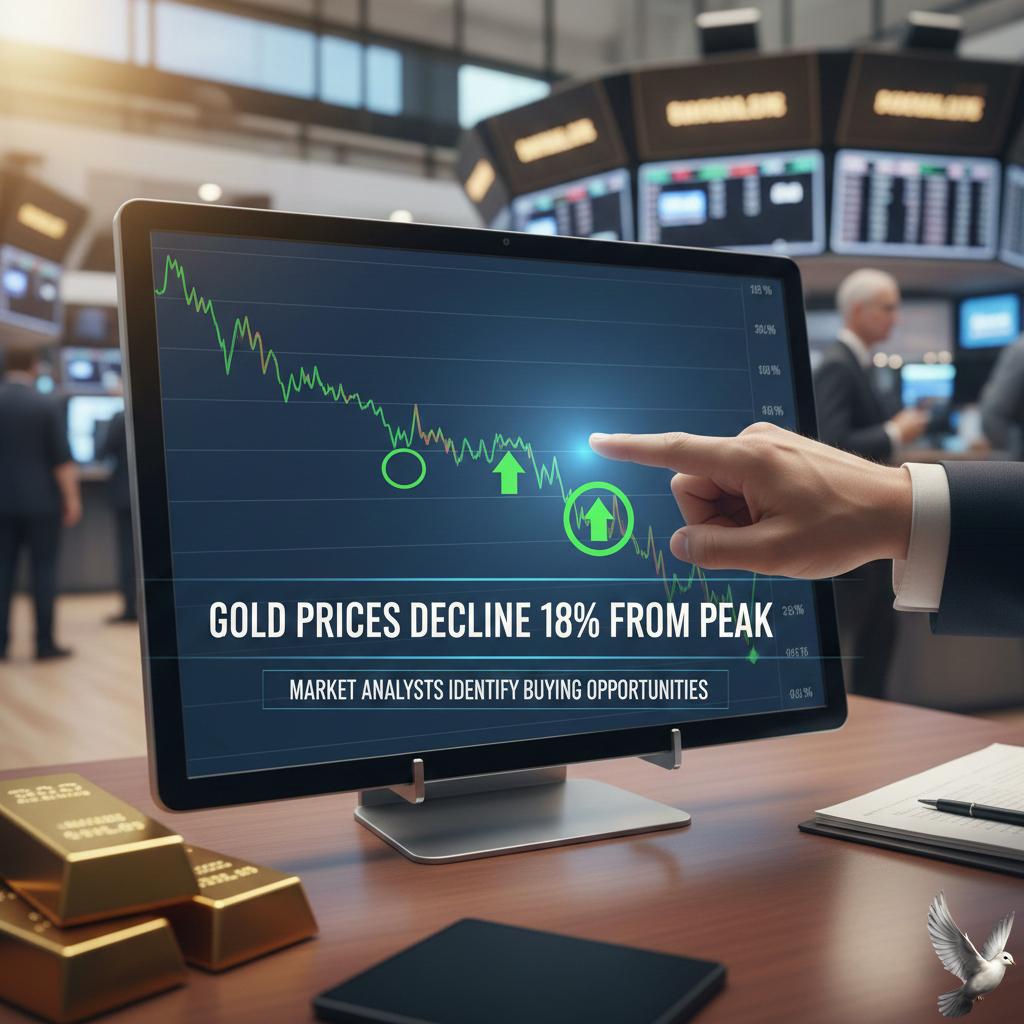
Gold Prices Decline 18% From Peak as Market Analysts Identify Buying Opportunities
The gold market is currently navigating a period of intense volatility as it enters the second week of February 2026. Following a historic rally in late January that saw prices reach unprecedented heights, the metal has undergone a significant "price discovery" phase. This shift was triggered by a combination of hawkish shifts in U.S. monetary policy expectations and a technical leverage reset across global exchanges.
On the Multi Commodity Exchange (MCX), April gold futures are trading near 1,57,540 per 10 grams, marking a steady recovery from the sharp corrections seen earlier in the month. While prices remain approximately 18% below the January peak of 1,93,096, the current momentum suggests strong buying interest at lower levels. Domestic retail rates for 24K gold have stabilized around 15,884 per gram, reflecting a cautious but firm rebound in major Indian cities.
International markets are mirroring this recovery. On the COMEX, gold for April delivery has surged past the psychological 5,000 mark, recently trading around 5,061.49 per ounce. This represents an intraday gain of approximately 81 or 1.64%. The upward move is largely supported by a weakening U.S. Dollar Index and a renewed focus on safe-haven assets amidst geopolitical uncertainties and shifting leadership at the Federal Reserve.
Several key events have defined the recent market structure. The nomination of Kevin Warsh as the next Fed Chair initially sent shockwaves through the commodities sector, as traders braced for a tougher stance on inflation. Simultaneously, the Chicago Mercantile Exchange (CME) increased margin requirements for gold and silver, forcing a massive liquidation of leveraged positions. This technical "squeeze" accelerated the pullback from record highs but has since cleared the path for more stable, fundamental-driven buying.
Central bank activity remains a primary pillar of support for the bullion market. Estimates suggest that official sector demand will continue to average nearly 585 tonnes per quarter throughout 2026. This sustained institutional interest, combined with structural silver deficits driven by AI and solar industries, provides a long-term constructive outlook for precious metals despite the current "paper market" volatility.
Investors are now closely monitoring upcoming U.S. economic indicators, including delayed jobs and inflation data, which will guide the next phase of interest rate expectations. With the Chinese Lunar New Year approaching in mid-February, market participants expect a period of "thin" liquidity, which could lead to unpredictable price action as Chinese speculative capital temporarily recedes.
Technically, the market is looking for a decisive close above the 1,60,000 level on the MCX to confirm a full reversal of the recent downtrend. Support remains robust in the 1,45,000 to 1,50,000 range, where long-term investors have shown a consistent appetite for physical accumulation. As the corrective phase potentially concludes, the broader bull trend is once again reasserting its dominance in the global financial landscape.