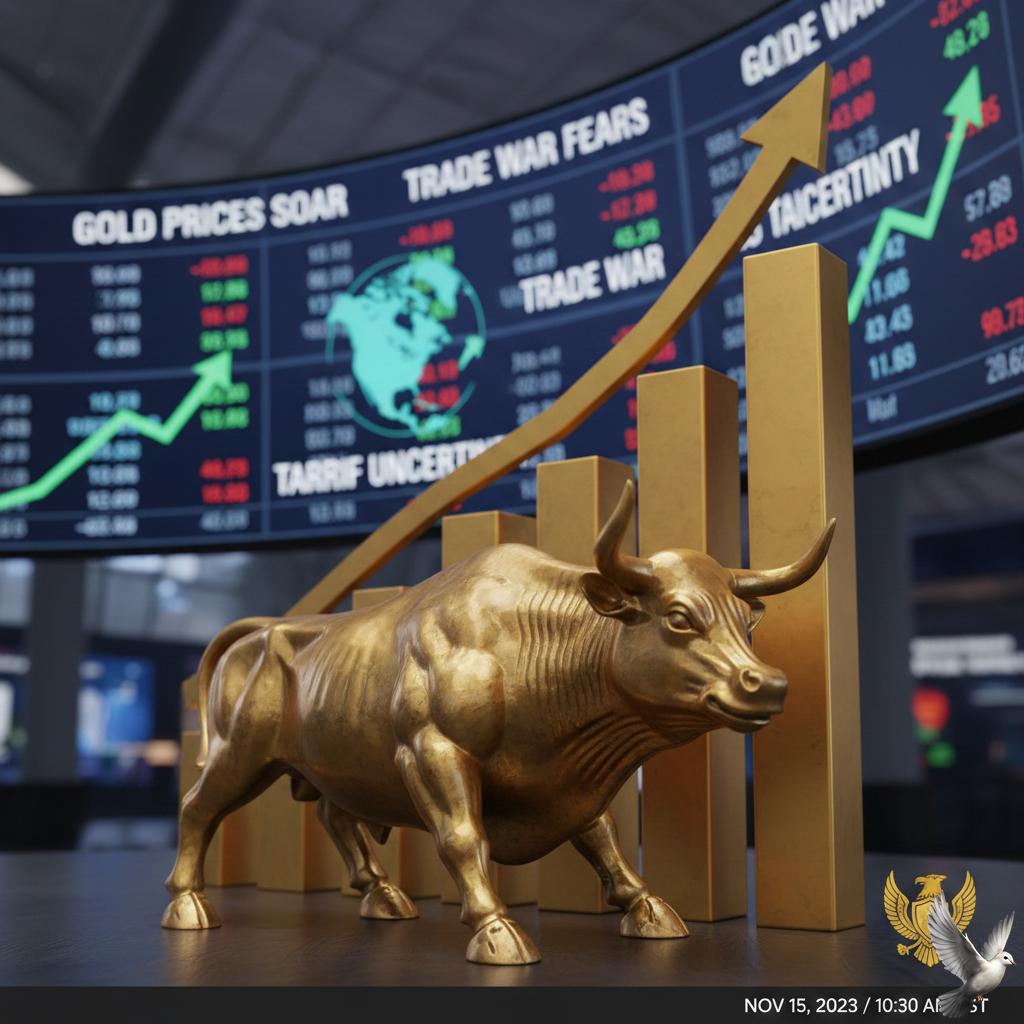
Gold Prices Increase Amid Uncertainty Regarding US Trade Policy and Tariffs
Market Brief: Gold and Global Trade Reset
**Gold prices** are maintaining a powerful recovery as of **February 23, 2026**, with bullion trading near **$5,144 per ounce**. This follows a recent surge that saw prices climb as much as **1.3%** to touch levels above **$5,170**. In domestic markets, **24K gold** is holding steady at approximately **₹15,942 per gram**, consolidating after a significant four-day rally.
Legal Shift in Trade Policy
The primary driver of this market movement is the landmark **6-3 decision** by the **U.S. Supreme Court** on **February 20, 2026**. The court ruled that the administration exceeded its authority by using emergency powers to impose broad global tariffs. This decision invalidated the **10% baseline** and various reciprocal duties that had been in place since early **2025**.
In immediate response, a new **10% global tariff** was announced under different legal provisions, while a proposal for a **15% blanket tariff** remains on the table. This legal "reset" has created a wave of uncertainty across international trade corridors.
Currency and Trade Impact
The **U.S. Dollar Index** dropped **0.3%** following the ruling, as investors priced in a higher risk premium for American assets. This weakening of the greenback has made gold more affordable for international buyers, accelerating its momentum.
Global trade deals are currently in a state of flux:
* **European Union:** Trade officials have proposed delaying the ratification of new agreements with Washington until legal clarity is restored.
* **India:** Officials have postponed high-level trade missions to the U.S. as they reassess the impact of the new **10% global levy**.
* **Japan:** Market sentiment remains volatile as lawmakers describe the sudden shift in tariff authority as a significant disruption to established negotiations.
Outlook for Bullion
Gold is increasingly viewed as a critical hedge against this systemic instability. Analysts point to a combination of disappointing **Q4 GDP** data (growing at just **1.4%**) and persistent geopolitical tensions as secondary supports for the metal.
While the market is currently in a consolidation phase near recent highs, the structural demand from central banks and the shift away from dollar-denominated assets suggest the recovery has significant underlying strength. The metal remains within striking distance of its **February high** of **$5,600**, supported by a broader "debasement trade" as global debt levels continue to climb.