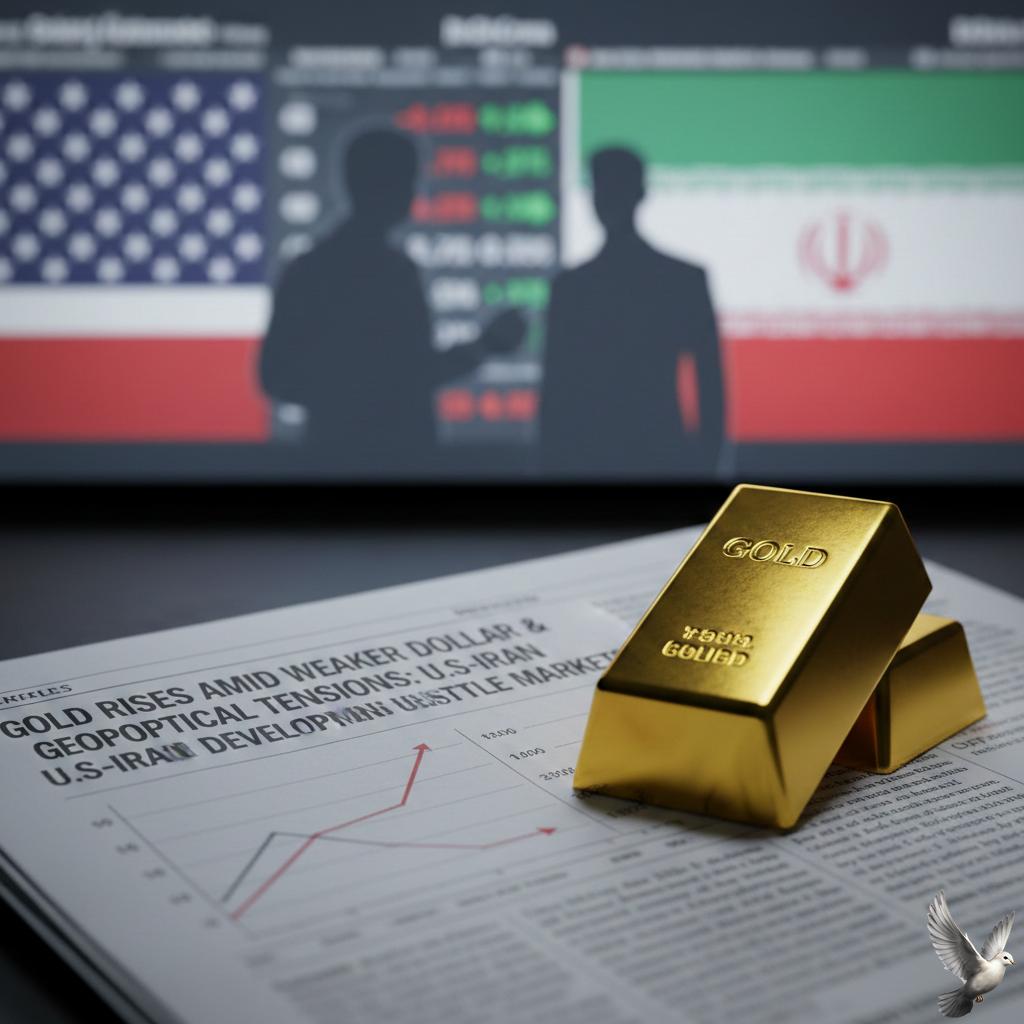
Gold Rises Amid Weaker Dollar and Geopolitical Developments Between U.S. and Iran
Gold prices hit fresh peaks on Thursday, February 26, 2026, as a confluence of geopolitical risks and trade policy shifts intensified demand for the precious metal.
Spot gold climbed over 1% to reach **$5,202.28 per ounce**. In domestic markets, prices also surged, with 24-carat gold in Delhi and other major metros trading near **₹162,050 per 10 grams**, marking a new high for the month.
The primary catalyst for this rally is the recent implementation of a **10% global import tariff** by the U.S. administration. Reports indicate the White House is exploring a further increase to **15%**, fueling fears of sustained global inflation and supply chain disruptions.
Geopolitical tensions in the Middle East have provided additional support. Investors are closely monitoring the third round of nuclear talks in Geneva between the U.S. and Iran. The threat of regional escalation and potential strikes on neighboring energy infrastructure have solidified gold’s status as a premier safe-haven asset.
Market liquidity has also been influenced by the retreat of the U.S. Dollar Index (DXY). A softer dollar makes greenback-priced bullion more affordable for international buyers, further driving the upward price action.
In the labor market, investors are shifting focus to the latest U.S. initial jobless claims data. Previous reports showed claims at **206,000**, and any significant deviation from expectations today could alter the Federal Reserve’s interest rate outlook for the remainder of the year.
Analysts have notably revised their long-term targets upward. Some major institutions now project gold could reach **$6,000 to $6,300 per ounce** within the next 12 months, citing structural shifts in central bank reserves and persistent fiscal deficits.
Silver has mirrored this bullish sentiment, with spot prices rising 3% to test the **$90 per ounce** level. In India, silver futures have consolidated near **₹295,000 per kg**, driven by both industrial demand and its role as a secondary hedge against policy uncertainty.