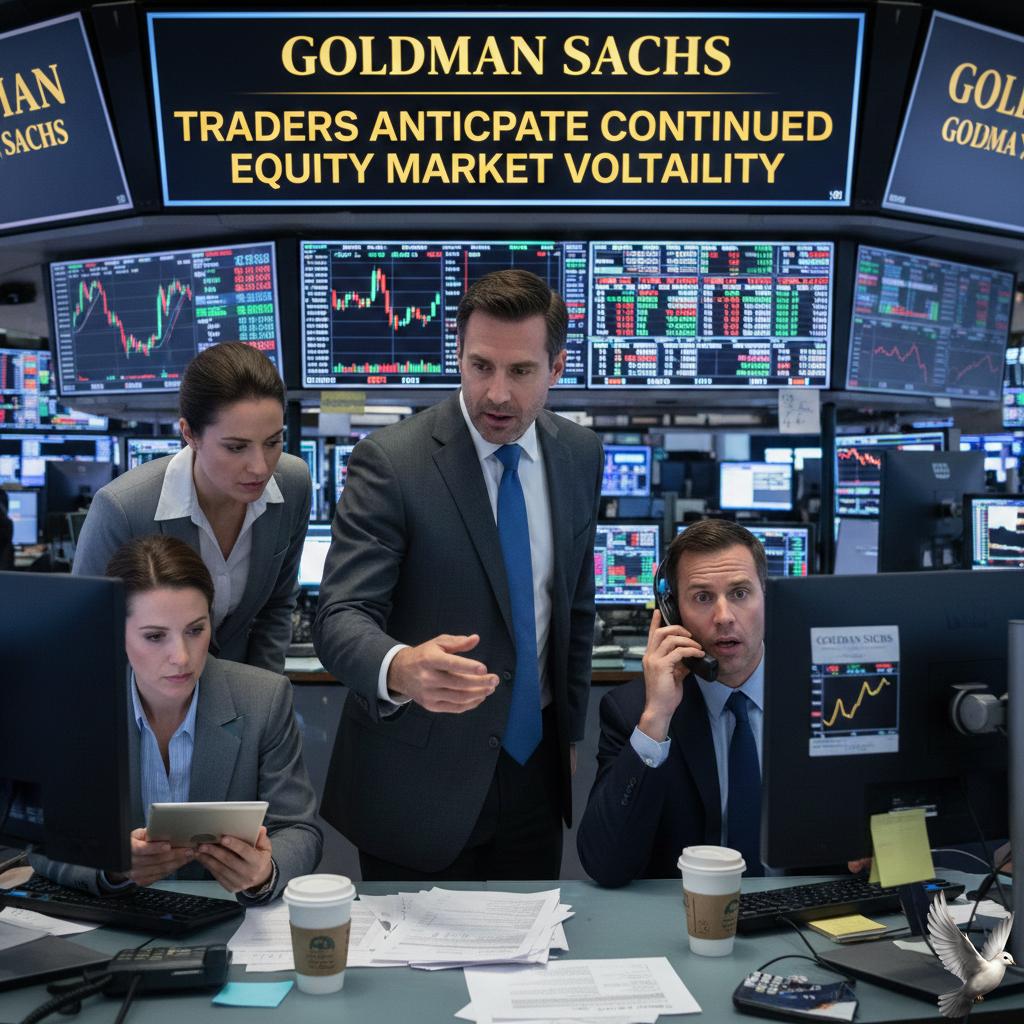
Goldman Sachs Traders Anticipate Continued Equity Market Volatility
US equity markets are navigating a period of intense technical volatility as systematic selling pressure collides with record-breaking price levels. Despite the S&P 500 recently crossing the historic 7,000 threshold, the market remains vulnerable to large-scale liquidations from algorithmic trend-followers.
Goldman Sachs has identified a significant shift in the behavior of Commodity Trading Advisers (CTAs). These funds, which trade based on price momentum rather than company fundamentals, have already triggered short-term sell signals. Trading desk data suggests that even if the market remains flat this week, these strategies are projected to unload approximately $15.4 billion in US equities. In a rising market, selling could still reach $8.7 billion, while a renewed decline could spark a massive $33 billion outflow within days.
A critical technical floor has been established at 6,707 for the S&P 500. A breach below this level is expected to unlock up to $80 billion in additional systematic selling over the next month. This algorithmic pressure comes at a time when investor stress is elevated. The market "Panic Index" recently reached 9.22, signaling a state of "max fear" during last week’s sessions, though a "tsunami" rally on February 6 helped the Dow Jones Industrial Average surge nearly 1,000 points to a new all-time high of 49,871.
The broader economic backdrop for 2026 remains a study in contrasts. Goldman Sachs analysts project a "sturdy" global GDP growth of 2.8%, with the US expected to outperform at 2.6%. Earnings resilience is a primary driver, with the S&P 500 forecast to reach 7,600 by year-end, representing a 12% total return. However, professional traders are closely monitoring a "soft" labor market, with the unemployment rate holding at 4.4% and job creation showing signs of cooling.
Inflation remains a persistent hurdle, with the PCE price index sitting at 2.9%, well above the Federal Reserve's 2.0% target. This has led to a stabilization of interest rate expectations, with a terminal rate of 3.0% to 3.25% now considered a reasonable baseline. While the AI-driven tech trade continues to underpin growth, market leadership is broadening into cyclical sectors such as Energy, Materials, and Industrials, which outperformed in early February.
Investors are now caught between robust corporate earnings and the threat of forced unwinds in leveraged positions. While the long-term outlook remains constructive, the immediate path is defined by high-frequency volatility and the potential for multi-billion dollar algorithmic exits.