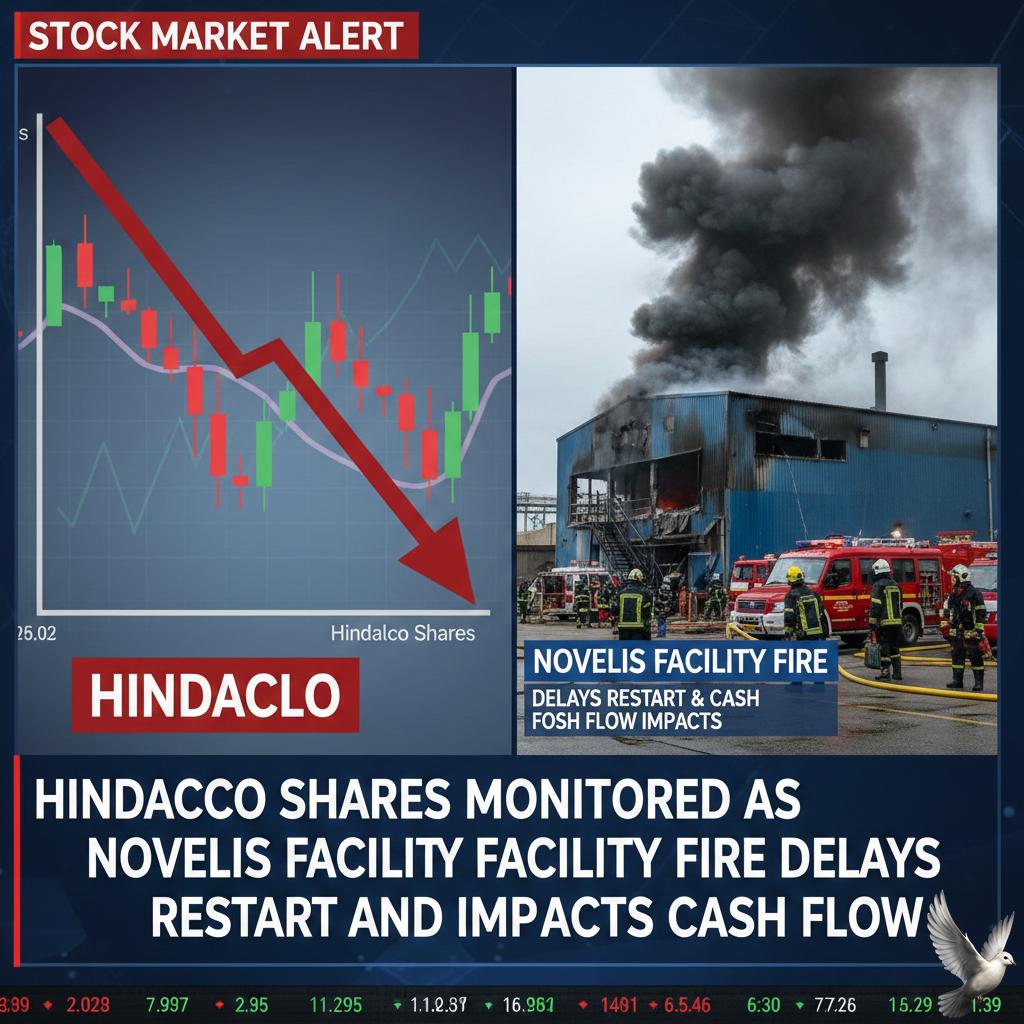
Hindalco Shares Monitored as Novelis Facility Fire Delays Restart and Impacts Cash Flow
Hindalco Industries shares are under intensified scrutiny as of February 12, 2026, following critical operational updates from its US subsidiary, Novelis. The company confirmed a significant delay in the restart of its Oswego hot mill in New York after two major fire incidents in late 2025.
The financial impact of these disruptions is now estimated to hit free cash flow by $1.3 billion to $1.6 billion (approximately ₹14,400 crore). While total liquidity remains stable at $2.6 billion, the group’s net leverage ratio has climbed to 3.7x. To stabilize the subsidiary’s balance sheet, Hindalco provided a strategic equity infusion of $750 million in December.
Novelis reported a net loss of $160 million for the third quarter of fiscal year 2026, a sharp reversal from the $110 million profit recorded in the same period last year. Total shipments fell by 11% to 809 kilotonnes, largely due to the 72-kilotonne production shortfall at the Oswego facility. Despite these headwinds, operational efficiency remains high, with Adjusted EBITDA per tonne rising 6% year-on-year to $430.
The recovery timeline for the Oswego hot mill has been pushed to late Q2 of the 2026 calendar year. Management expects that 70% to 80% of the financial losses related to property damage and business interruption will be recoverable through insurance. However, the immediate cash flow pressure remains a primary concern for investors.
In the broader market, Hindalco’s stock price has shown resilience despite these updates, trading near ₹966 as of the latest close. The metal sector is currently benefiting from multi-year highs in global aluminum prices, which reached approximately $3,130 per tonne in January 2026. This price surge has helped offset some of the domestic concerns, with analysts highlighting a potential 20% upside in future earnings if aluminum prices remain elevated.
Operational focus is also shifting to the massive $5 billion greenfield project in Bay Minette, Alabama. Commissioning of the cold mill at this site is scheduled to begin in March 2026. This facility is expected to eventually deliver 600 kilotonnes of capacity, positioning the company to capture long-term growth in the beverage packaging and aerospace sectors once current disruptions are resolved.