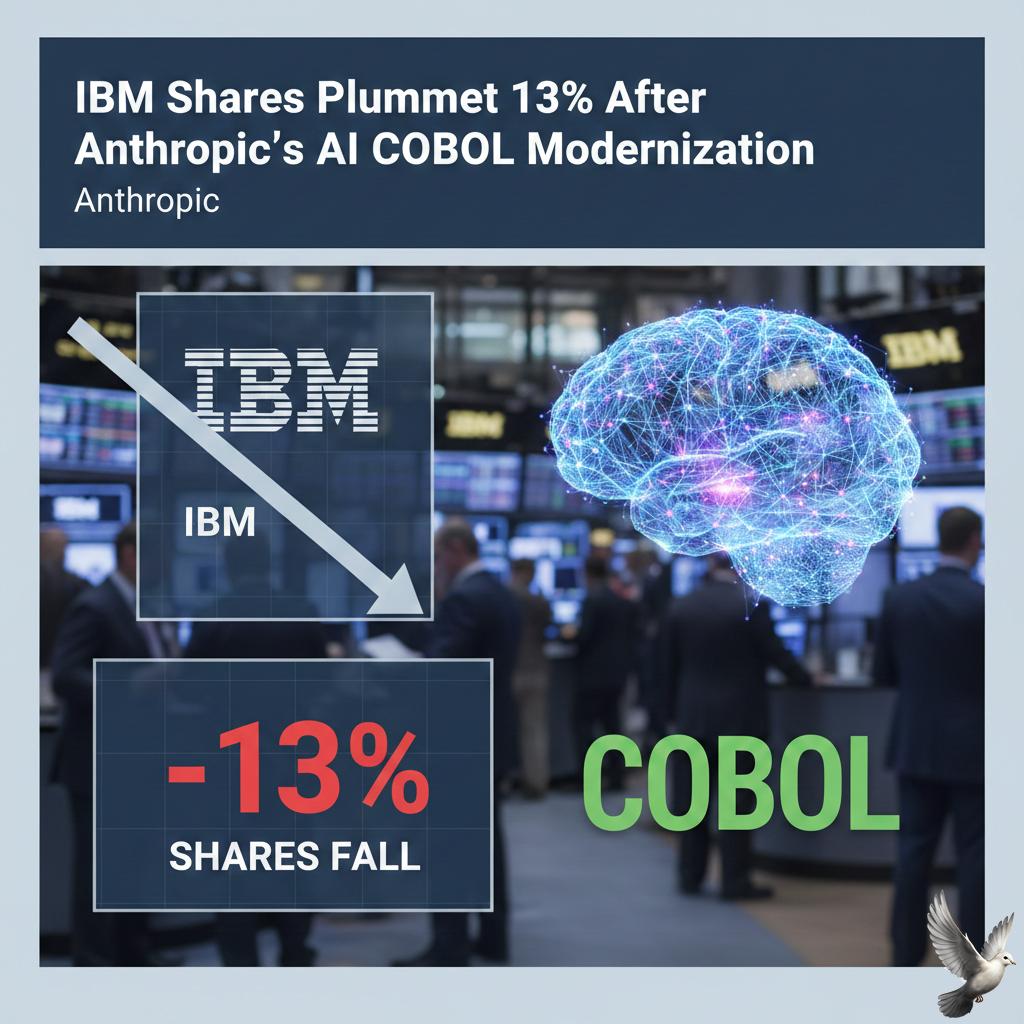
IBM Shares Fall 13% Following Anthropic Announcement on AI COBOL Modernization
IBM shares experienced a historic collapse on February 23, 2026, plunging 13.15% in a single session. The sell-off, which wiped out over $31 billion in market value, represents the stock's steepest one-day decline since October 2000.
This dramatic move followed an announcement from AI startup Anthropic regarding its new "Claude Code" tool. The startup revealed that its latest AI can effectively modernize COBOL, the legacy programming language that has served as a defensive moat for IBM’s mainframe business for decades.
The market reaction stems from fears that AI is finally capable of automating the "investigative and analytical" work required to replace old systems. Traditionally, modernizing COBOL was considered too complex and expensive for most enterprises, keeping them locked into IBM's ecosystem.
Anthropic claims its AI can complete analysis in days that previously took human developers months. This threat strikes at the heart of IBM’s Infrastructure and Consulting segments, which recently reported a 67% surge in IBM Z mainframe revenue during the last quarter of 2025.
The disruption extended beyond IBM, triggering a broader sell-off in the IT services and cybersecurity sectors. Major players saw significant declines as investors reassessed the value of human-led software maintenance:
- CrowdStrike fell roughly 8%
- Cloudflare dropped 8%
- Okta tanked over 9%
- The Global X Cybersecurity ETF hit its lowest level since late 2023
Investor anxiety is focused on "AI cannibalization." While IBM recently reported a generative AI book of business exceeding $12.5 billion, the market is now questioning if this new growth can offset the potential loss of high-margin legacy maintenance revenue.
Despite the crash, some analysts suggest the reaction may be an overshoot. They note that while Claude Code can identify and fix over 500 high-risk vulnerabilities, enterprise-grade modernization still requires rigorous human oversight, regulatory compliance, and complex integration that cannot be fully automated overnight.
IBM entered 2026 with strong momentum, reporting a total annual revenue of $67.5 billion for 2025. However, the stock is now down roughly 27% month-to-date. The company's ability to defend its modernization funnel against increasingly capable AI agents remains the primary focus for Wall Street as the tech landscape shifts.