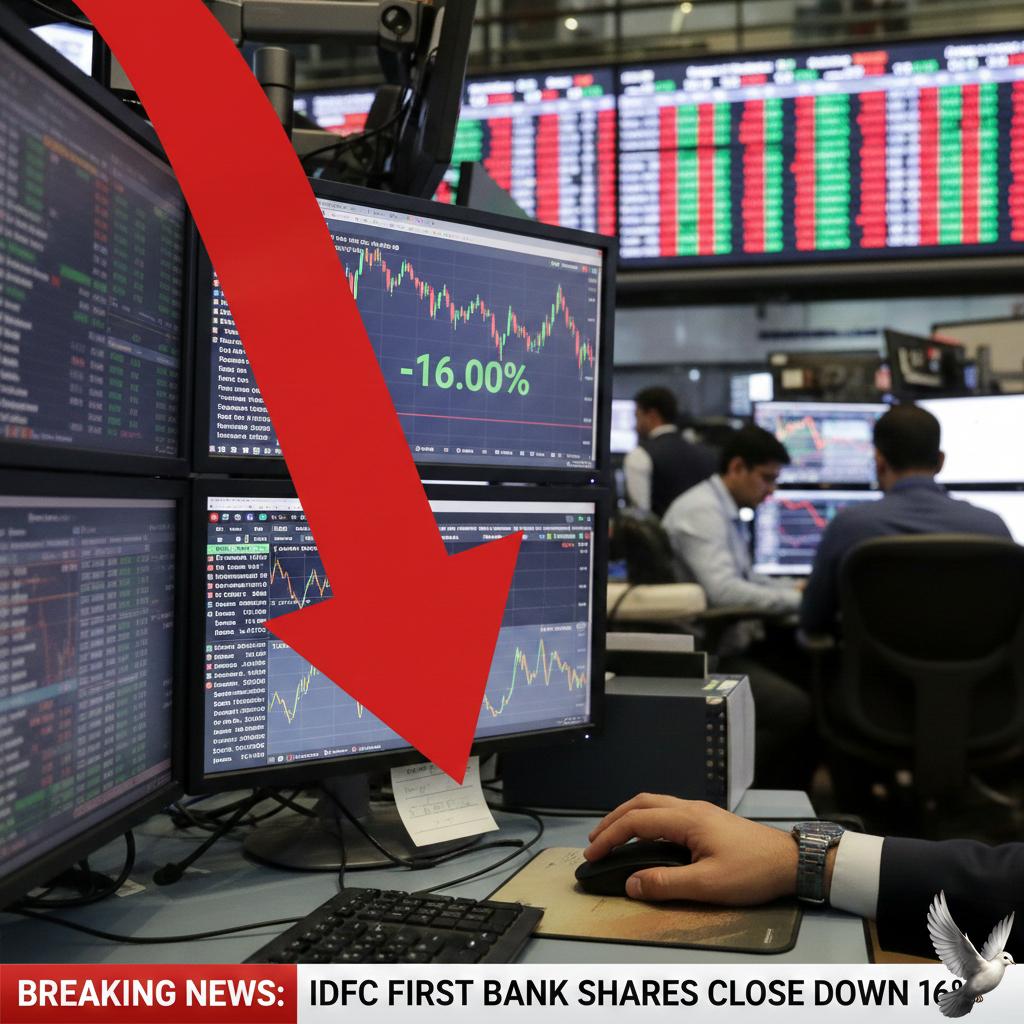
IDFC First Bank Shares Close Down 16%
IDFC First Bank shares experienced a historic collapse on Monday, February 23, 2026, marking the stock's steepest single-day decline since the pandemic onset in March 2020.
The sell-off was triggered by the disclosure of a **Rs 590-crore** fraud at the bank's Chandigarh branch. The incident involved unauthorized transactions within accounts linked to the Haryana state government.
Market Performance and Valuation
The stock plummeted as much as **20%** during intraday trading, eventually closing **16.1%** lower at **Rs 70.04**.
This correction wiped out approximately **Rs 14,438 crore** in market capitalization in a single session. Trading volume surged to over **55 crore shares** as investors reacted to the news, pushing the stock well below its 50-day and 100-day moving averages.
The scale of the fraud is particularly significant as it exceeds the bank's most recent quarterly net profit of **Rs 503 crore**.
Details of the Incident
The discrepancy was discovered when a Haryana government department requested to close its accounts and transfer funds. Bank officials noticed that the actual balances did not match the records provided by the government entities.
Preliminary reviews suggest the fraud was localized to specific government-linked accounts in Chandigarh and was facilitated by internal collusion between certain employees and external parties through forged physical checks.
Institutional and Regulatory Response
The Haryana government has taken immediate punitive action by de-empanelling IDFC First Bank and AU Small Finance Bank from state business. All state departments and public sector undertakings have been directed to close their accounts and migrate funds to authorized lenders.
In response, the bank management has:
* Suspended **four officials** suspected of involvement.
* Appointed **KPMG** to conduct an independent forensic audit, expected to conclude in 4–5 weeks.
* Filed formal police complaints and notified the Reserve Bank of India (RBI).
* Initiated "lien marking" on suspicious beneficiary accounts at other banks to facilitate fund recovery.
Sector Outlook
The Reserve Bank of India has issued a statement clarifying that the incident poses **no systemic risk** to the broader Indian banking financial system.
While the bank maintains it is well-capitalized with a Capital Adequacy Ratio of **16.22%**, analysts note that the fraud represents roughly **28%** of the bank's projected profit for the 2026 fiscal year. The long-term impact will depend on the success of fund recovery efforts and the findings of the forensic investigation.