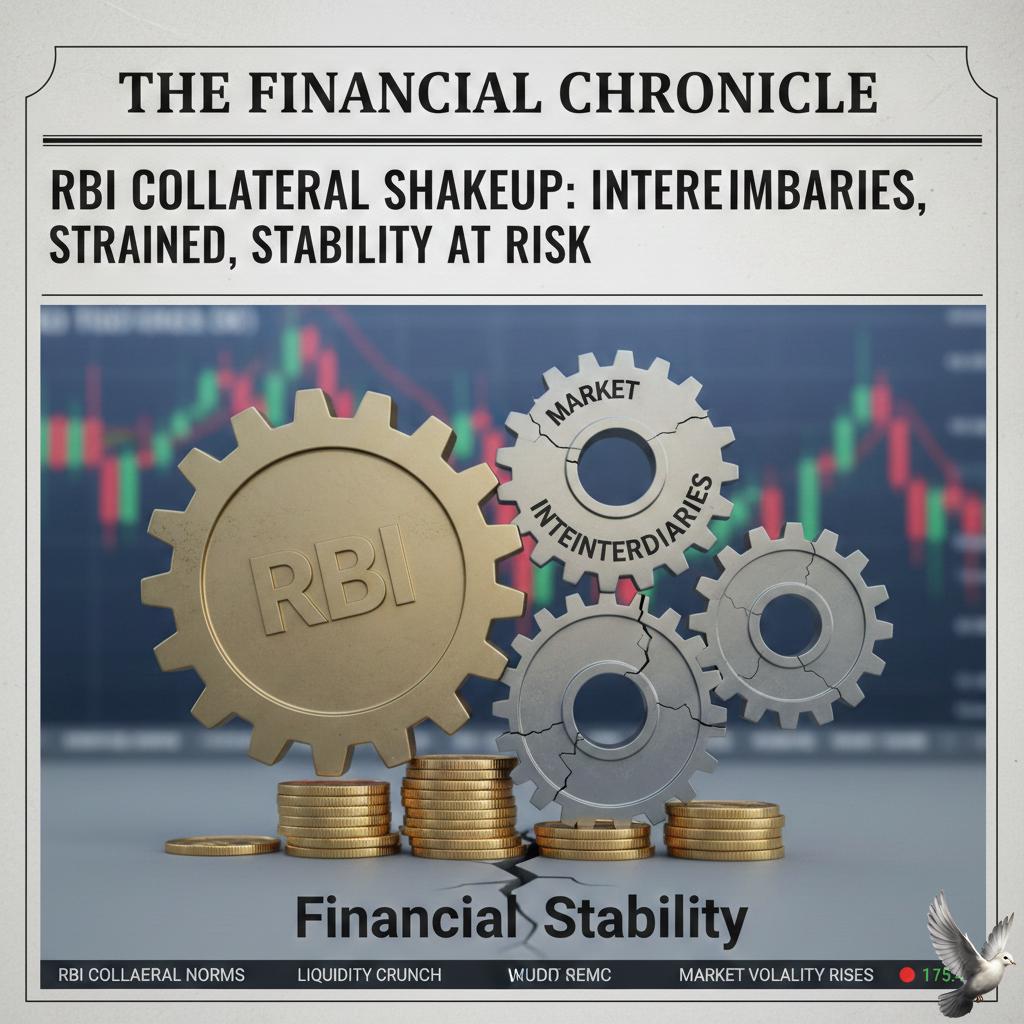
Impact of RBI Collateral Norms on Market Intermediaries and Financial Stability
India's capital markets are undergoing a fundamental transformation as regulators pivot toward long-term stability over short-term speculation. This shift is headlined by the Reserve Bank of India’s updated credit facility directions, set to take full effect on April 1, 2026.
The new framework introduces rigorous collateral standards for stockbrokers and financial intermediaries. Banks must now ensure all credit facilities are 100% secured by high-quality assets such as cash, government securities, or immovable property. The previous practice of using unsecured personal or corporate guarantees for bank guarantees has been entirely discontinued.
Under these rules, bank guarantees issued for exchanges must maintain at least 50% collateral support. Within this, a strict 25% cash reserve is mandatory. Furthermore, any equity shares used as collateral will face a minimum 40% haircut, significantly reducing the leverage available to brokers.
The regulator has also effectively banned banks from financing proprietary trading. While market-making and debt warehousing remain eligible for funding, the move aims to curb speculative volatility. Currently, proprietary trading accounts for nearly 50% of equity options turnover and 30% of cash market volumes, making this a critical structural change.
Despite these tightening measures, the broader market continues to show resilience. As of mid-February 2026, the Nifty 50 is trading above the 25,400 mark, while the Sensex remains near 82,700. Recent data highlights a maturing investor base, with monthly mutual fund SIP inflows hitting a record 31,000 crore rupees in January 2026.
Retail participation remains the backbone of this growth. Total demat accounts have surged past 21.6 crore, and unique mutual fund investors have reached 5.9 crore. Systematic Investment Plan assets now exceed 16.36 lakh crore rupees, representing more than 20% of the industry’s total assets.
Looking ahead, the RBI’s direct capital market exposure limit for banks is capped at 20% of Tier 1 capital, with an aggregate ceiling of 40%. These boundaries, combined with the new Securities Markets Code of 2025, are designed to protect the banking system from market shocks while fostering a disciplined investment culture across the country.