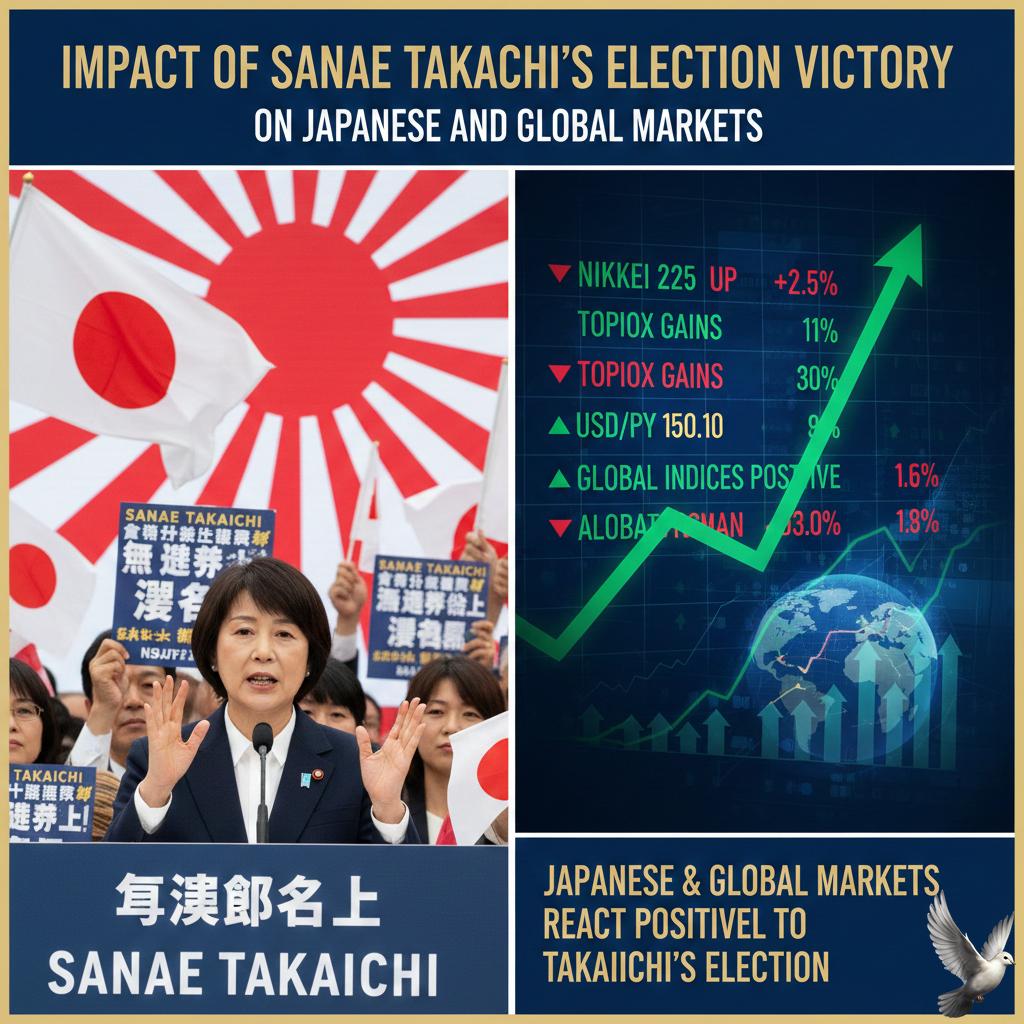
Impact of Sanae Takaichi’s Election Victory on Japanese and Global Markets
Sanae Takaichi’s landslide election victory on February 8, 2026, has triggered a historic rally in Japanese equities, with the Nikkei 225 surging past the 57,000 mark for the first time. The Liberal Democratic Party’s two-thirds majority—securing 316 of 465 seats—has provided a clear mandate for a "pro-growth" agenda, centering on expansionary fiscal spending and strategic investments in semiconductors, defense, and artificial intelligence.
On Monday, February 9, the Nikkei 225 closed at a record high of 56,363.94, a one-day gain of 3.9%. This rally reflects investor optimism regarding Takaichi’s proposed ¥21.3 trillion stimulus package and a potential two-year suspension of the 8% consumption tax on food. While these measures aim to boost domestic consumption and combat the rising cost of living, they have introduced significant volatility into the currency and debt markets.
The Japanese yen experienced sharp fluctuations following the results, initially weakening to a two-week low before stabilizing near 155.66 against the U.S. dollar. Traders are closely monitoring the "Takaichi trade," weighing the benefits of fiscal stimulus against the risks of a further sell-off in the yen, which continues to drive up import costs.
Bond markets remain a primary point of concern. Yields on 10-year Japanese Government Bonds (JGBs) climbed to 2.28% as of February 10, while 30-year yields reached 3.55%. Markets are pricing in the reality of Japan’s debt burden, which currently stands at more than twice its GDP. Analysts warn that if the administration pursues aggressive debt-fueled spending without clear funding sources, the resulting upward pressure on interest rates could threaten fiscal stability.
The Bank of Japan is navigating a delicate policy normalization phase. The central bank raised its policy rate to 0.75% in December 2025 and is expected to continue semi-annual hikes, potentially reaching 1.0% by July 2026. This shift toward higher rates is part of a broader move to achieve sustainable 2% inflation, though it complicates the government's ability to service its massive debt.
Market sentiment is currently split between the short-term boost to corporate earnings and the long-term sustainability of the nation's finances. While sectors like defense, machinery, and technology are seeing immediate gains, the persistent rise in JGB yields suggests that the market will continue to act as a check on the administration's fiscal ambitions.
[Japanese Market Update: Takaichi Victory Impact](https://www.youtube.com/watch?v=S8xWeDpUIjY)
This video provides an expert analysis of the recent selloff in the Japanese bond market and the implications of Prime Minister Takaichi's fiscal policies on future yields.
http://googleusercontent.com/youtube_content/0