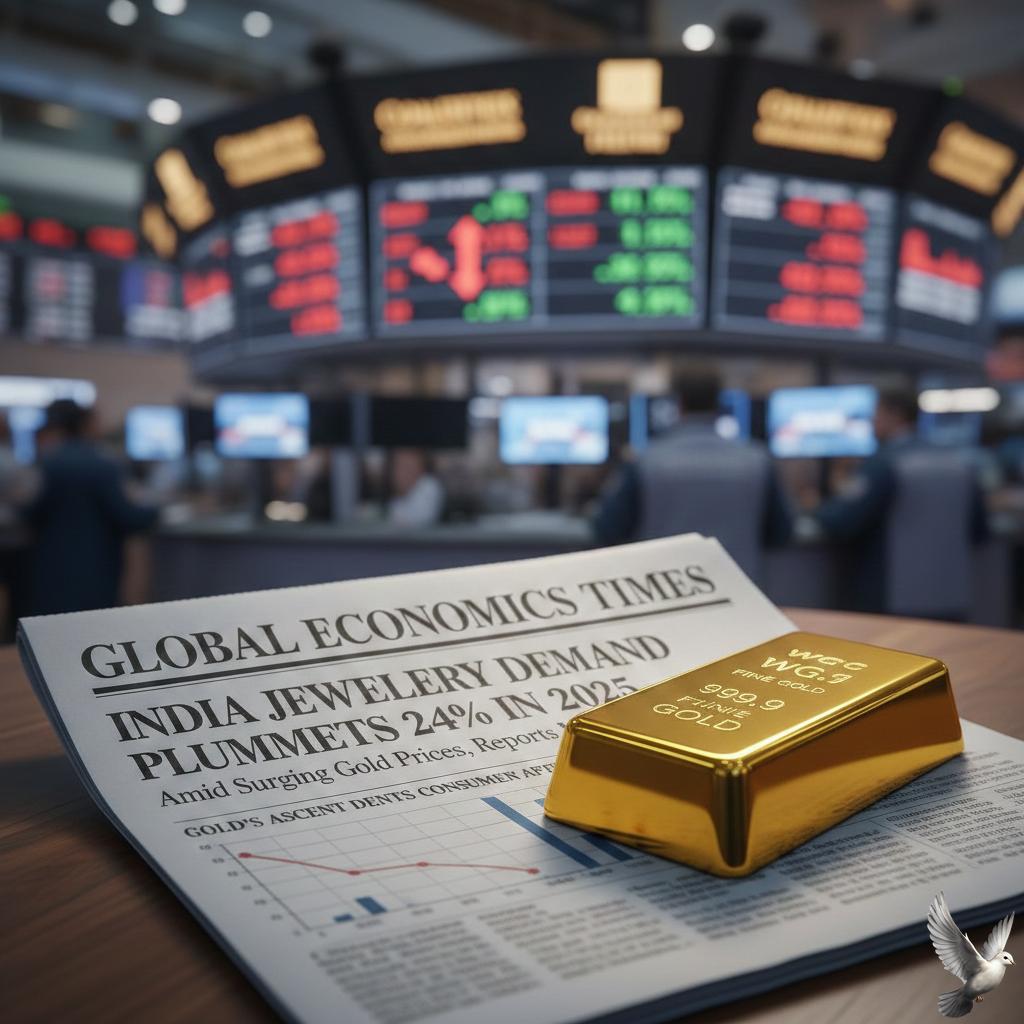
India Jewellery Demand Declines 24% in 2025 Amid Rising Gold Prices: WGC
The Indian gold market is experiencing a profound structural shift, characterized by a sharp decline in consumption volume coupled with a record high in value, a direct consequence of the relentless surge in bullion prices.
The calendar year **2025** saw India's total gold demand fall by **11%** in volume to **710.9 tonnes**. This marks the lowest level of annual consumption in five years. However, the skyrocketing price environment boosted the overall value of demand by a significant **30%** year-on-year, reaching an unprecedented **₹7,51,490 crore**.
***
Jewellery Demand and Price Impact
Jewellery, the traditional pillar of Indian gold consumption, absorbed the main impact of the price rally. Demand for gold jewellery by volume plummeted **24%** in 2025 to **430.5 tonnes**, the weakest showing since the COVID-impacted year of 2020. Despite this massive volume decline, the value spent on jewellery climbed **12%** to reach a new record high of **$49 billion**.
Domestic gold prices soared an exceptional **76.5%** over the course of the year. The average gold price climbed to over **₹1,01,572 per 10 grams** in 2025, up sharply from the previous year. This rapid appreciation created intense affordability pressure, forcing consumers to adjust buying patterns. Even during the critical wedding season in the final quarter, jewellery volumes dropped **23%**, illustrating that budgets simply could not keep pace with the price movement.
The market trend has extended into early **2026**. Spot rates for 24-karat gold have continued to hit lifetime highs, reaching peaks near **₹1,80,000 per 10 grams** in major city retail markets in January, driven by sustained global risk aversion.
***
The Investment Pivot
High and volatile prices have cemented gold’s status as a pure investment vehicle over adornment. Investment demand—covering bars and coins—emerged as the market's clear bright spot.
Investment consumption surged **17%** by volume in 2025, totaling **280.4 tonnes**, its highest level since 2013. The value of this segment saw an even sharper increase, jumping **73%** year-on-year to a massive **₹2,97,100 crore**. This reflects a growing strategic commitment among Indian households to treat gold as a long-term portfolio hedge against global financial uncertainty and domestic inflation. Investment now accounts for roughly **40%** of total consumption, significantly higher than its historical average.
This pivot is further evidenced by the dramatic rise in inflows into gold Exchange Traded Funds (ETFs), which increased by **283%** in 2025.
***
Consumer Behavior and Supply Dynamics
To manage affordability, consumers have shifted purchasing behavior. There is a noticeable trend toward **lower-weight** and simpler jewellery designs. Many consumers are using **trade-ins**, exchanging old gold to fund new, smaller purchases, thereby maintaining a fixed spending budget.
In an unusual trend for a period of record-high prices, gold recycling, or scrap supply, fell by **19%**. This indicates that consumers are choosing to retain their gold holdings, betting on further price gains rather than liquidating their reserves for immediate profit.
Looking ahead, the World Gold Council forecasts overall demand for India in **2026** to remain subdued, expected to range between **600 and 700 tonnes**. Jewellery demand volumes are likely to face continued weakness if prices stay elevated, while investment demand is predicted to remain robust, buoyed by ongoing global geopolitical tensions and expectations of a potentially easier global monetary policy. The gold market remains firmly driven by its role as a safe-haven asset.