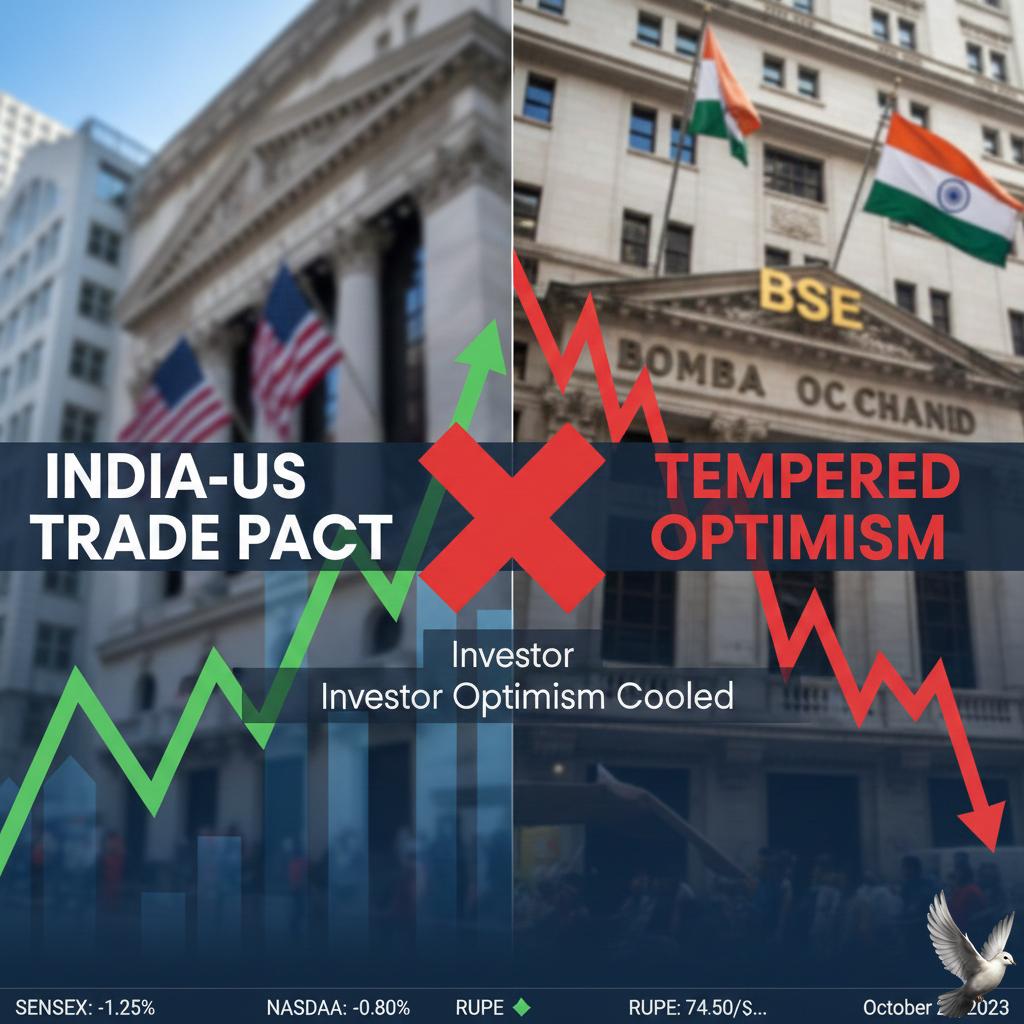
India-US Trade Pact Details Temper Investor Optimism
**MARKET BRIEF: INDIA-US TRADE BREAKTHROUGH**
**Major De-escalation in Trade Tensions**
India and the United States have announced a significant trade agreement, effectively ending a period of escalating tariffs and geopolitical friction. Announced on February 2, 2026, the deal marks a pivotal shift from the threat of a trade war to renewed economic cooperation. Markets have reacted positively to the truce, though analysts emphasize that the framework relies heavily on high-level political commitments rather than a finalized legal text.
**Key Deal Parameters**
* **Tariff Slash:** The US has agreed to cut tariffs on Indian exports to **18%**, a substantial reduction from the peak effective rate of **50%** (which included punitive duties).
* **Russian Oil Penalty Removed:** The additional **25% punitive tariff**, previously imposed by Washington in response to India’s purchase of Russian crude oil, has been scrapped.
* **India’s Commitments:** New Delhi has reportedly pledged to reduce its own tariffs on US goods. While US officials claim a move toward "zero tariffs" in some areas, Indian negotiators maintain that sensitive sectors remain safeguarded.
* **Energy Pivot:** A core component of the deal involves India shifting its energy procurement away from Russian oil. The agreement outlines a commitment to purchase increased volumes of energy from the United States and potentially Venezuela.
* **$500 Billion Target:** Statements from the US side indicate a massive Indian commitment to purchase **$500 billion** worth of American products, covering energy, technology, coal, and defense equipment over the coming years.
**Market Reaction: Immediate Relief**
Investor sentiment improved sharply following the announcement.
* **Equities:** Benchmark indices (Sensex and Nifty) rallied nearly **3%** intraday, driven by export-heavy sectors that had been battered by the high-tariff regime.
* **Currency:** The Indian Rupee strengthened as the threat of continued trade hostility receded.
* **Sector Focus:** Textiles, gems, and jewelry exporters are seen as immediate beneficiaries of the tariff cut to 18%, regaining competitiveness against regional rivals like Vietnam and Bangladesh.
**The "Caution" in the Celebration**
Despite the market euphoria, trade experts and policy analysts argue that the details warrant close scrutiny.
* **Agriculture & Dairy Anxieties:** The US push for "zero tariff" access has raised alarms regarding India's politically sensitive agriculture and dairy sectors. While Indian officials assert these areas are protected, the lack of public text leaves the extent of market access unclear.
* **Implementation Risks:** The deal currently rests on verbal declarations and social media announcements. The absence of a signed, comprehensive treaty means the durability of these terms—especially the $500 billion purchase commitment—remains to be tested.
* **Energy Transition Costs:** Switching from discounted Russian oil to US energy sources could have inflationary implications for the Indian economy, potentially impacting the current account deficit.
**Strategic Implications**
This agreement is broader than simple economics. It serves as a geopolitical realignment, solidifying the India-US partnership against shared competitors like China. By integrating India more deeply into US energy and supply chains, the deal aims to reduce New Delhi’s historical defense and energy dependence on Russia.
For now, the narrative has shifted from "trade war" to "strategic alliance," giving global investors a reason to re-evaluate their risk premiums for Indian assets. However, the true cost of the deal will only become visible as specific sectoral tariff lines are released.