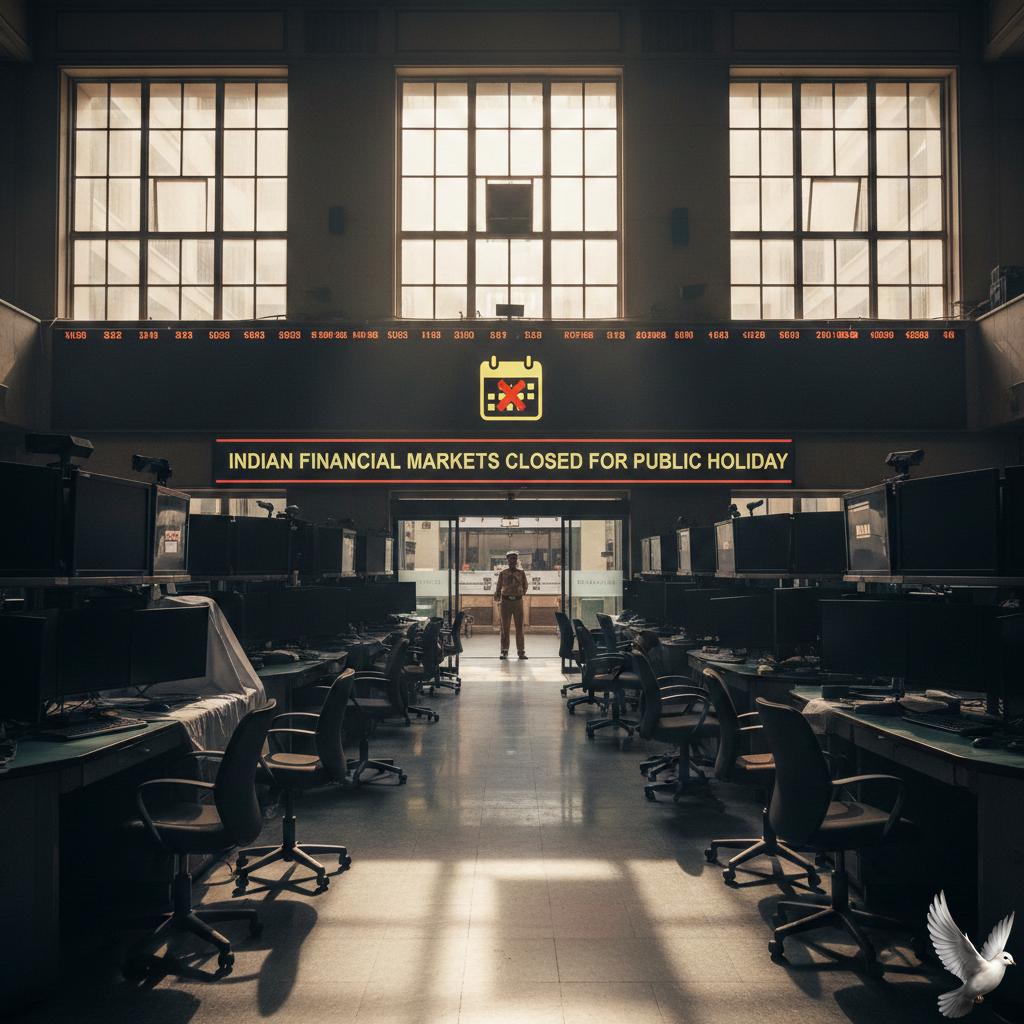
Indian Financial Markets Closed for Public Holiday
Indian currency and debt markets remain closed today, Thursday, February 19, 2026, in observance of Chhatrapati Shivaji Maharaj Jayanti.
While the equity markets are open for trading, clearing and settlement activities are paused due to the bank holiday. Full operations across all financial segments, including debt and forex settlements, will resume on Friday, February 20.
**Currency Market Stability**
The Indian rupee enters the holiday break following a period of steady performance. On Wednesday, the currency hovered near the **90.68** level against the U.S. dollar.
Market sentiment has been supported by a recent trade agreement between India and the United States, which helped the rupee recover from previous lows of **92.00**. Despite global volatility, the currency has remained resilient, trading within a narrow range as the central bank avoids aggressive intervention.
**Debt and Bond Yields**
The benchmark 10-year government bond yield ended Wednesday's session slightly higher at **6.68%**, up approximately **3 basis points** from the previous day.
Yields have remained elevated despite the Reserve Bank of India (RBI) implementing a cumulative **125 basis point** reduction in the repo rate over the past year. This disconnect is largely attributed to structural liquidity tightness within the banking system and a shift by banks toward credit deployment rather than government securities.
**Policy and Outlook**
The RBI maintained the repo rate at **5.25%** during its February 2026 meeting. The central bank has shifted to a **neutral stance**, providing flexibility as it monitors inflation, which recently hit a low of **1.3%**.
To manage market liquidity, the RBI conducted nearly **4 trillion** in Open Market Operation (OMO) purchases between late 2025 and early 2026. Market participants do not anticipate immediate further measures to cool yields, as the government focuses on debt-switch programs to manage upcoming redemptions.
The 10-year yield is expected to move sideways in the near term, as investors await further cues from global markets and domestic liquidity conditions once trading resumes.