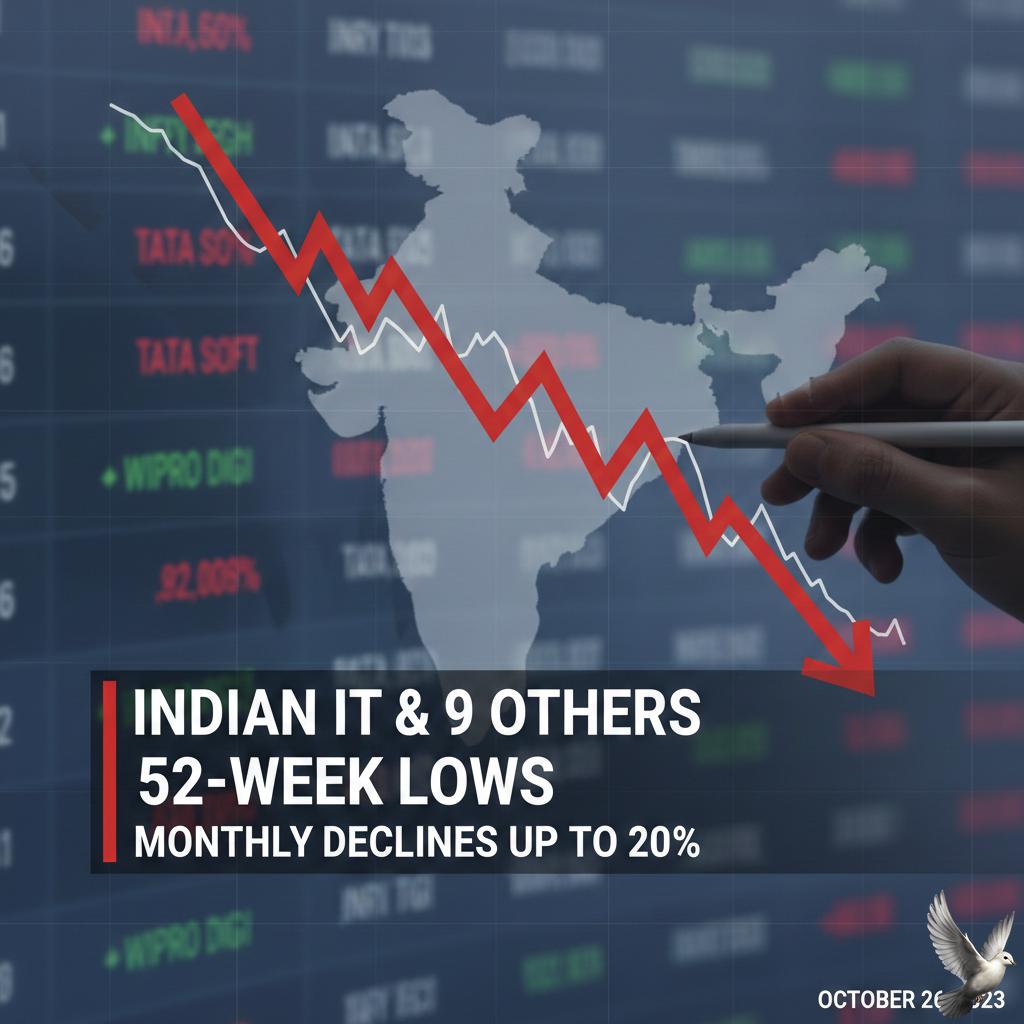
Indian IT Stocks and Nine Others Reach 52-Week Lows Following Monthly Declines of Up to 20%
Dalal Street witnessed a significant retreat as the benchmark **BSE Sensex** crashed **1,048.16 points**, or **1.25%**, to close at **82,626.76** on Friday, February 13, 2026. This sharp decline was mirrored by the **NSE Nifty 50**, which plunged **336.10 points** to settle at **25,471.10**, slipping below the critical **25,500** mark.
The downturn was primarily fueled by a massive sell-off in the technology sector, following a rout in global tech markets and renewed fears over artificial intelligence disrupting traditional business models. The **Nifty IT index** cracked over **5%** during intraday trade, marking a cumulative loss of nearly **12%** in just three sessions.
Key blue-chip IT stocks bore the brunt of the selling pressure. **Infosys** tumbled **7.5%**, while **Tata Consultancy Services (TCS)** and **HCL Technologies** dropped **6%** and **5.5%** respectively. **Wipro** and **Tech Mahindra** also faced steep declines of approximately **4.5%**.
Broader market sentiment remained fragile as nine stocks within the **BSE 200** index hit fresh **52-week lows**. Among the notable names touching their lowest prices in a year were **Wipro**, **TCS**, **Infosys**, **L&T Technology Services**, and **Info Edge India**.
Market capitalisation of BSE-listed companies was eroded significantly, falling to approximately **₹465 lakh crore** ($5.13 trillion). The market breadth was overwhelmingly negative, with **2,960** shares declining compared to only **1,253** gainers on the BSE.
Volatility spiked as the **India VIX** surged **15.18%**, reflecting increased investor anxiety ahead of upcoming U.S. inflation data. External pressures, including a stronger **U.S. Dollar Index** at **97.07** and the Indian rupee edging lower to **90.65** against the dollar, further weighed on domestic equities.
In other sectors, metal and FMCG stocks also saw heavy profit-booking. **Hindustan Unilever (HUL)** dropped **4.34%** following weak quarterly results, while **Hindalco** emerged as a top loser, sliding **5.75%**.
Only a few counters managed to defy the trend. **Bajaj Finance** rose **2.57%** and **State Bank of India (SBI)** gained **0.52%**, standing out as rare bright spots in an otherwise sea of red.
The current correction reflects a structural recalibration as investors reassess growth assumptions for the IT services industry. With the traditional headcount-based model facing scrutiny, the market is likely to remain volatile until clearer guidance on deal flows and AI integration emerges.