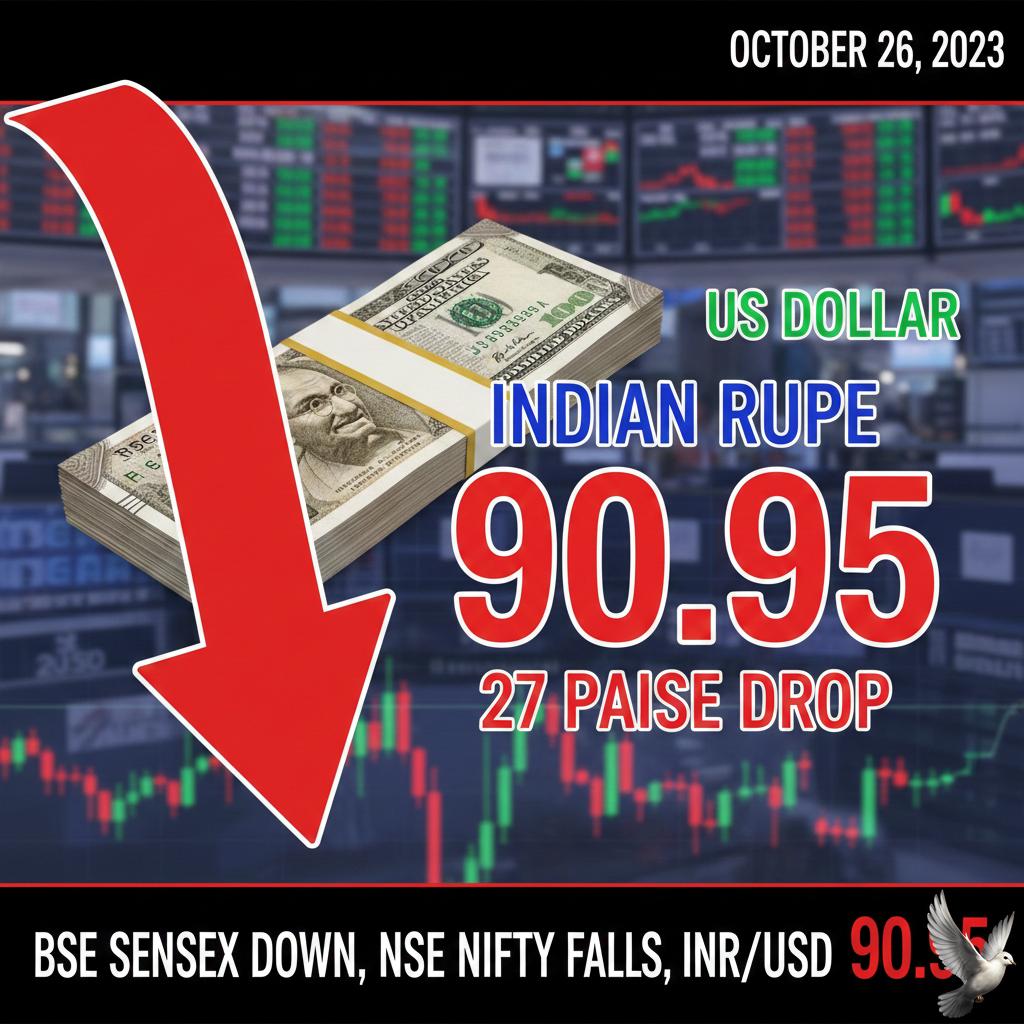
Indian Rupee Drops 27 Paise to 90.95 Against US Dollar
The Indian rupee faced intensified pressure on Friday, February 20, 2026, as a convergence of geopolitical risks and global macro shifts weighed on the domestic currency. The local unit retreated toward the **90.95** level against the US dollar, reflecting a broader trend of risk aversion across emerging markets.
The primary catalyst for this weakness is the escalating friction between the United States and Iran. Market nerves were rattled by reports of a potential US military strike following stalled nuclear talks and a strict 15-day ultimatum issued by Washington. This standoff has heightened fears regarding the Strait of Hormuz, a critical maritime corridor that facilitates roughly **20%** of the world's oil supply.
Consequently, Brent crude prices surged past the **$71.40** per barrel mark, hitting six-month peaks. For India, which imports nearly **80%** of its oil requirements, this spike directly threatens the trade deficit and stokes concerns of imported inflation.
Equity Market Volatility
Domestic stock indices reflected the global unease, with the BSE Sensex and NSE Nifty 50 experiencing a significant downturn. The Sensex plummeted by over **1,236 points** (**1.5%**) to settle near **82,500**, while the Nifty 50 shed **365 points** to close around **25,454**.
This selloff effectively erased approximately **₹6.4 lakh crore** in investor wealth in a single session. The India VIX, a key measure of market fear, spiked by **10.1%** to reach **13.5**, signaling that traders anticipate continued volatility in the near term.
Institutional Flows and Foreign Reserves
Capital outflows added to the rupee's woes as foreign portfolio investors (FPIs) turned net sellers. On the most recent trading day, FPIs offloaded equities worth **₹880.49 crore**, while domestic institutional investors (DIIs) also recorded net sales of approximately **₹596.28 crore**.
Recent data from the Reserve Bank of India (RBI) further underscores the tightening liquidity environment. India's foreign exchange reserves fell by **$6.71 billion** to **$717.6 billion** as of the latest reporting week. This decline was largely attributed to a dip in foreign currency assets and a sharp **$14.2 billion** drop in gold holdings.
The Strengthening Dollar
The US dollar index (DXY) continues to find support from a more hawkish Federal Reserve outlook and strong US economic data. The dollar is currently on track for its strongest weekly performance since October, bolstered by its status as a safe-haven asset during times of geopolitical crisis.
As the market monitors the developments in West Asia and upcoming US Core PCE data, the rupee is expected to remain under the "cosh," with technical support for the Nifty now pegged at the **25,000** to **25,330** range.