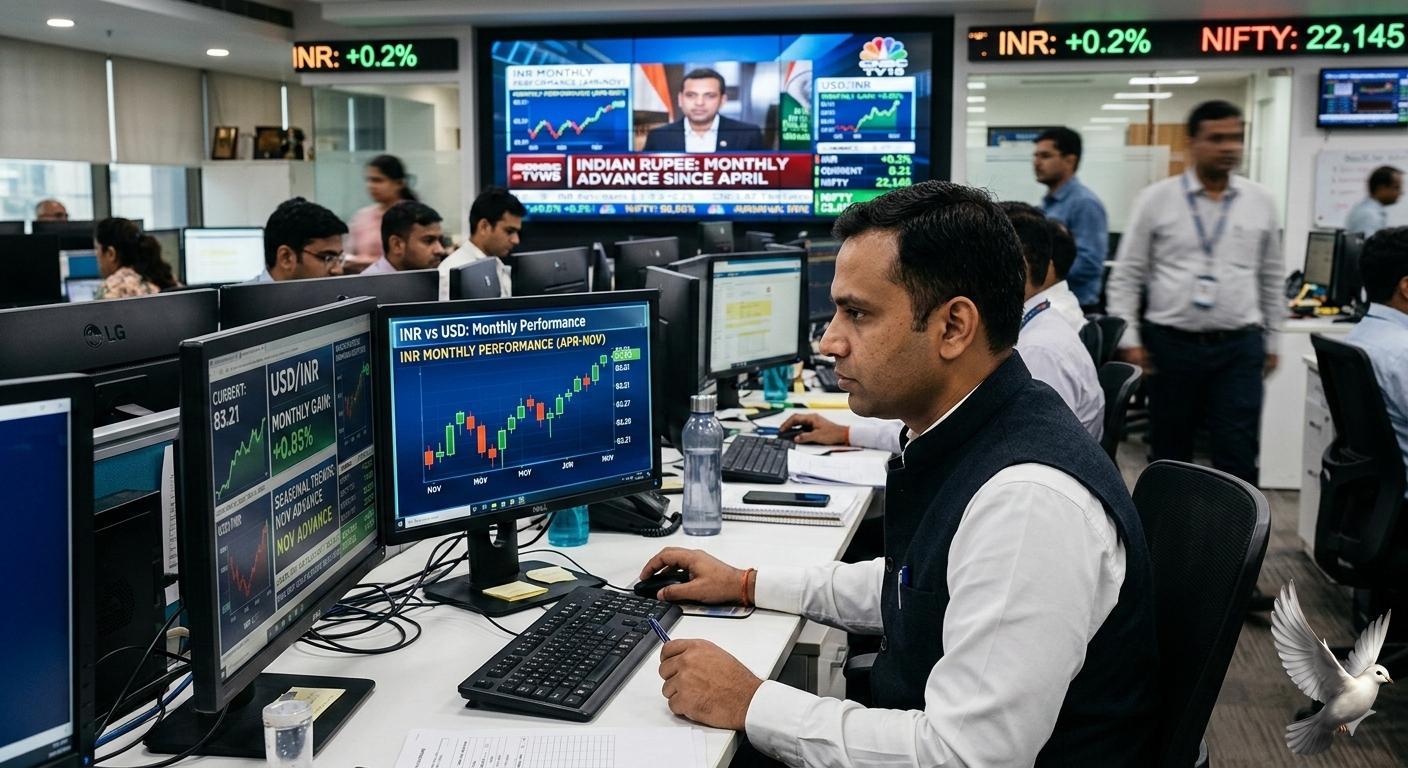
Indian Rupee Records First Monthly Advance Since April as Traders Evaluate Seasonal Trends
The Indian rupee recorded its first monthly appreciation in nearly a year this February, breaking a downward trend that had persisted since April 2025. The currency strengthened by approximately 1% during the month, climbing from historic lows to trade near the 90.40 level against the U.S. dollar in mid-February.
The primary catalyst for this recovery was the breakthrough announcement of a landmark trade deal between India and the United States. Under the agreement, U.S. tariffs on Indian goods were reduced from 25% to 18%, a move that significantly brightened the outlook for Indian exports. This policy shift effectively removed a major layer of uncertainty that had previously triggered heavy speculative selling of the local unit.
Capital flows also provided a vital cushion. Foreign Portfolio Investors (FPIs) turned into net buyers during the first half of the month, with total net inflows reaching 19,675 crore. A significant portion of this interest was concentrated in debt markets and domestic growth sectors such as capital goods and financials. In a single week ending February 13, net inflows reached 69.34 billion, highlighting a pivot in global investor sentiment toward Indian assets.
Macroeconomic data released in late February added further support to the currency's narrative. India’s GDP growth for the third quarter of fiscal year 2026 reached 7.8% under a newly introduced 2022-23 base year series. While this represented a slight sequential moderation from the previous quarter's 8.4%, it surpassed many market estimates. Additionally, January inflation was contained at 2.75%, remaining well within the central bank's comfort zone.
However, the final days of the month saw some of these gains pared back. On February 27, 2026, the rupee settled at 90.99 against the dollar as profit-taking in the equity markets and renewed geopolitical tensions in the Middle East pressured emerging market currencies. Brent crude oil prices rose to 71.91 per barrel, increasing the dollar demand from importers.
Despite the month-end volatility, the Reserve Bank of India’s strategic interventions near the 91.00 level helped prevent a deeper slide. The month concluded with the rupee positioned significantly higher than its January close, supported by a much-improved trade landscape and a robust domestic growth trajectory.