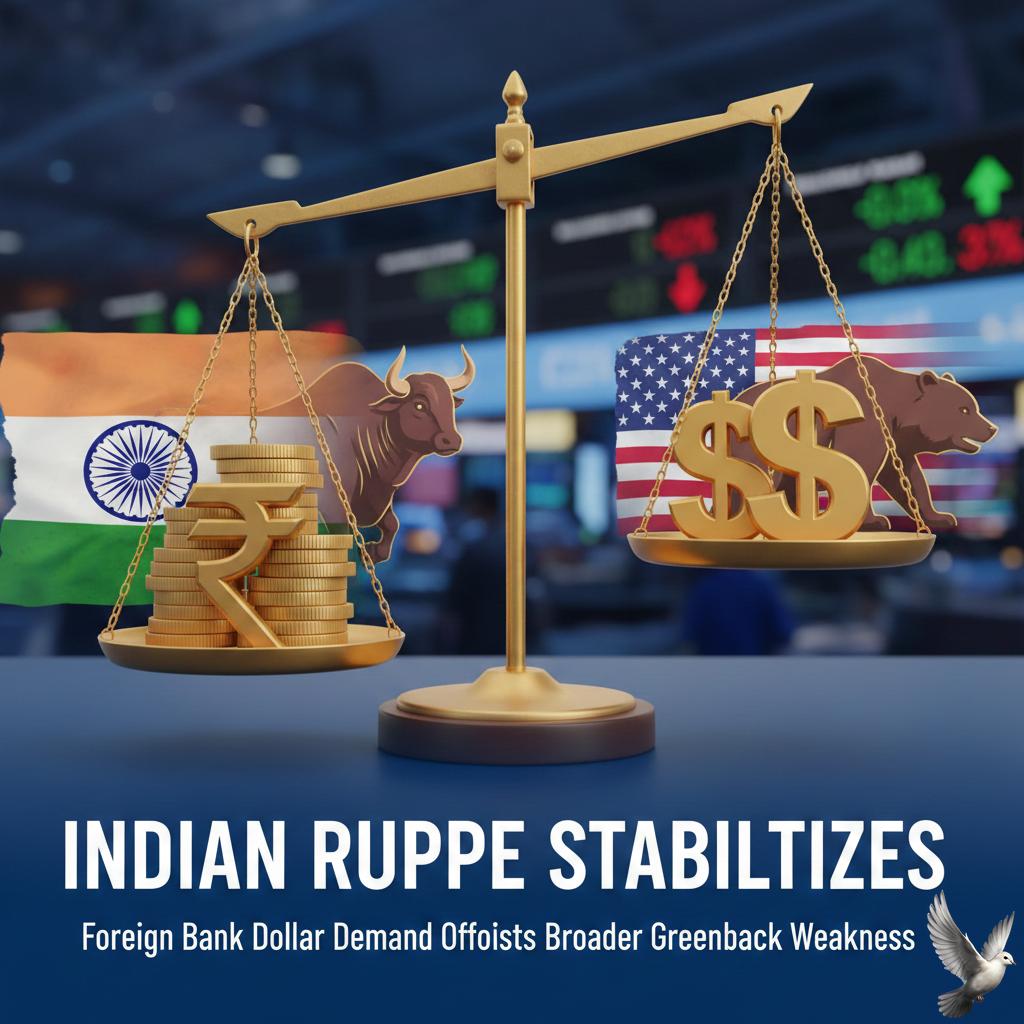
Indian Rupee Stabilizes as Foreign Bank Dollar Demand Offsets Broader Greenback Weakness
The Indian rupee faced renewed pressure during Wednesday’s session, depreciating by **14 paise** to close at **90.70** against the U.S. dollar. This downward movement followed a brief period of strength, as increased dollar bids from foreign banks and sustained demand from importers outweighed broader global trends.
While several Asian peer currencies gained ground against a softening greenback, the rupee’s performance remained subdued. The local unit opened at **90.56** and fluctuated within an intraday range of **90.46** to **90.75**. The decline comes despite recent optimism surrounding the newly unveiled India-U.S. interim trade framework, which initially sparked a rally in the currency.
Market participants are currently balancing positive domestic factors against external headwinds. Foreign Institutional Investors (FIIs) remained net buyers in the equity market, with recent purchases totaling approximately **₹69.45 crore**. These inflows, alongside India’s record-high foreign exchange reserves of **$723.77 billion**, provide a critical buffer for the Reserve Bank of India to manage volatility.
However, rising energy costs continue to impact the currency’s outlook. Brent crude futures edged up to **$69.34** per barrel, expanding India’s import bill and putting structural pressure on the exchange rate. Analysts note that while the **90.00–90.20** zone remains a strong support level for the rupee, persistent demand for the dollar could push the pair toward the **91.00** mark in the coming sessions.
On the domestic front, equity benchmarks showed resilience. The Nifty50 stayed near the **26,000** threshold, closing at **25,987**, while the Sensex ended at **84,415**. Investors are now shifting their focus to upcoming domestic inflation data and global labor market reports to gauge the next move for interest rates.
Expectations for the rupee throughout 2026 remain mixed. While some institutional forecasts suggest a potential slide toward the **93.00–94.00** range due to external pressures, others point to India’s projected GDP growth of **6.4%** to **7.0%** as a stabilizing force that could anchor the currency during periods of global uncertainty.