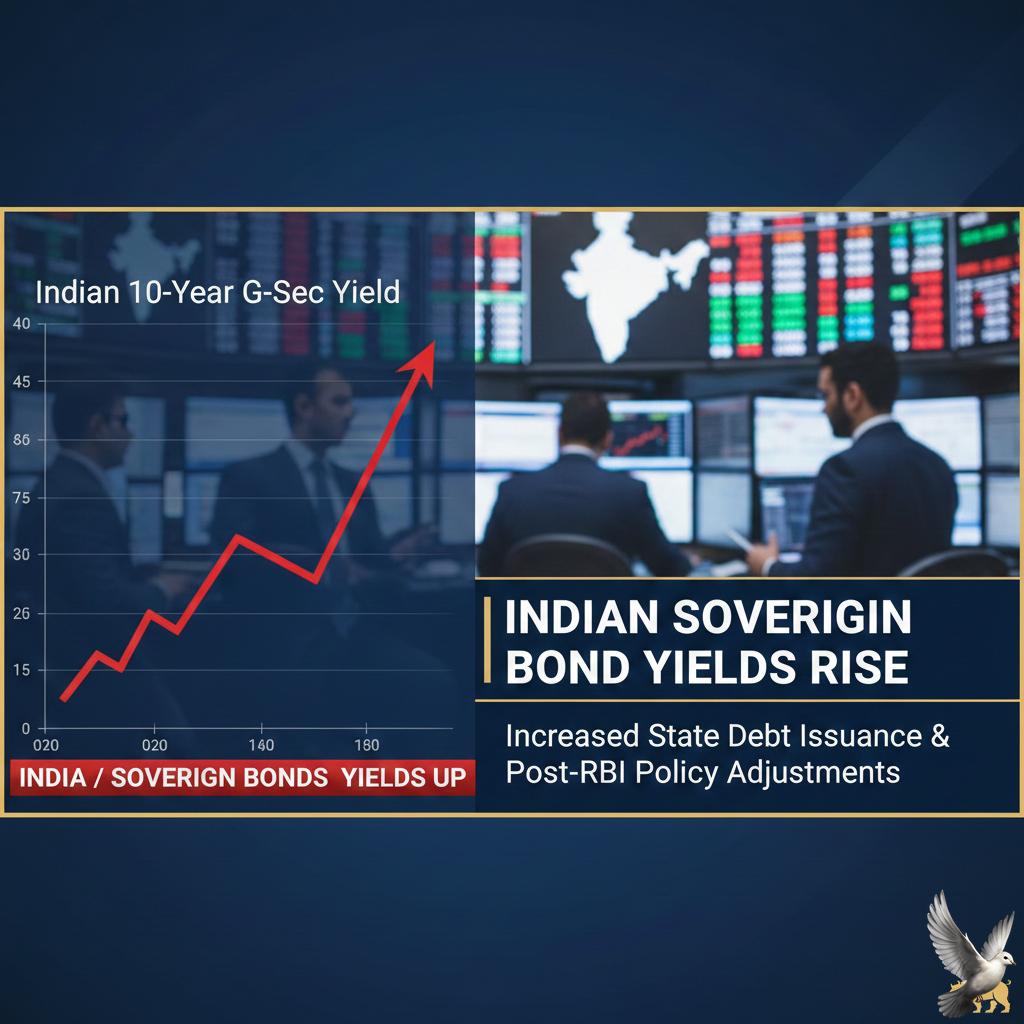
Indian Sovereign Bond Yields Rise Amid Increased State Debt Issuance and Post-RBI Policy Adjustments
Indian government bonds are facing significant selling pressure as the market reacts to a dual challenge of heavy supply and the central bank's cautious stance. The benchmark 10-year government bond yield has climbed to approximately 6.76%, marking one of its highest levels in the past year. This spike follows the Reserve Bank of India's (RBI) February 2026 monetary policy meeting, where officials kept the repo rate unchanged at 5.25% and maintained a "neutral" stance.
Market sentiment was dampened by the absence of fresh liquidity-easing measures. While the RBI has already reduced policy rates by 125 basis points since early 2025, traders had anticipated more aggressive support to counter a persistent deposit shortfall in the banking system. Instead, the central bank’s decision to withhold extra durable liquidity has fueled concerns that yields may continue to stay elevated.
State government borrowing is adding further weight to the market. Indian states recently targeted a massive issuance of 486.15 billion rupees in a single week—the largest of the current financial year. This surge in state debt supply is competing for limited investor appetite, as many commercial banks are currently reluctant to expand their bond holdings due to tight liquidity and rising credit demand.
The broader fiscal outlook remains a point of focus for bondholders. The federal budget has set a record gross borrowing target of 17.20 trillion rupees for the upcoming 2026-27 financial year, representing a 17% increase over previous levels. With the government’s fiscal deficit projected at 4.2% and total state and central debt supply expected to exceed 30 trillion rupees, the market is bracing for a sustained supply-demand imbalance.
Investors are now closely monitoring secondary market activity and potential foreign portfolio inflows for relief. However, with the rupee trading near 90.55 against the US dollar and capital flows remaining volatile, the yield curve is expected to remain under pressure. Market participants suggest that without proactive intervention or a significant shift in liquidity management, bond yields may hover between 6.60% and 6.75% for the remainder of the quarter.
[India 10-Year Bond Yield Historical Data](https://www.youtube.com/watch?v=W7-iaZpORkQ)
This video provides a deep dive into how the massive supply of government debt and the latest budget figures are testing the resilience of the Indian bond market.
http://googleusercontent.com/youtube_content/0