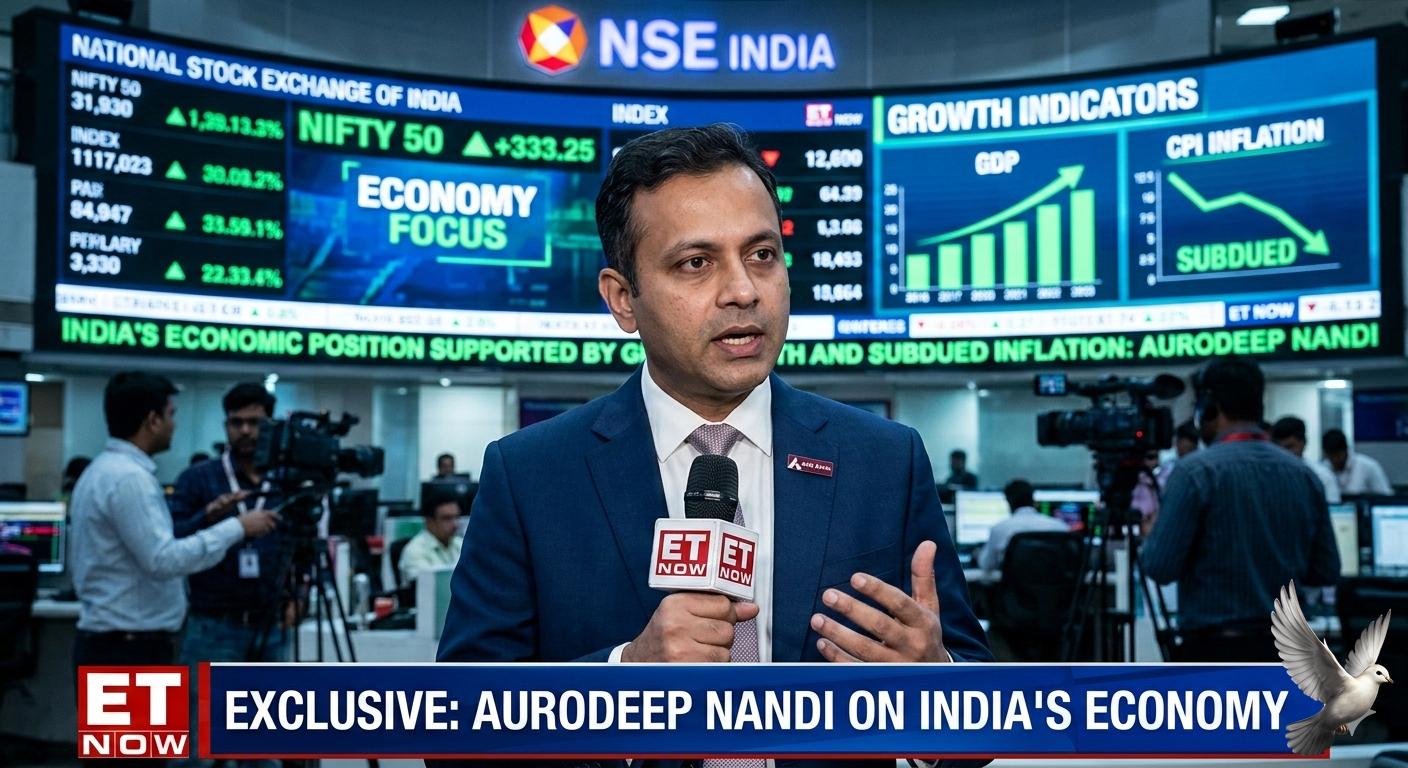
India's Economic Position Supported by Growth and Subdued Inflation: Aurodeep Nandi
India is currently maintaining a "goldilocks" economic environment, characterized by high growth and low inflation. Fresh data released in late February 2026 confirms that the economy is outperforming earlier expectations, supported by a significant revision in national accounting series.
GDP Growth Performance
The Ministry of Statistics has projected a real GDP growth of **7.6%** for the 2025–26 financial year. This is an upward revision from previous estimates, driven by a robust **7.8%** expansion in the October–December quarter. Nominal GDP, which includes the impact of inflation, is expected to grow by **8.6%** during the same period.
The manufacturing sector remains a primary engine of this momentum, recording double-digit growth. Additionally, both the secondary and tertiary sectors have expanded by more than **9%**, reflecting broad-based resilience across the industrial and services landscape.
Inflation and Price Trends
Retail inflation continues to remain well within the official tolerance band. In January 2026, headline CPI stood at **2.75%**, marking the 12th consecutive month where inflation stayed below the medium-term target of **4%**.
Core inflation, which excludes volatile items like food and energy, remains stable at approximately **2.6%**. While food inflation showed a slight uptick to **2.13%** in January, it remains historically low. Projections for the full 2025–26 fiscal year place average inflation at roughly **2.1%**, though a low base effect is expected to push this figure toward **4.3%** in the following year.
Monetary Policy and Interest Rates
The Reserve Bank of India (RBI) maintained the repo rate at **5.25%** during its February 2026 meeting. This decision follows a cumulative reduction of **125 basis points** over the past year. The central bank has signaled a "prolonged pause," shifting its focus to a neutral stance to ensure price stability while supporting growth.
Liquidity in the banking system remains in surplus, averaging **₹3.5 lakh crore**. To manage this, the RBI has employed open market operations and forex swaps. The current policy environment suggests that lending rates will remain steady for the foreseeable future.
Manufacturing and Services Momentum
High-frequency indicators show accelerated private sector activity. The Composite PMI Output Index rose to **59.3** in February 2026, the strongest expansion in three months.
Manufacturing PMI reached a four-month high of **57.5**, supported by domestic orders and increased production capacity. While services growth cooled slightly to **58.4**, the sector saw the fastest rise in new export orders since August 2025, indicating strong international demand for Indian services.
Currency and External Factors
The Indian Rupee has shown notable resilience, trading in a steady range of **90.2 to 90.5** against the US Dollar. This stability is bolstered by a recent trade agreement with the United States, which reduced tariffs on Indian imports from nearly **50%** down to **18%**.
Robust foreign exchange reserves and steady foreign portfolio inflows continue to act as a shield against global volatility, maintaining the currency's strength despite geopolitical uncertainties.