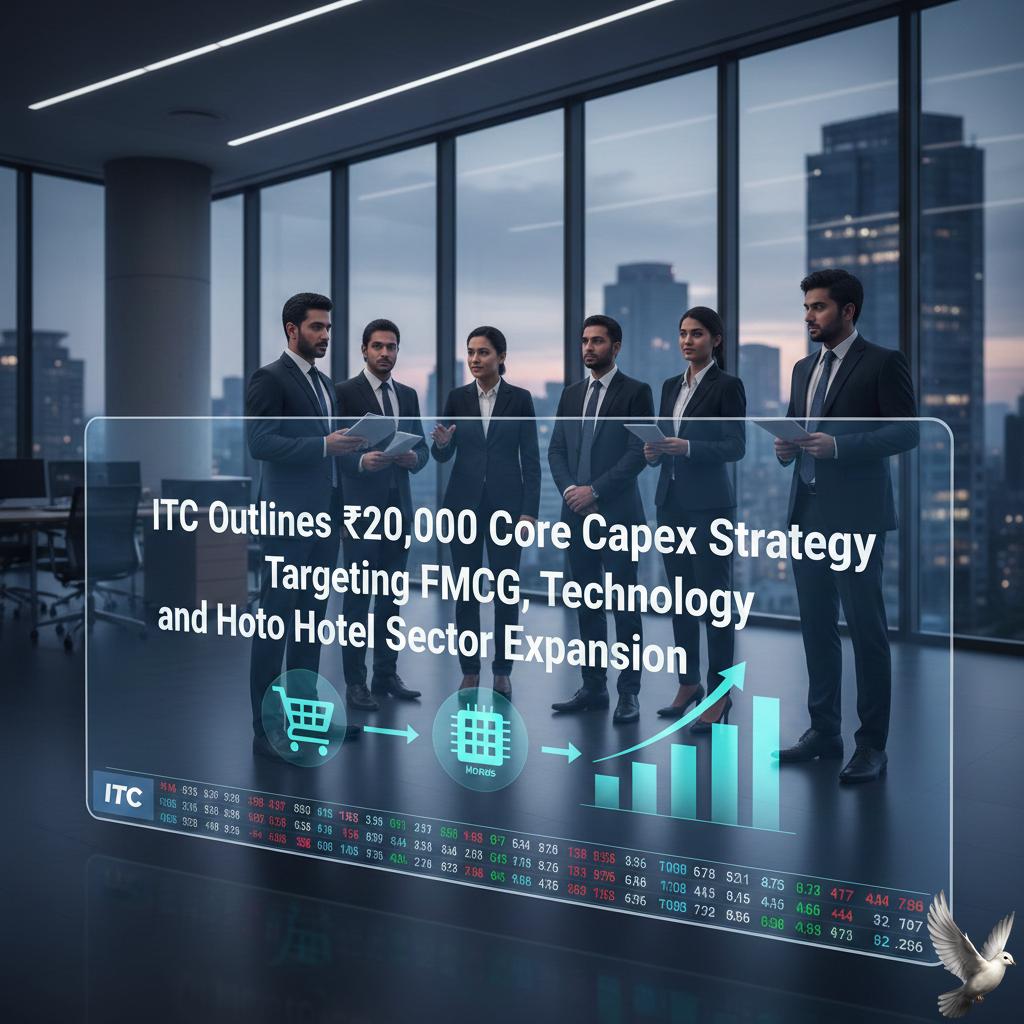
ITC Outlines ₹20,000 Crore Capex Strategy Targeting FMCG, Technology, and Hotel Sector Expansion
ITC Limited is undergoing a deep structural transformation, pivoting toward a technology-first model while committing to a massive ₹20,000 crore capital expenditure plan. This strategic outlay is designed to scale its manufacturing footprint and accelerate emerging growth vectors over the medium term.
The conglomerate recently concluded a landmark corporate restructuring with the demerger of its hotel business. Effective January 6, 2025, the hospitality arm transitioned into a standalone entity, ITC Hotels Limited. Under this arrangement, shareholders received one share of the new hotel entity for every 10 shares held in ITC Ltd, while the parent company retains a 40% stake to maintain strategic synergy.
Market performance in early 2026 has been defined by regulatory shifts and sector-specific volatility. As of late February 2026, ITC’s stock has shown signs of recovery, trading around the ₹320 to ₹330 range after hitting a 52-week low of ₹302 on February 2. This pressure followed a significant hike in cigarette taxes—effective February 1, 2026—which saw excise duties rise by 20% to 55% depending on product size.
To protect margins against these tax headwinds, the company implemented strategic price hikes across its cigarette portfolio ranging from 20% to 40%. Despite the immediate impact on stock pricing, ITC maintains a robust dividend yield of approximately 4.4%, continuing to attract institutional interest.
The non-cigarette FMCG segment remains a primary growth engine, with a long-term revenue target of ₹1 lakh crore by 2030. Currently, non-cigarette businesses contribute 65% of the group’s total revenue. High-performing categories like staples, dairy, and biscuits, along with digital-first brands such as Yoga Bar and Mother Sparsh, are driving this momentum.
Innovation is being spearheaded through the ITCMAARS digital platform. This "phygital" ecosystem now supports over 2.2 million farmers across 11 states. By integrating advanced tools like the Krishi Mitra AI assistant and image-based disease diagnostics, the platform has reportedly boosted farm incomes by 25% while reducing fertilizer use by up to 15%.
Operational efficiency remains a core focus as the company evaluates its broader corporate structure. With a debt-free balance sheet and a focus on "Bharat First," ITC is positioning itself to capture rising domestic consumption, projecting that India’s per capita income will exceed $4,000 by 2030.