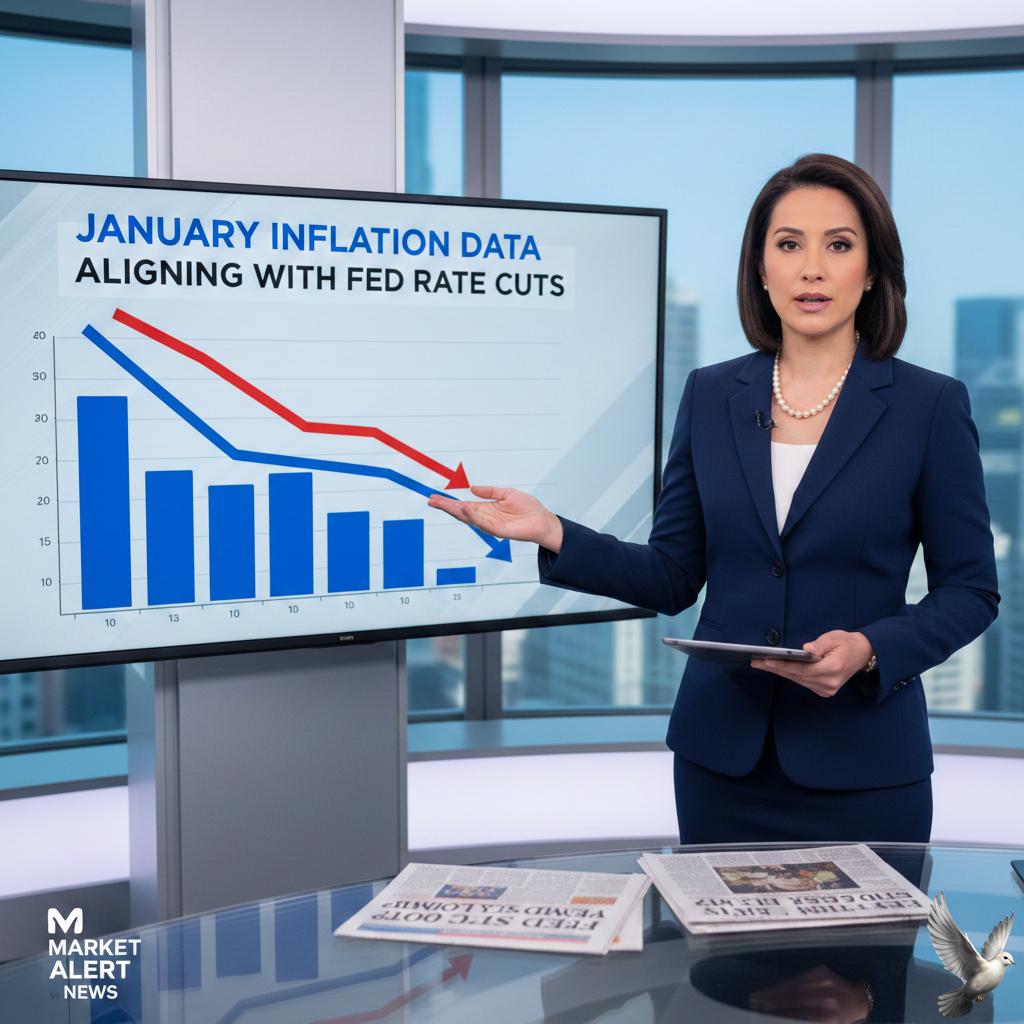
January Inflation Data Aligns With Potential Federal Reserve Rate Cuts
U.S. inflation cooled more than expected in January 2026, reaching its lowest annual level since mid-2021. The Consumer Price Index (CPI) rose **2.4%** year-over-year, coming in below the **2.5%** forecast and down from the **2.7%** recorded in December.
On a monthly basis, prices edged up **0.2%**, trailing the **0.3%** increase seen in the previous month. This deceleration was largely driven by a sharp drop in energy costs. Gasoline prices plunged **3.2%** in January alone, contributing to a broader **1.5%** decline in the energy index.
Core inflation, which strips out volatile food and energy sectors, remained stable but firm. The annual core rate slowed to **2.5%**, while the monthly core figure rose **0.3%**. Service-side inflation, particularly in shelter and airline fares, continues to present a hurdle. Shelter costs rose **0.2%** for the month, while airline tickets surged **6.5%**.
The cooling data has shifted market expectations for Federal Reserve policy. Interest rate futures now price in a nearly **70%** probability of a rate cut in June, up from **64%** prior to the report. Analysts anticipate the Fed will likely maintain the current target range of **3.5% to 3.75%** through March while monitoring the labor market.
Market reactions were immediate. Treasury yields fell as investors pivoted toward safety, with the **10-year note** finishing at **4.04%**—its lowest mark since November. The **2-year note** yield dropped to **3.40%**, hitting a level not seen since 2022.
Equities experienced a sharp sell-off despite the positive inflation news. The **S&P 500** fell **1.6%** to **6,832.76**, and the **Nasdaq** dropped **2.0%** to **22,597.15**. This downturn was fueled by shifting sentiment around sector-specific profitability and volatility in the "Magnificent Seven" technology stocks.
The labor market remains a critical secondary indicator. While January payrolls showed a resilient addition of **130,000** jobs, the unemployment rate held at **4.4%**. The Federal Reserve continues to balance these figures against a fiscal deficit projected to reach **$1.9 trillion** this year.
Economic momentum is expected to fluctuate as the effects of 2025 trade policies and tariffs continue to filter through the supply chain. While headline inflation is moving toward the **2%** target, persistent service costs suggest that the path to aggressive rate cuts remains a cautious one for central bankers.