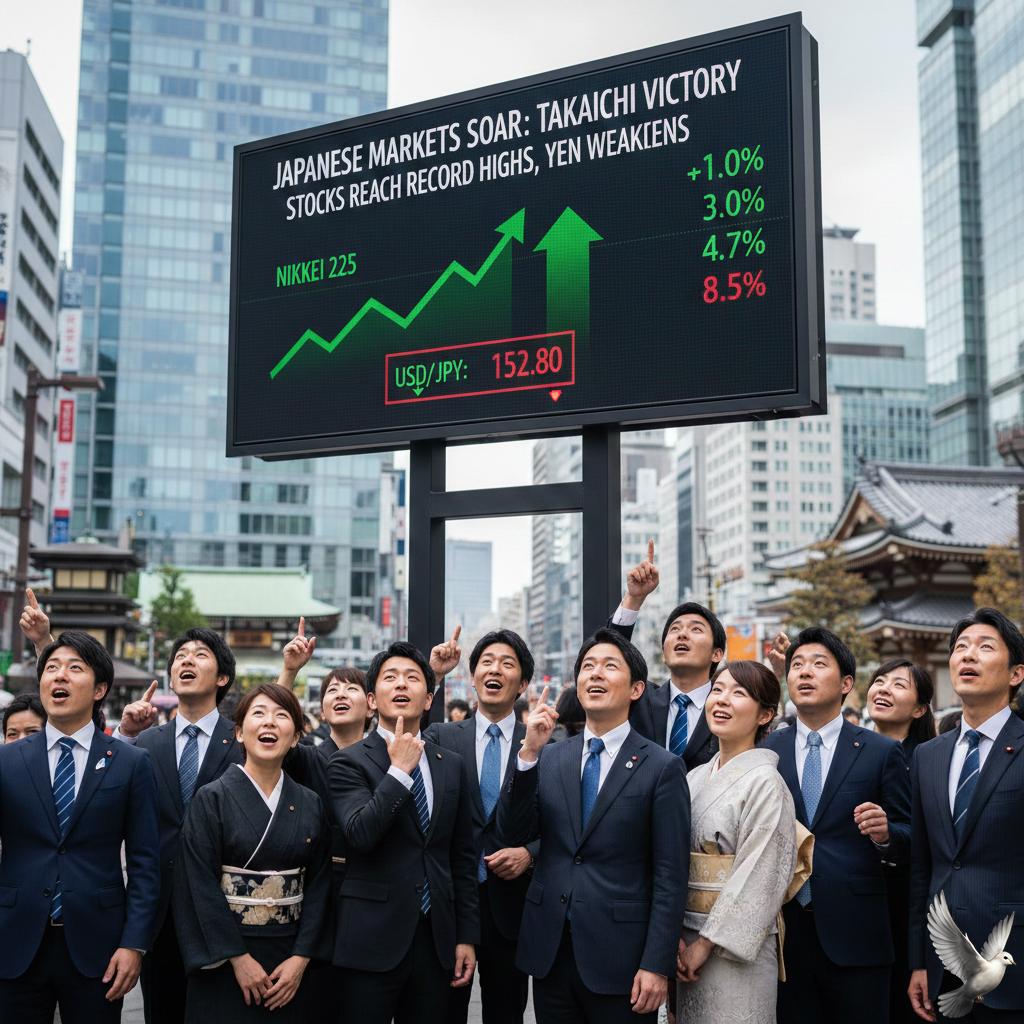
Japanese Markets React to Takaichi Election Victory as Stocks Reach Record and Yen Weakens
Japanese financial markets have entered a new era of volatility and growth following Prime Minister Sanae Takaichi’s landslide victory in the February 8, 2026, snap election. Her Liberal Democratic Party secured a commanding 316-seat supermajority in the 465-seat lower house, granting her an undisputed mandate to implement aggressive fiscal expansion.
The Nikkei 225 index responded with an unprecedented surge, climbing 5.7% to a record high of 57,337.07. The broader Topix index followed suit, advancing 3.4% to reach a historic 3,825.67. This "Takaichi trade" is being driven by investor confidence in her pro-growth agenda, which prioritizes heavy spending in strategic sectors like AI, defense, and shipbuilding.
The administration’s fiscal plan includes a massive stimulus package exceeding 13.9 trillion yen. Key measures on the immediate horizon include a proposed two-year suspension of the consumption tax on food, aimed at providing relief from persistent inflation. Additionally, corporate tax incentives for production facility investments are expected to boost industrial output.
While equities have soared, the bond market is signaling caution. Yields on 10-year Japanese Government Bonds (JGBs) climbed to 2.275%, marking a five-year high. Even more striking was the movement in long-dated debt, where 30-year yields reached 3.615%. This rise in yields reflects market concerns over the potential for increased deficit-covering bond issuance to fund the government’s ambitious spending goals.
The Japanese yen has faced significant downward pressure, sliding to a fresh two-week low of 157.95 against the U.S. dollar. Most notably, the yen hit an all-time low of 203.30 against the Swiss franc. The currency is also trading near record lows against the euro, currently around 186.55. These movements have prompted Japanese authorities to issue warnings of potential market intervention to stabilize the exchange rate.
Traders are now closely watching the Bank of Japan, with market swaps pricing in a 74% probability of a rate hike by late April. The central goal of the Takaichi administration remains a delicate balance: stimulating domestic growth through tax relief and public investment while managing the inflationary risks and currency depreciation that come with such a large-scale fiscal pivot.