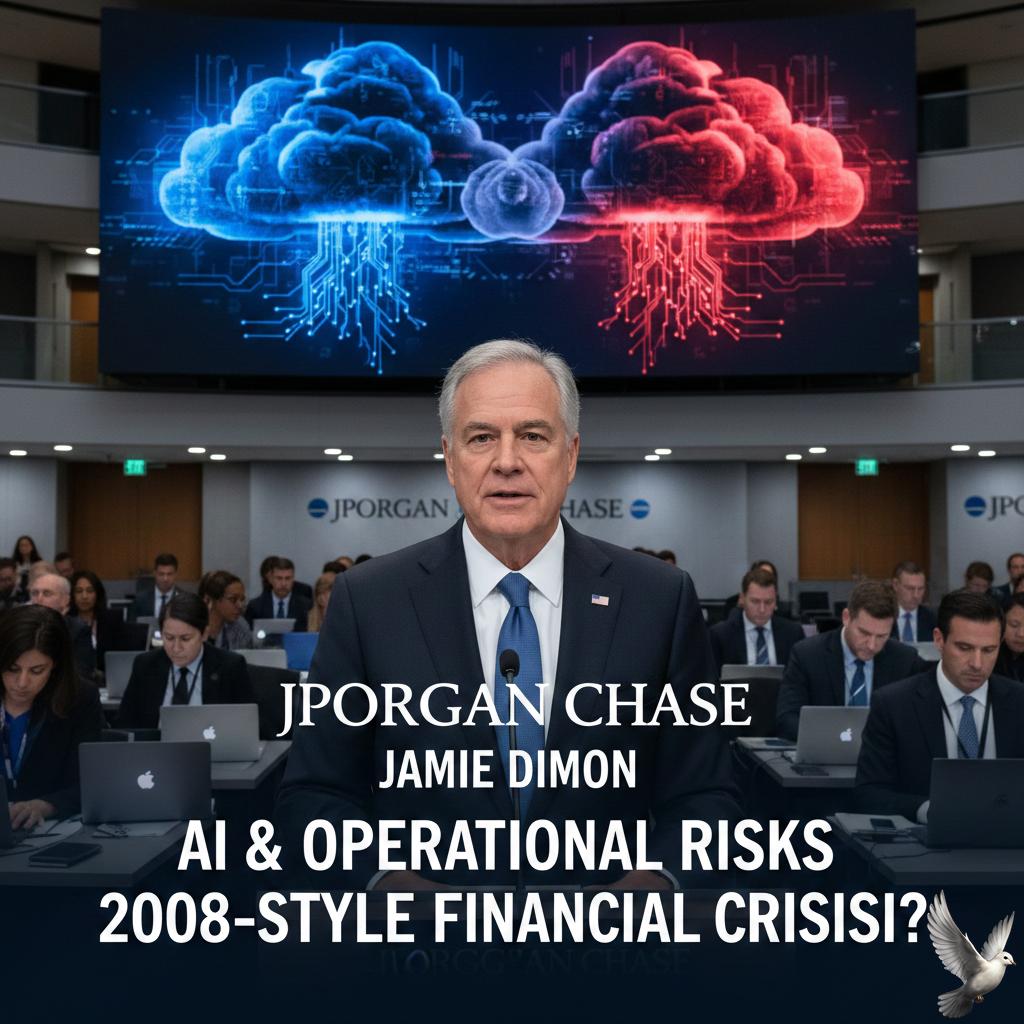
JPMorgan CEO Jamie Dimon Cites AI and Operational Risks as Potential Drivers of 2008-Style Financial Crisis
Market Brief: Systemic Fragility and the AI Disruption
Current financial conditions are exhibiting growing parallels to the era preceding the **2008 global financial crisis**. Analysts and industry leaders observe that a "rising tide" of liquidity has pushed asset prices to elevated levels, fostering a dangerous sense of complacency across global markets.
Traditional risk awareness is being dulled by prolonged periods of high trading volumes and record-breaking stock performance. As of **February 2026**, the **S&P 500** continues to trade near historic highs, even as underlying credit markers begin to signal stress.
Credit Market Strain
The lending environment is seeing a shift toward riskier behavior. Competitive pressure is driving some institutions to stretch underwriting standards to maintain net interest income. This "chase for yield" mirrors the pre-2008 cycle where leverage was increased to unsustainable levels.
Specific stress points are emerging in the private credit and corporate debt sectors.
* **Exchange-Traded Funds (ETFs)** now hold approximately **25%** more corporate bonds than US banks.
* Total corporate debt outstanding has ballooned to roughly **$16 trillion**.
* Broker-dealer holdings have dropped from over **$300 billion** pre-2008 to between **$70 billion and $80 billion** today, significantly reducing market liquidity during potential downturns.
The AI Catalyst
While the 2008 crisis was rooted in subprime mortgages, the next cyclical downturn may find its catalyst in the technology sector. The enthusiasm surrounding **Artificial Intelligence (AI)** is creating "tectonic shifts" in software and service industries.
There is a growing concern that AI disruption could sour the credit cycle as entire industries come under pressure from rapid automation and shifting business models. Recent volatility in software stocks highlights this sensitivity.
While AI infrastructure spending currently contributes roughly **1%** to US economic growth, a failure in the "AI boom" could erase the wealth effects currently propping up consumer sentiment.
Economic Indicators
Global economic data remains mixed, adding to the atmosphere of uncertainty.
* **Headline inflation** in key regions like Australia remains stuck at **3.8%**, while European inflation has dipped to **1.7%**.
* **Gold** has surged to **$5,017** per ounce, reflecting a flight to safe-haven assets amid geopolitical tensions and market anxiety.
* **Brent crude** prices have climbed to **$71.42** a barrel due to supply disruption fears.
Sector Outlook
The banking sector is bracing for a "sour" credit cycle. High asset prices are no longer viewed as a sign of health but as an increased risk factor. Market participants are being urged to maintain strict underwriting as the probability of borrower defaults rises in sectors previously thought to be stable, such as software and utilities.
Vigilance is required as the market navigates this transition from "AI assistance" to "transactional authority," where the speed of technological change may outpace the financial system's ability to absorb the resulting economic shocks.