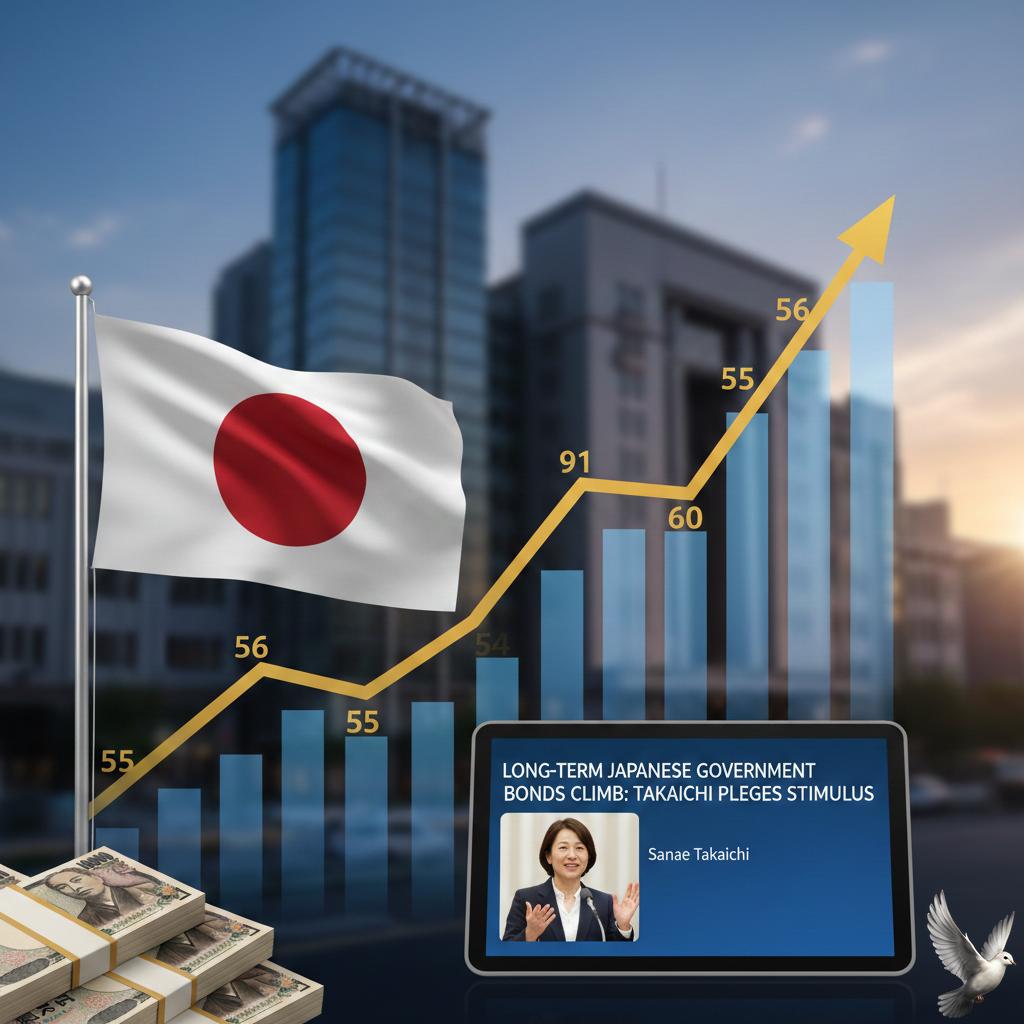
Long-term Japanese Government Bonds Rise as Takaichi Pledges Stimulus Measures
Japanese government bonds experienced a significant rally this Thursday, February 12, as investors responded to Prime Minister Sanae Takaichi’s post-election commitment to "responsible" fiscal stimulus. Following a landslide victory on February 8, Takaichi moved to soothe market anxiety regarding her expansionary spending plans, which previously triggered a spike in yields to multi-decade highs.
Long-term yields saw sharp declines as the market digested the administration's pledge to fund strategic investments without issuing fresh deficit-covering bonds. The yield on the 40-year JGB, the market’s longest tenor, fell by 8 basis points to 3.64%. Similarly, the 30-year yield sank by 7.5 basis points to reach 3.05%, while the benchmark 10-year JGB yield retreated to approximately 2.19%, nearing one-month lows.
This bond recovery reflects a shift in sentiment toward Takaichi’s "responsible proactive fiscal policy." The Prime Minister aims to fund a 21 trillion yen stimulus package and a two-year suspension of the food consumption tax by reviewing subsidies and non-tax revenues rather than relying solely on debt. However, total national debt reached a record 1,342.17 trillion yen at the end of last year, maintaining a baseline of caution among institutional holders.
While fiscal concerns have temporarily eased, the broader interest rate environment remains in transition. The Bank of Japan (BoJ) raised its short-term policy rate to 0.75% in December and is widely expected to continue its normalization path. Market pricing currently suggests a high probability of another rate hike in April, with analysts forecasting a potential move toward 1.00% by the end of the year.
Economic indicators provide a mixed backdrop for these policy shifts. Japan’s economy is growing at a moderate pace, with real GDP growth projected at 1.2% for 2025. Core inflation persists around 2.7%, fueled by rising import costs and a weak yen, which has recently traded between 153 and 160 against the US dollar.
Equities have largely benefited from the "Takaichi trade," with the Nikkei 225 gaining over 10% since the beginning of the year. Investors remain focused on sectors positioned for government support, including defense, semiconductors, and nuclear energy. Despite the current bond rally, the long-term outlook for JGBs remains sensitive to the BoJ’s next moves and the government's ability to maintain its "sustainable" spending narrative without further straining the nation’s debt-to-GDP ratio.