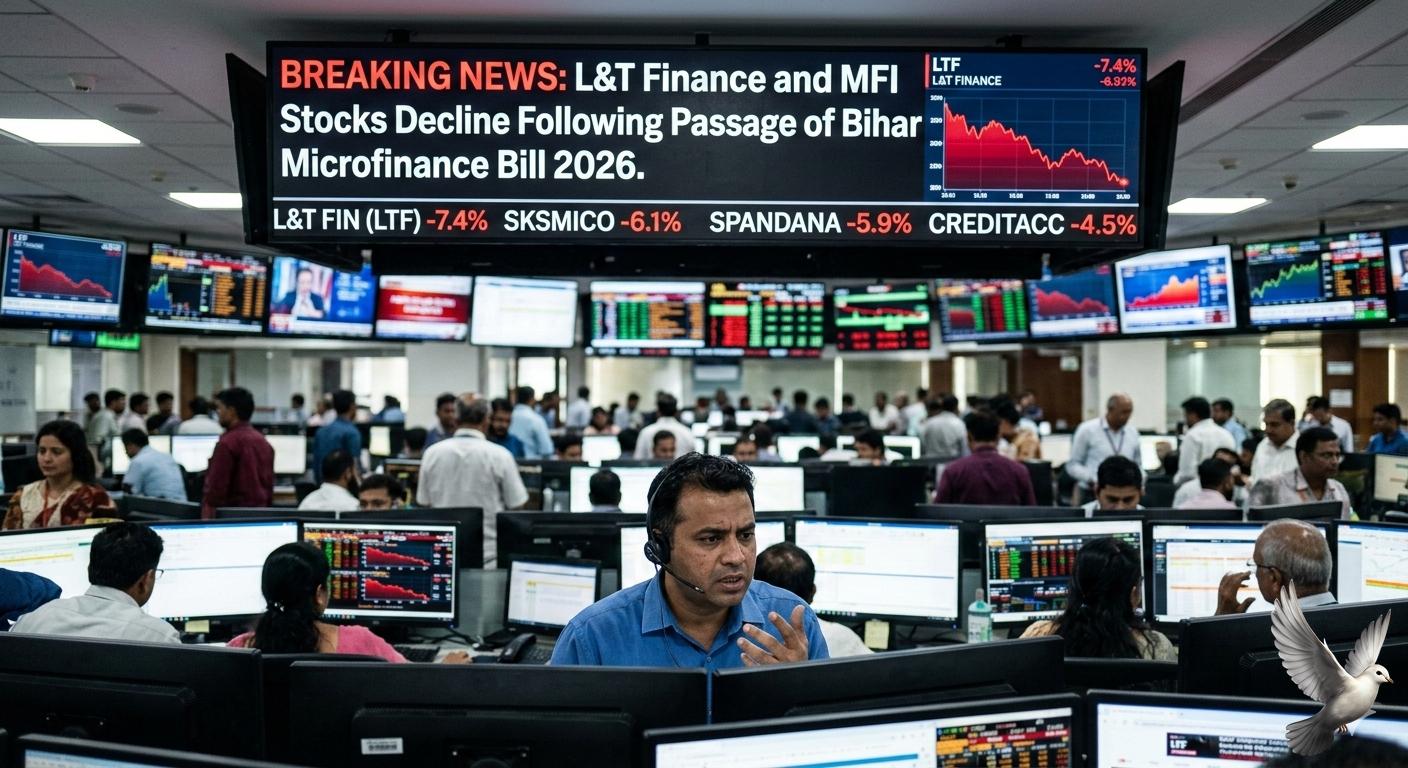
L&T Finance and Other MFI Stocks Decline Following Passage of Bihar Microfinance Bill 2026
Market Brief: Bihar MFI Regulatory Shift
Shares of India’s leading microfinance-linked lenders experienced a sharp sell-off on February 27, 2026, following the passage of the Bihar Micro Finance Institutions Bill, 2026. The legislation introduced stringent oversight for a region that represents the largest microfinance market in India, holding roughly 15% of the national industry portfolio.
Market Reaction and Stock Performance
Major lenders with significant exposure to the state saw immediate double-digit corrections. Fusion Finance plummeted 11% to 181 INR, while Utkarsh Small Finance Bank—which holds a 46% exposure to Bihar—fell 5% to 14.10 INR. L&T Finance also shed 5% to settle at 286 INR. Other key players like Satin Creditcare and Spandana Sphoorty, which maintain exposures of 13% each, remained under intense selling pressure.
Key Provisions of the 2026 Bill
The new law mandates that all micro-lenders, including those already licensed by the Reserve Bank of India, must obtain separate state-level registration. Crucially, institutions are now required to seek prior approval from the state Finance Department before any loan disbursement. The bill also caps lending to a maximum of two MFIs per borrower and prohibits total interest from exceeding 100% of the principal amount. To curb aggressive collection, special courts will be established at the district level to hear borrower grievances.
Sector Trends and Asset Quality
The regulatory tightening comes at a time of existing stress for the microfinance sector. Data for the 2024-25 fiscal year revealed a surge in delinquencies, with loans overdue by more than 30 days jumping to 6.2% nationally. Bihar recorded the highest rate of default in the country, with 7.2% of its 57,712 crore INR outstanding loan book categorized as overdue. Analysts estimate that between 5% and 45% of MFI exposure in the state could face further delinquency as these new rules disrupt debt-cycling practices.
Outlook and Regional Risk
While the immediate financial impact on balance sheets may be manageable for larger entities, the "precedent risk" is the primary concern for investors. If other high-exposure states adopt similar restrictive measures, it could trigger a fundamental reassessment of growth and valuation multiples across the Small Finance Bank and NBFC-MFI space. For the 2026 fiscal year, credit growth is expected to remain moderate at approximately 4% as institutions prioritize asset-quality repair over aggressive expansion.
The shift marks a transition toward a more regulated, welfare-oriented lending model. However, the requirement for state-level registration and disbursement approvals is expected to slow operational speed and increase compliance costs across the industry in the near term.