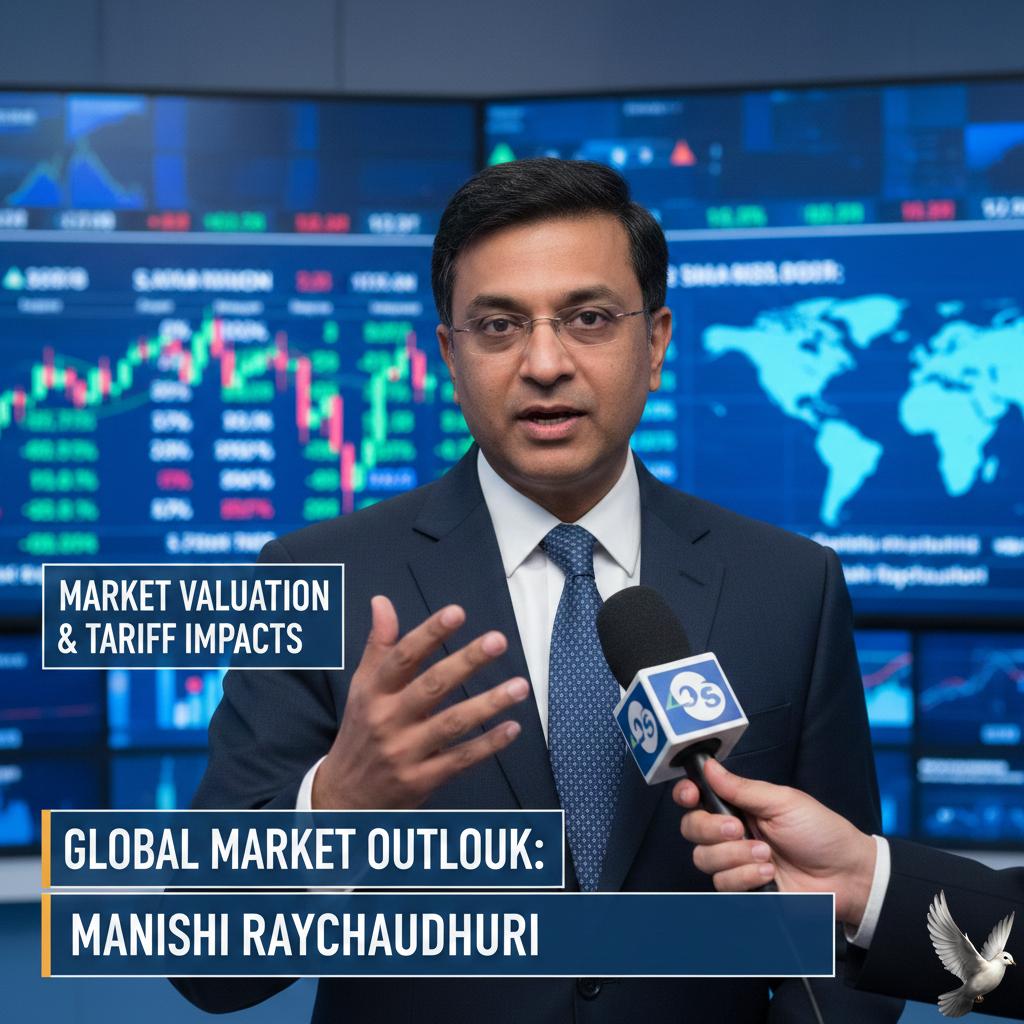
**Manishi Raychaudhuri on market valuation and tariff impacts**
Global trade policy is undergoing a period of intense volatility in early 2026. Trade growth is projected to slow to **0.6%** this year, down significantly from **2.0%** in 2025. This deceleration is largely driven by rising effective US import tariffs, which are expected to peak at approximately **14%** by year-end.
In this environment, market strategist Manishi Raychaudhuri advocates for a strategic pivot toward domestic growth. He maintains a target of **91,000** for the Sensex by the end of 2026, representing a potential upside of **7.0% to 8.0%**. The focus remains on selective stock picking rather than broad market momentum.
Preferred Growth Sectors
Investors are increasingly favoring sectors tied to local demand and infrastructure. Industrial activity in major emerging markets like India is gaining pace, with the sector projected to grow by **6.2%** in FY26.
**Basic Materials & Industrials**
Infrastructure, capital goods, and defense remain top picks. Manufacturing activity in technology-linked segments has shown remarkable resilience, with computer and electronic products expanding by **34.9%**.
**Consumer Discretionary**
The outlook is positive for market-leading automobile companies and niche segments. Growth in motor vehicles and trailers reached **33.5%** recently, supported by strengthening rural incomes and urban demand.
**Healthcare & Financials**
Healthcare services, specifically hospital and diagnostic chains, are viewed as defensive growth plays. Private banks are also highlighted for potential recovery following a three-year period of underperformance.
Sectors Facing Pressure
Caution is advised for sectors heavily exposed to global trade barriers and technological disruption. Roughly **77%** of imported goods are now seeing tariff costs absorbed by exporters, directly squeezing profit margins.
**IT Services**
The sector faces structural challenges from artificial intelligence. The adoption of large language models for coding is viewed as a threat to traditional service models. Short-term sentiment remains bearish as the industry navigates this transition.
**Exporters & Consumer Staples**
Export-oriented companies are grappling with a more restrictive trade landscape. Consumer staples are also under watch due to potential margin compression. Higher tariff costs on raw materials are increasingly difficult to pass on to consumers without impacting demand.
Global GDP growth is forecasted to reach **2.5%** in 2026, a slight dip from the previous year. With corporate insolvencies predicted to rise by **5.0%** globally, the shift toward domestic-facing assets serves as a hedge against heightening international risks.