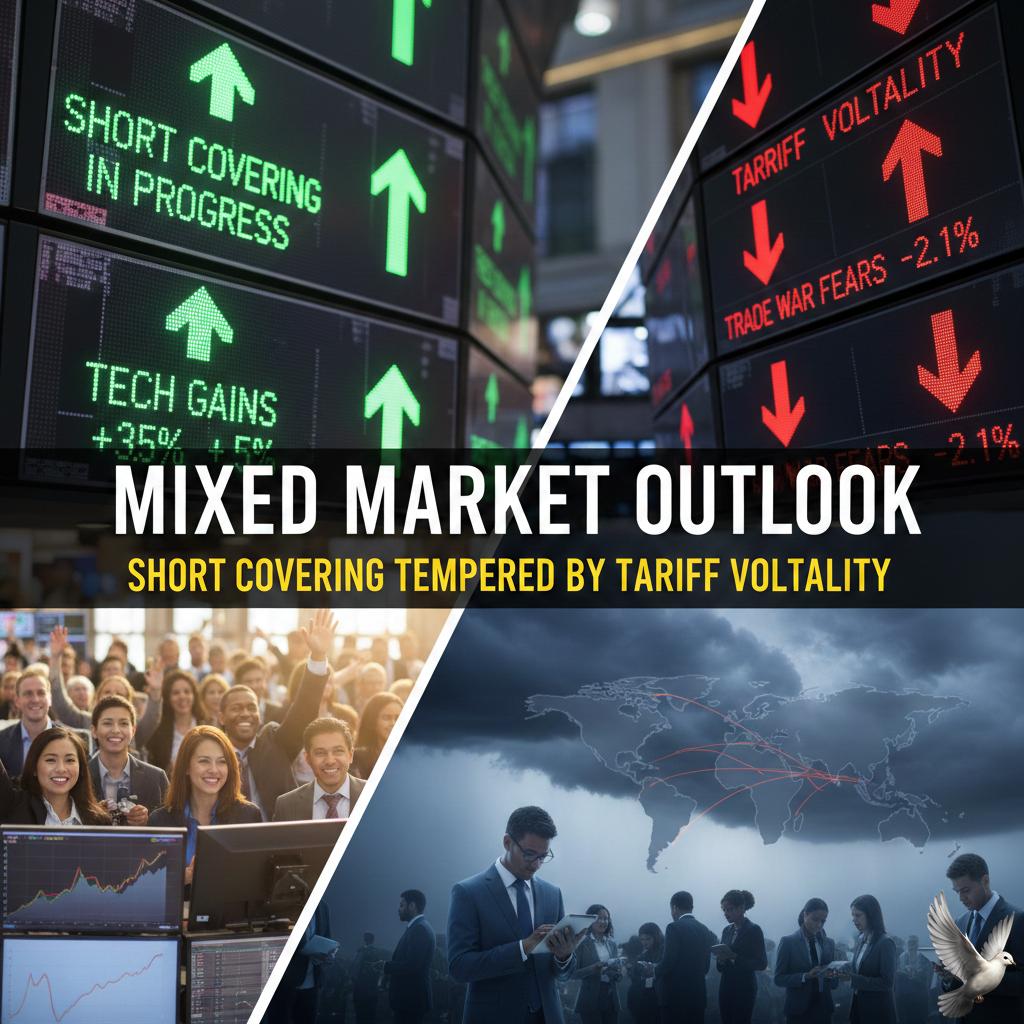
Mixed Market Outlook: Short Covering Tempered by Tariff Volatility
Indian markets open today, Monday, February 23, 2026, with a complex mix of relief and renewed geopolitical anxiety.
The primary catalyst is a landmark US Supreme Court ruling that struck down President Trump’s sweeping reciprocal tariffs. This decision invalidates 18% duties previously facing 55% of Indian exports, including critical engineering goods and auto components.
However, the relief was short-lived. Following the ruling, the US administration immediately proposed a new 10% global import surcharge, which was increased to 15% over the weekend. This temporary levy is expected to last 150 days, keeping trade uncertainty high for Indian exporters.
Geopolitical tensions between the US and Iran have emerged as a significant headwind. Reports of a US military buildup in the Middle East have pushed Brent crude prices toward $71.48 per barrel.
As India imports nearly 80% of its oil, and with 40% of energy supplies transiting through the Strait of Hormuz, these tensions pose a direct threat to domestic inflation and fiscal stability.
Domestic indices entered the session following a volatile week where the Nifty 50 held near 25,571 and the Sensex hovered around 82,814. While PSU banks and energy stocks gained over 2.4% last week, the IT sector remains under pressure due to global tech spending concerns.
Investors are closely monitoring the Indian rupee, which has found some support from recent foreign inflows but remains sensitive to the strengthening US dollar and rising oil prices.
Market sentiment is currently defined by a "narrow range" outlook. While the removal of the 18% tariff provides a competitive boost for manufacturers, the looming 15% universal surcharge and the risk of conflict in the Middle East are expected to cap major gains.
Trading today is likely to focus on stock-specific movements. Upstream oil companies like ONGC and Oil India may see interest due to higher crude realizations, while export-heavy sectors wait for clearer legal signals from Washington regarding the new 15% tariff implementation.