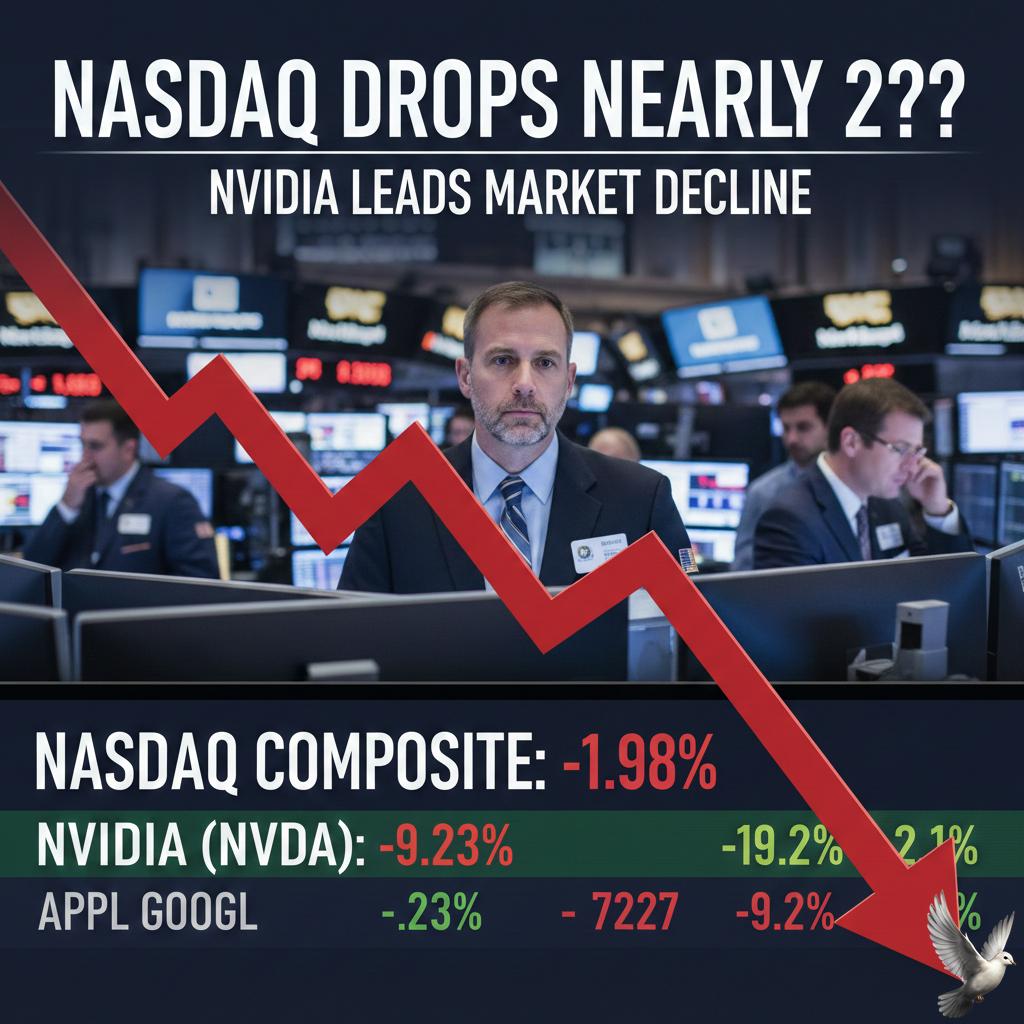
Nasdaq Drops Nearly 2% as Nvidia Leads Market Decline
Market dynamics shifted sharply following the release of high-stakes earnings from the technology sector's most influential players. While headline figures often surpassed expectations, the nuanced reactions from Wall Street highlight a growing scrutiny of the artificial intelligence trade.
Nvidia recently reported fiscal fourth-quarter results that technically outpaced analyst projections. The company posted a staggering **$68.1 billion** in revenue, marking a **73%** increase compared to the previous year. Net income reached **$39.5 billion**, roughly **5%** higher than consensus estimates. Despite this performance and a robust forecast of **$78 billion** for the upcoming quarter, the stock price experienced a retreat.
The market response saw Nvidia shares tumble approximately **4.7%** in the immediate aftermath. This decline pulled the S&P 500 down by **0.8%**, or nearly **56 points**, as investors weighed the sustainability of massive infrastructure spending. Currently, Nvidia’s data center business accounts for more than **91%** of its total sales, leaving the company highly sensitive to any shift in capital expenditure from major cloud providers.
In the software space, Salesforce provided a contrasting narrative. The CRM giant reported quarterly revenue of **$11.2 billion**, up **12.1%** year-over-year. Most notably, its non-GAAP profit of **$3.81** per share delivered a significant **24.9%** surprise over the **$3.03** expected by analysts. The company also demonstrated strong momentum in its AI-driven Agentforce and Data 360 units, which saw annual recurring revenue surge **200%** to **$2.9 billion**.
However, Salesforce's outlook for fiscal year 2027 remains a point of contention. Management guided revenue to approximately **$46 billion**, which fell slightly short of some aggressive analyst targets. This conservative forecast reflects broader concerns that corporate software budgets are being tightened or redirected toward hardware, leading to a mixed reaction in the stock's price action.
Broader market indices are reflecting this volatility. The S&P 500 has been trading in a holding pattern between the **6,800** and **7,000** levels. Technical indicators show the index attempting to maintain its position above the 50-day moving average near **6,900**. While the technology sector has faced a nearly **20%** drawdown in specific software niches this year, the overall AI chip market remains on a path toward massive growth.
The global AI chip market is currently valued at approximately **$94.44 billion** for 2025. Projections suggest this sector could skyrocket to over **$1.1 trillion** by 2035, maintaining a compound annual growth rate of nearly **28%**. While short-term profit-taking and high valuation concerns persist, the underlying demand for accelerated computing continues to drive the fundamental narrative of the global economy.