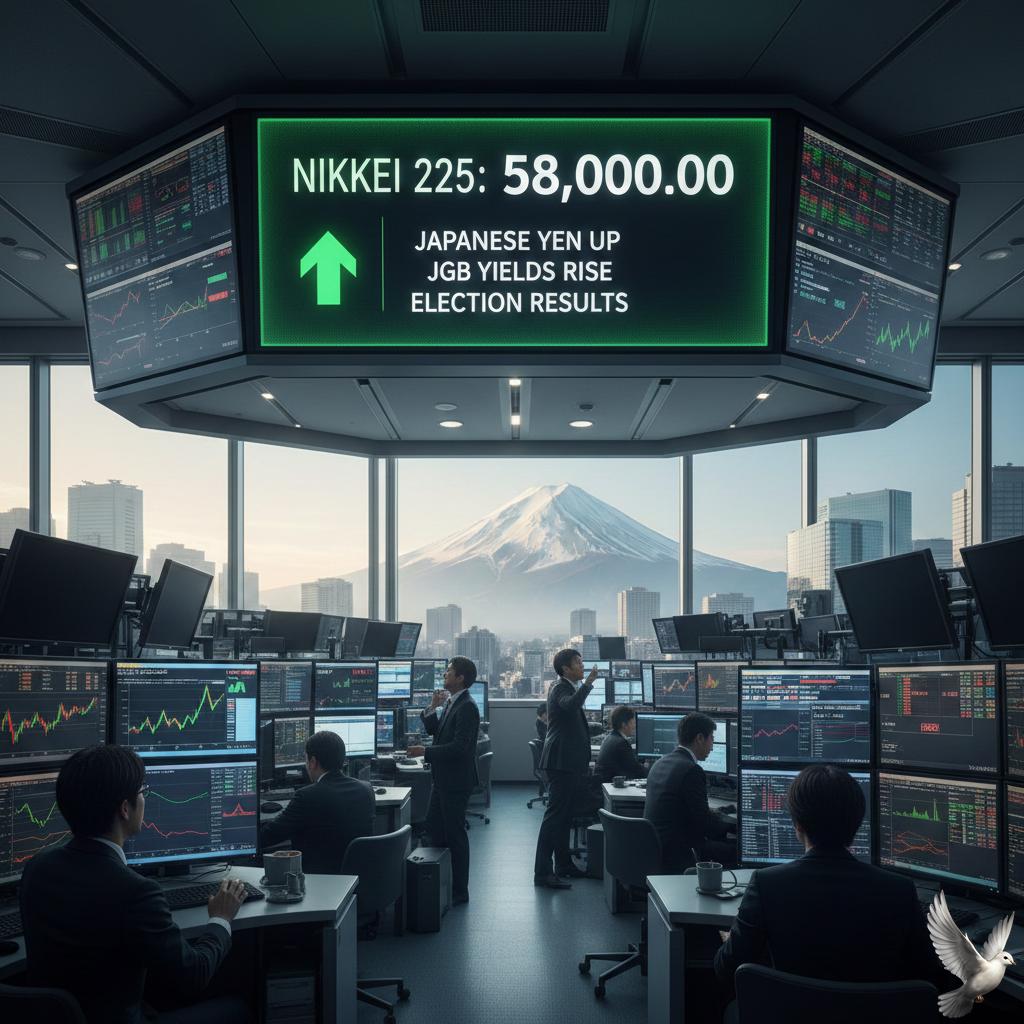
Nikkei 225 reaches 58,000 as Japanese yen and bonds rise following election results
Japan’s financial markets have entered a historic era as the Nikkei 225 share average surged past the 58,000 mark for the first time in history. This milestone, reached on February 12, 2026, solidifies a massive rally triggered by the Liberal Democratic Party’s landslide election victory.
Prime Minister Sanae Takaichi’s secure mandate has fueled what traders are calling the "Takaichi trade." Investors are responding to her ambitious fiscal policy, which includes a proposed 21 trillion yen stimulus package and a landmark two-year suspension of the 8% food consumption tax.
The benchmark index gained 0.3% to hit the 58,000 level, marking a rare "triple rally" where domestic equities, government bonds, and the yen all climbed simultaneously. Technology, defense, and semiconductor stocks are leading the charge, supported by expectations of increased strategic government spending in AI and infrastructure.
The currency market remains highly active. The yen has strengthened to approximately 154.39 per dollar, recovering from recent lows. This rebound is driven by the rise in bond yields and verbal warnings from government officials regarding potential currency intervention. Top diplomats have signaled they are monitoring moves with a high sense of urgency to prevent excessive volatility.
In the fixed-income sector, the 10-year Japanese Government Bond (JGB) yield has climbed to 2.24%, reflecting expectations of higher inflation and increased government borrowing. Longer-dated debt is also seeing pressure, with 30-year yields holding near 3.50%. These levels represent some of the highest borrowing costs for Japan in decades.
While the market is buoyed by political stability, analysts are beginning to flag risks of overheating. Investors are closely watching for profit-taking as the Nikkei approaches the psychological 60,000 barrier. Concerns persist regarding the sustainability of Japan’s debt-to-GDP ratio, which remains the highest in the developed world.
Corporate Japan is contributing to the bullish sentiment with record share buybacks projected for fiscal 2025. Strong fourth-quarter earnings and a focus on corporate governance reforms are encouraging the deployment of excess cash into domestic investments, further insulating the market from external global pressures.