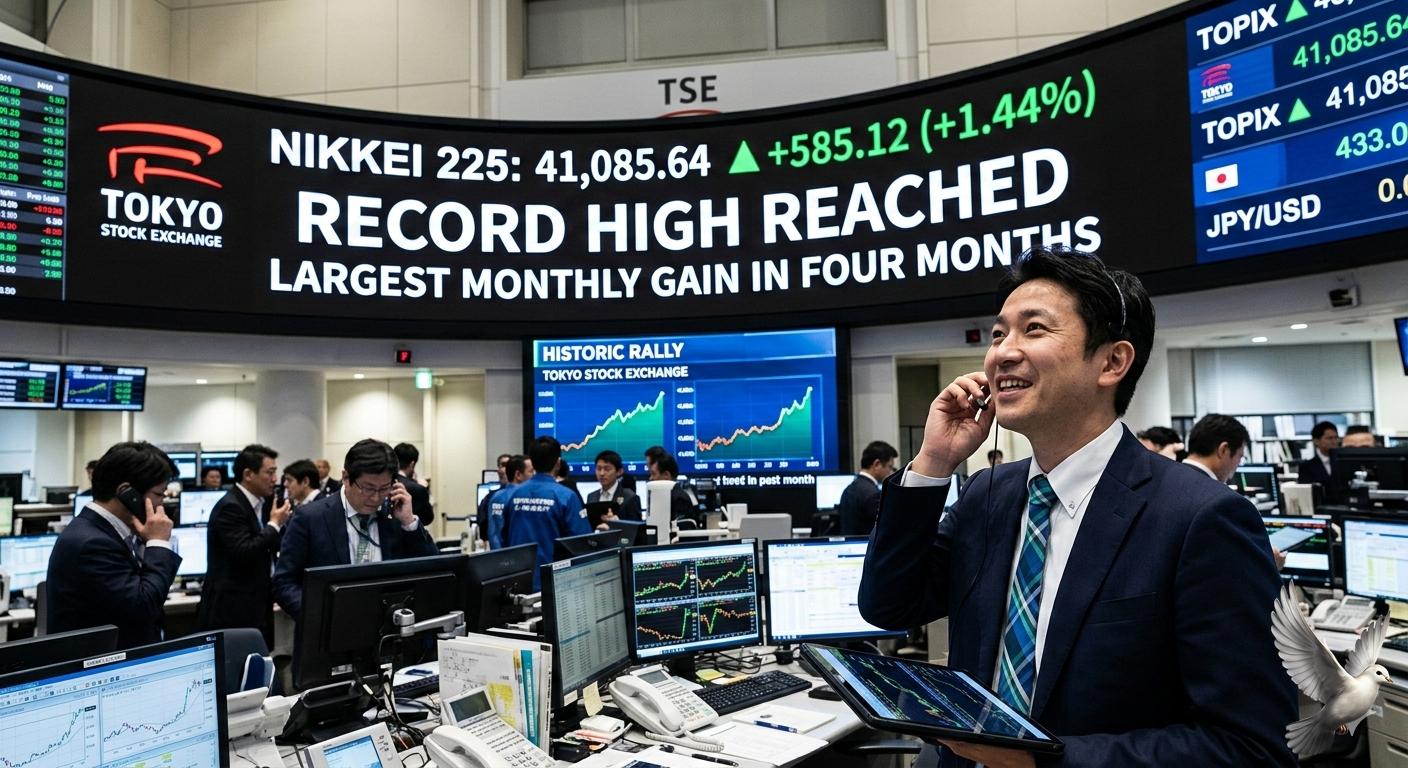
Nikkei 225 Reaches Record High Following Largest Monthly Gain in Four Months
Japan's equity markets have entered a historic "Golden Age" as the benchmark Nikkei 225 surged to a new record close of 58,850.27 points on Friday, February 27, 2026.
This milestone capped an explosive month of growth, with the index posting a 10.37% gain for February alone. This represents the largest one-month percentage increase since late 2025 and marks the third consecutive month of gains. Year-to-date, the index has already soared by 16.91%, adding over 8,510 points since the start of January.
The rally is largely fueled by the "Takaichi Trade," a wave of investor optimism following Prime Minister Sanae Takaichi’s landslide election victory. Her administration’s commitment to a 17.1 trillion yen economic stimulus package—roughly 10% of Japan’s GDP—has signaled a clear path toward aggressive fiscal expansion and tax relief.
Market sentiment was further bolstered this week by the government’s nomination of two "reflationist" academics to the Bank of Japan’s policy board. These appointments suggest that the central bank will maintain a highly accommodative, low-interest-rate environment to support domestic growth, even as global markets face volatility.
Corporate Japan is playing a central role in this ascent. Investors are aggressively betting on the structural transformation of domestic firms, which are now prioritizing shareholder returns and return-on-equity (ROE) improvements. Sony Group, for example, saw its shares jump 7.2% after expanding its share buyback program to 250 billion yen.
SoftBank Group also trended upward, rising over 4% during the week. While global semiconductor stocks faced some profit-taking pressure—with firms like Advantest and Tokyo Electron seeing slight Friday pullbacks—the broader market momentum remained resilient.
Economic data released today supports a cooling inflation narrative. Tokyo’s core consumer price index (CPI) slowed to 1.8% in February, falling below the central bank's 2% target for the first time in over a year. This cooling phase, aided by government energy subsidies, provides the Bank of Japan with additional flexibility regarding the timing of future rate hikes.
Despite the rapid ascent, technical analysts note that the index is operating in "overbought" territory. While the 58,586 level has transitioned from resistance to a key support floor, the accumulation of 12-month gains exceeding 53% suggests that short-term volatility and profit-taking remain possible in the coming weeks.