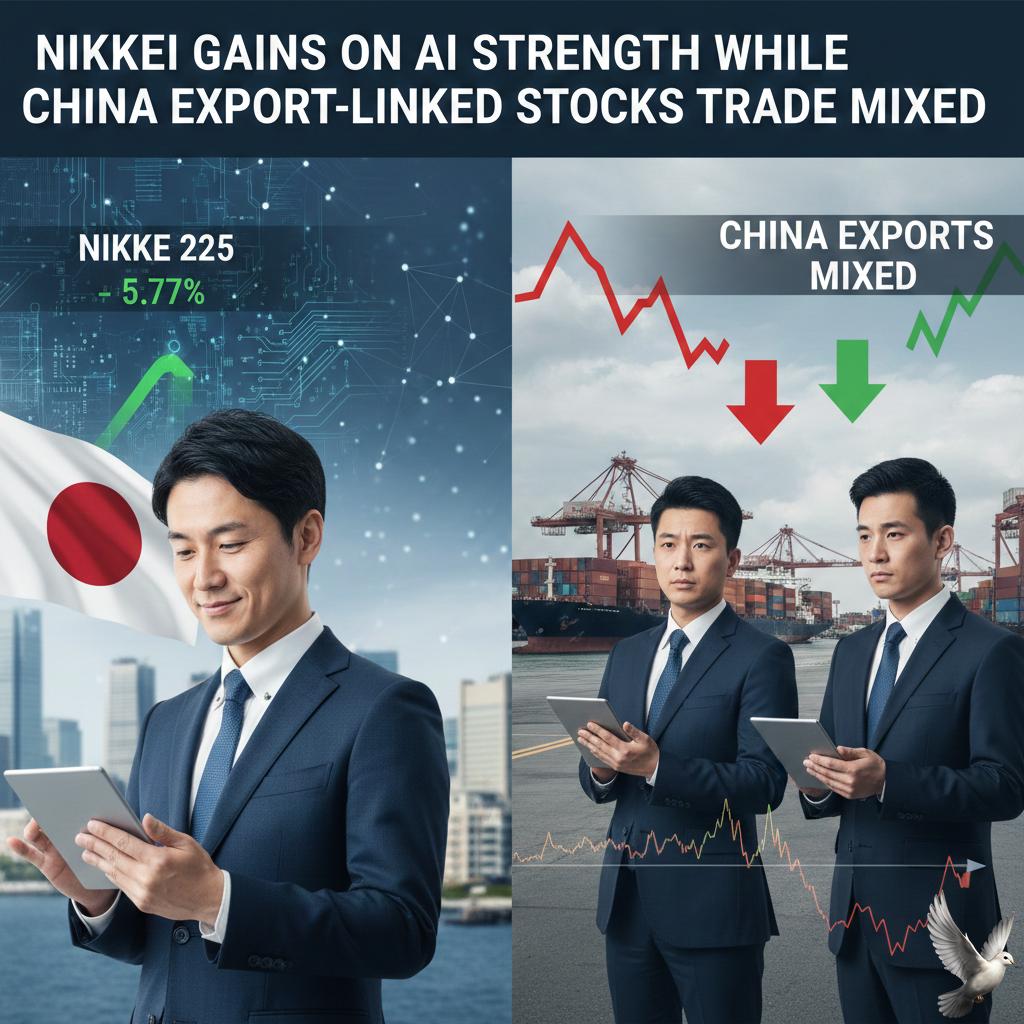
Nikkei Gains on AI Strength While China Export-Linked Stocks Trade Mixed
Japan’s stock market demonstrated significant resilience on Tuesday, February 24, as the Nikkei 225 surged following a long holiday weekend. The index gained 571 points, closing 1.00% higher at 57,396. This rally effectively erased losses from previous sessions, driven by a powerful rebound in technology and infrastructure-related shares.
Investor sentiment was primarily buoyed by reports of a strategic evolution in the partnership between Nvidia and OpenAI. The two AI giants are reportedly finalising a 30 billion dollar investment deal. This arrangement, which positions Nvidia as a key participant in OpenAI’s latest massive fundraising round, has reignited expectations for sustained capital flows into global AI infrastructure.
Japanese tech leaders capitalized on this momentum. Advantest, a critical supplier in the semiconductor testing space, saw its shares rise 4.5%. Kioxia Holdings recorded an 8.3% jump, while Fujikura surged 11.16%. These gains highlights a broader "risk-on" shift in Tokyo, even as Wall Street faced volatility from geopolitical concerns and shifting trade policies.
Beyond the AI sector, industrial and manufacturing stocks posted standout performances. Furukawa Electric led the market gainers with a 15.83% increase, and Murata Manufacturing rose 9.06%. These moves reflect a robust domestic outlook, supported by recent data showing Japanese machinery orders rising at a record pace.
Economic indicators provide a stabilizing backdrop for the current market trajectory. Japan’s GDP growth accelerated to 0.7% in the final quarter of last year, while the manufacturing PMI for February 2026 showed marginal improvement to 48.9. Although inflation rose to 4.0% in January, the market remains focused on corporate resilience and the potential for increased dividends and share buybacks.
The yen's movement remains a critical variable for export-oriented firms. While recent appreciation caused brief corrections in late January, the Nikkei has maintained an upward bias throughout February. Analysts point to a 38% rise in the market over the past 12 months, with annual earnings in the tech sector forecasted to grow by 16% over the next five years.
Market participants continue to monitor external factors, including United States trade rulings and geopolitical tensions in the Middle East. However, the immediate focus remains on the semiconductor and AI sectors, which are increasingly viewed as the primary engines for Japan’s continued equity growth in the 2026 fiscal year.