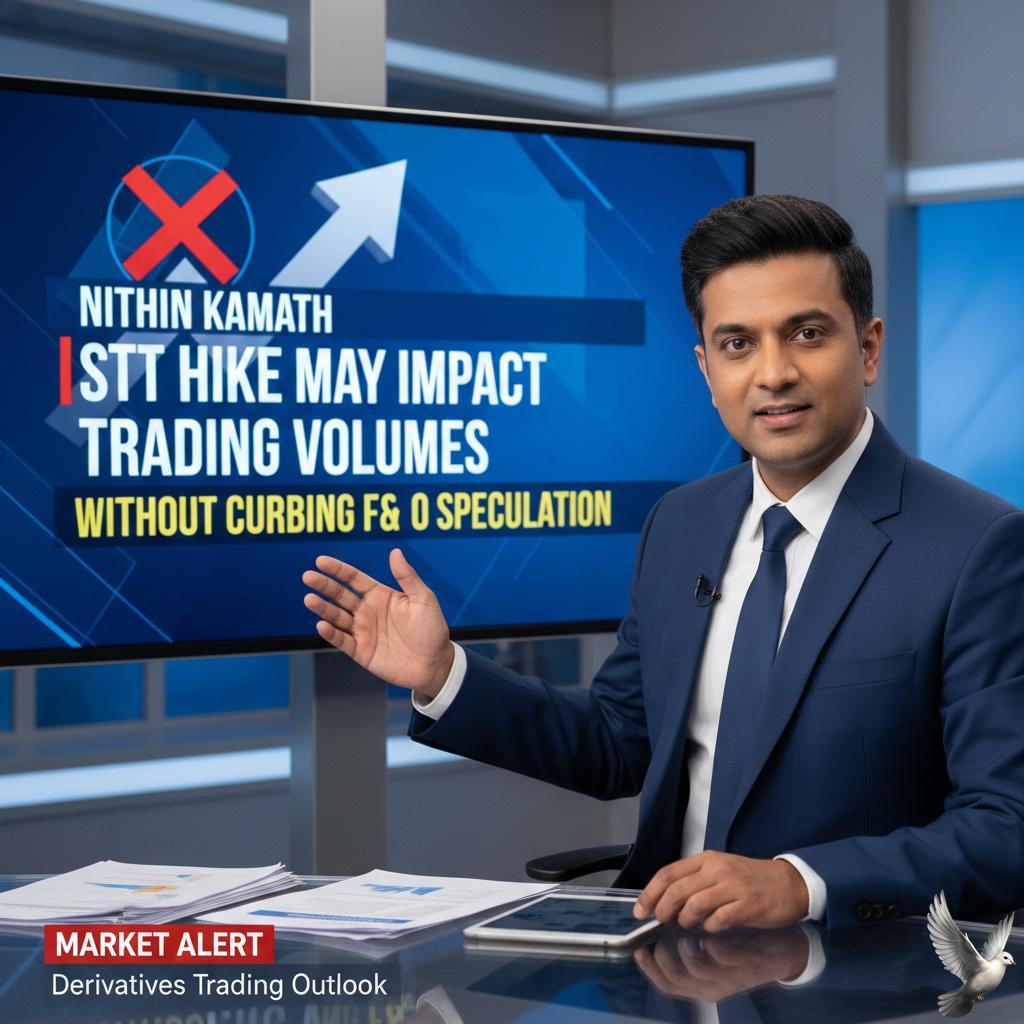
Nithin Kamath: STT Hike May Impact Trading Volumes Without Curbing F&O Speculation
**Market Brief: STT Hikes & The Derivatives Dilemma**
**Context** Following the Union Budget 2026 announcement, Zerodha CEO Nithin Kamath has issued a sharp critique of the continued increase in Securities Transaction Tax (STT) on equity derivatives. His comments come as the government proposes yet another steep hike, aiming to curb excessive retail speculation in the F&O segment.
**The New Fiscal Reality** The latest Budget (Feb 2026) proposes raising STT rates significantly effective April 1, 2026:
* **Futures:** Increased to **0.05%** (from 0.02%).
* **Options Premium:** Increased to **0.15%** (from 0.1%).
This marks the second major hike in two years, following the October 2024 revision. The cumulative impact has made trading costs exponentially higher for high-frequency traders and hedgers.
**Revenue Paradox** Kamath highlights a critical disconnect between tax rates and actual revenue. Despite previous hikes intended to boost collections, government data reveals a shortfall.
* **Projected STT Collection (FY26):** ₹78,000 crore.
* **Actual Collection (Est.):** ~₹57,000 crore (approx. **25%** deficit).
Kamath argues that the "Laffer curve" effect is setting in—higher taxes are shrinking the volume base, leading to lower-than-expected total revenue.
**Impact on Market Structure** The "Death of Futures" is a primary concern. The tax structure now heavily disincentivizes futures trading, which is essential for price discovery and hedging.
* **Volume Shift:** Traders are migrating further into low-premium options (buying "lottery tickets") where transaction costs are perceived as less burdensome relative to potential (but rare) outsized gains.
* **Liquidity Drain:** Higher costs are forcing liquidity providers and arbitrageurs to widen spreads or exit, potentially increasing volatility during stress periods.
**Regulatory vs. Fiscal Control** Critiquing the reliance on tax as a behavioral deterrent, Kamath suggests that fiscal penalties fail to address the root cause of speculation. Instead, he advocates for **product suitability norms**—strict regulatory frameworks that ensure only qualified investors with adequate capital and risk tolerance can access leveraged derivatives.
**Market Outlook** Retail participation has already seen a **~20%** decline in turnover following SEBI’s earlier tightening measures (increased lot sizes and limited weekly expiries). With the new tax regime, industry experts anticipate a further consolidation of volumes, potentially making the market more expensive and less efficient for genuine hedgers.